Film & TV Writer Elizabeth Gough discusses Emerald Fennell’s upcoming adaptation of Wuthering Heights
Despite numerous attempts at adapting Emily Brontë’s classic Wuthering Heights, there is no definitive adaptation yet. Perhaps this is what Emerald Fennell is attempting in her upcoming version, although initial reactions online are doubtful. The society which judges and punishes Heathcliff on account of his race
The 1847 novel follows Heathcliff, who is mysteriously adopted into the Earnshaw family after being found in Liverpool. He is mistreated and abused by all except Catherine, leading to their distinctly obsessive bond for one another. Upon hearing that Catherine is engaged to Edgar Linton, Heathcliff runs away, makes his fortune and begins his campaign for revenge on the Earnshaw and Linton families. He goes as far as punishing the younger generation for their parents’ mistakes.
Many adaptations, most famously in the 1939 version with Laurence Olivier, only adapt the first half of the novel. This thereby emphasises the romance instead of the revenge story. This often leads to a disconnect between the modern reader’s expectations and the reality of the novel. Every character is horrible yet somehow sympathetic, a quality of the book which is typically lost in adaptation.
For Fennell’s version of “Wuthering Heights”, the discourse began after the casting announcements. Many were sceptical of 35-year-old Barbie star Margot Robbie playing Catherine Earnshaw, a character who dies at age 19 in Brontë’s novel. Even ignoring age, Robbie is arguably not an obvious choice to play such a wild and intense character. According to the BBC, Fennell justified this casting decision by describing Robbie as ‘not like anyone I’ve ever met – ever – and I think that’s what I felt like with Cathy.’
This, however, has been overshadowed by Fennell’s decision to cast Saltburn actor Jacob Elordi as Heathcliff in her interpretation of “Wuthering Heights”. Throughout the book, Brontë exoticises Heathcliff, describing him as ‘a dark-skinned gipsy in aspect’ and characters theorising that his ‘father was Emperor of China, and [his] mother an Indian queen.’ While it is unclear what Heathcliff’s ethnicity is supposed to be, it is disappointing that there has only been one adaptation of the novel (a 2011 film) where Heathcliff was not played by a white man.
The potential for shock value through sexuality in a modern adaptation could reflect the experience of reading Wuthering Heights during the 19th Century
Furthermore, Fennell has cast Shazad Latif as Edgar Linton. In the book, he represents the society which judges and punishes Heathcliff on account of his race. While there has been a rise in colour-blind casting for period dramas recently, it does not feel appropriate for Wuthering Heights. This is because race is integral to the story. It could be seen as though the racism Heathcliff encounters is too uncomfortable to portray, forgetting that the discomfort is entirely the point. I would argue that swapping the races of Heathcliff and Edgar is even perverse, as it deliberately ignores the power dynamics that Brontë had originally set out.
Many are hesitant about Fennell’s stylistic decisions, particularly the original soundtrack by Charli XCX. Though random, I will refrain from judging this decision until “Wuthering Heights” is released. Many modern soundtracks have worked well in other period pieces, such as Sofia Coppola’s Marie Antoinette or Baz Luhrmann’s The Great Gatsby.
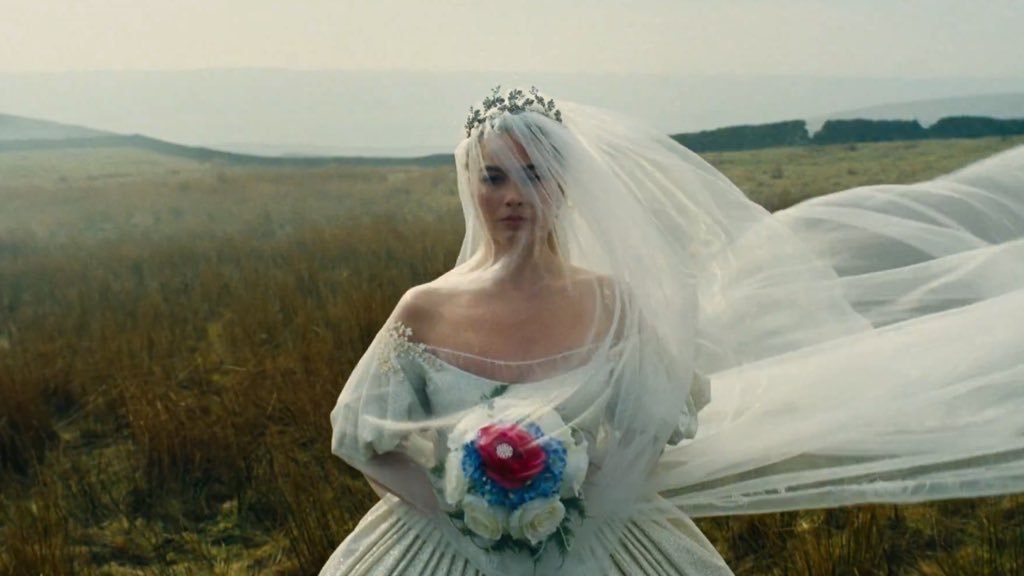
The main takeaway from the trailer is the overt sexuality in this adaptation. Book loyalists are likely to disagree with this choice: there is nothing sexually explicit in Brontë’s Victorian novel. Nevertheless, the intensity of the relationship between Catherine and Heathcliff was outrageous to contemporary readers. Therefore, the potential for shock value through sexuality in a modern adaptation could reflect the experience of reading Wuthering Heights during the 19th Century. Arguably, capturing the spirit of the novel in a new medium is far more important than copying the book’s exact events
The discussion surrounding Fennell’s “Wuthering Heights” leads us to question whether fidelity to the text is even necessary. Arguably, capturing the spirit of the novel in a new medium is far more important than copying the book’s exact events. That said, how far can you stray from the source material until it is no longer considered an adaptation?
Perhaps this question is answered by Fennell within her filmography. Her previous film, Saltburn, was inspired by Evelyn Waugh’s Brideshead Revisited, though not a direct adaptation. This would signal that she views this film as having more direct links to the source material than her previous work. In the same BBC article, Fennell revealed she has retained much of the original dialogue. Interestingly, however, the title is literally “Wuthering Heights”, inverted commas included. Maybe this is a tongue-in-cheek way of acknowledging her diversions from the source material.
Unfortunately, we cannot know for certain until Valentine’s Day next year. What we can guarantee, based on Fennell’s previous work, is stunning, stylised visuals and provocative material. What cannot be doubted is Fennell’s capacity to shock people with what can be done to a grave, just as Brontë had done before her in Wuthering Heights.
More from Redbrick Film & TV:
Best Spots in Birmingham for a Film Fix
Comments