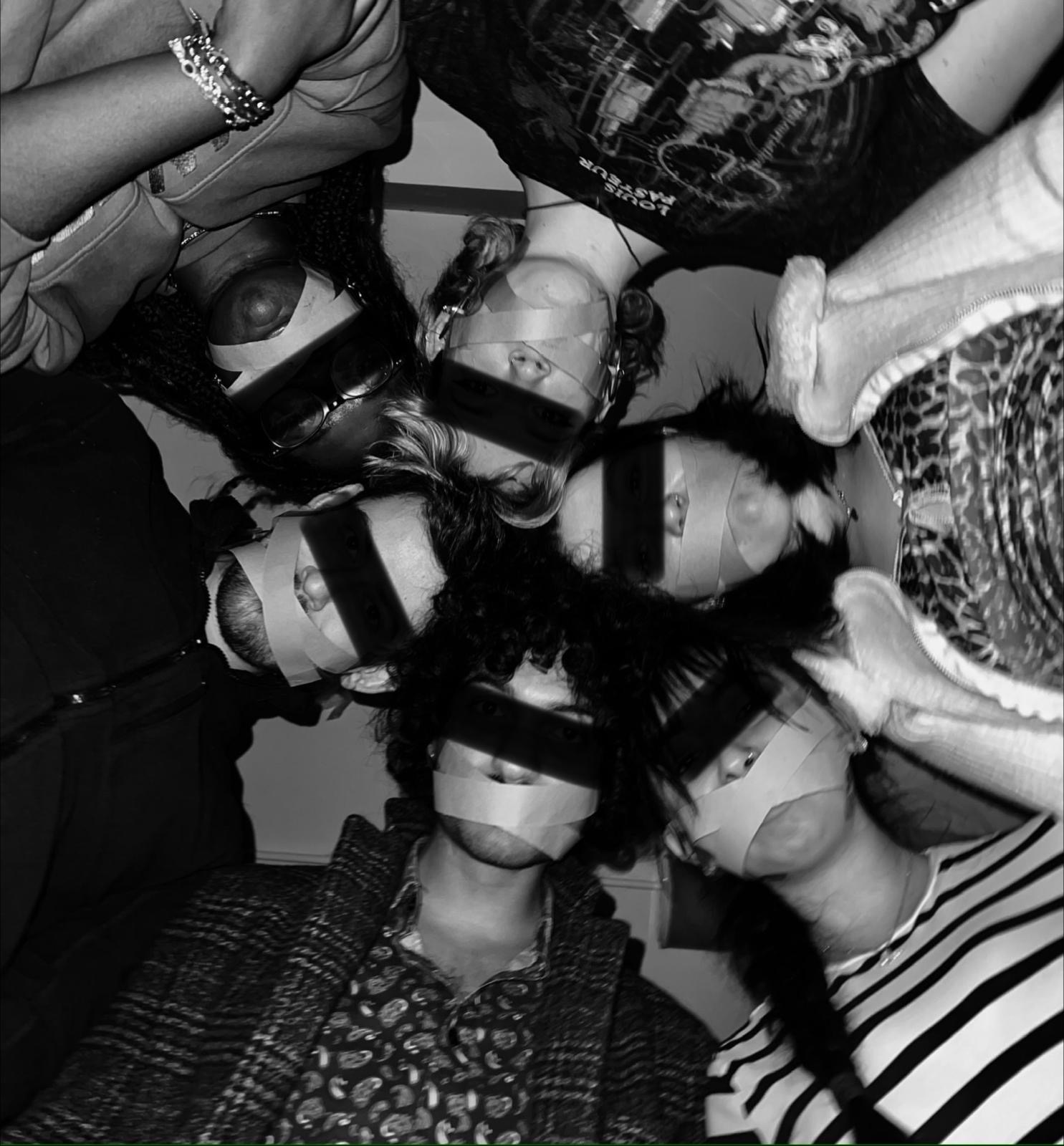
Events Secretary Alfie Warner, Deputy Editor Jennifer Sawitzki, and Lead Developer Adam Abrahams report on the root causes of Redbrick’s decline, and what is being done to reverse it
Redbrick has been around since 1936, and as of this current issue, the newspaper has published 1,540 issues. Redbrick was and still is an incredibly diverse source of information, now with 12 distinct sections after the addition of the brand new Business & Finance Section this year. We have historically championed the student voice and discussed subjects that are important to students, both at the University of Birmingham and in the wider-Birmingham area. But you’d be forgiven for not realising this, as for the past couple of years Redbrick has been in a state of crisis.
If you’ve been at the University for the past 2 to 3 years, you may have seen stacks of Redbrick editions scattered throughout various university buildings, and then just as quickly disappearing. You may have picked up one of these editions, and found that most of the content is not about the University, or even about Birmingham. In the rare instances they are related to campus – such as the Guild Fire in February 2025 or the Dick and Dom crush in November 2023 – they are often published months after the fact, losing most of their relevance and potential impact.
Now, in certain circumstances such as the Travel section, this makes perfect sense, and though the News section has faced criticism about its lack of Brum-focused coverage, this is not to say that coverage of more international events doesn’t have a place at Redbrick – it certainly does. But the bottom line is that many of the articles submitted to Redbrick usually contain information you could find anywhere, and has resulted in a large disinterest in the paper by both readers and writers.
The slow decline of Redbrick is not only found within its content. There have been huge, irregular gaps between print editions, alongside increasing pleas for financial assistance, including two online fundraising campaigns in the last two years. Redbrick’s finances have been perilously low in recent years, and from an outside perspective it might seem like Redbrick is self-imploding. With the increasing obsolescence of printed student journalism due to the internet, why would you read a newspaper when you could get the same information much more quickly online? Perhaps it is a sign that student journalism is destined for the history books.
None of this should be new information; many student publications across the country struggle with similar financial and quality issues. But the current Redbrick committee has been committed to fixing as many of the newspaper’s problems as possible.
Over the past year, some notable milestones we have achieved are:
• Our Editor-In-Chief, Vidhi Bhanushali, and Deputy Editors, Jennifer Sawitzki and Lauren Henry, have cut expenses for the Redbrick website and online workspaces.
• Our Print & Features Editors, Tamara Greatrix and Habibah Ali, have slashed our operating costs for print cycles.
• Our Marketing Secretaries, Devina Sharma and Elisa Aylmer-Hall, have created a tiered advertising package for potential sponsors. This year, Redbrick has had partnerships with UniHomes, Property Solutions, and most recently HouseHunt.
• Our Social Media Manager, Toby Jarvis, has revolutionised our social media pages, creating witty and engaging content advertising Redbrick’s events and publications.
• Our Lead Developer, Adam Abrahams, has created Redbrick’s puzzle page for the crossword and sudoku savants. He has also been working tirelessly to maintain the Redbrick website.
• Our Events Secretary, Alfie Warner, has started a new event, ‘Off The Record’, in partnership with media societies BurnFM and GuildTV, and in collaboration with student music groups. The three societies are planning more events to be announced in the very near future.
• We have regularly timetabled the release of print editions of the newspaper to two editions per term.
This is by no means an exhaustive list, but many of you reading this won’t realise the extent of Redbrick’s issues, and the efforts that have been made to restore its reputation. Despite the resolve of the committee, there is still one glaring issue that Redbrick faces. Our biggest issue is still the content that we report on (or are allowed to report on), and the biggest barrier preventing the timely reporting of issues on campus is the influence of The Guild. It is this stringent, bureaucratic system that restricts the newspaper from fulfilling its Group Objectives. Despite the Guild’s formal agreement to these objectives through signing Redbrick’s Constitution, articles focusing on the Guild’s handling (or lack thereof) of some incidents have led to publishing delays of up months at a time.
In the autumn of last year, Professor Tom Cutterham, in collaboration with a student at the University, Tanshpreet Kaur, researched and released a report titled ‘Sustainable Student Journalism at the University of Birmingham’. The report set out to discover the main issues that Redbrick was experiencing, and to propose potential solutions that Redbrick, the Guild, and the University could implement. When asked why he pursued the report, Professor Cutterham had this to say:
“I think an independent, investigative student newspaper is a crucial part of university life. Without it, there’s so much stuff—good and bad—that goes unreported, unrecorded, and undiscussed. And to be honest, sometimes it seems like that’s how university executives want it. I undertook this project to try and find some ways to push back against that, to make Redbrick better and more sustainable.
I can’t say I expected the University or the Guild to just welcome all our proposals with open arms and promises of cash, but I have been a bit disappointed by the total lack of engagement so far. As the report sets out, there are some things they could both do relatively cheaply that could really improve the situation, and help put student journalism in Birmingham back on a sustainable footing. The students and Redbrick committee are doing their part turning things around, and I really hope the University and Guild decide to get on board too.”
We highly encourage you to read the report in its entirety, as many of the findings are exceptionally alarming. You can find the full report on Redbrick’s LinkedIn, Instagram or via this link, but to summarise:
- The Guild’s position as Redbrick’s publishers means they are legally responsible for the paper’s statements, and need to monitor the paper’s output. However, this position of supervision has been warped to hinder the timely reporting of events relating to campus. The report suggests that an updated written agreement needs to be implemented between Redbrick and the Guild which clearly outlines the responsibilities and expectations of each party.
- Despite efforts by the 25/26 committee to make the paper financially stable, Redbrick’s finances are still perilous at best. Redbrick does not receive funding from the Guild, a growing trend among student publications nationwide, but instead receive support in the form of office space, IT equipment, and legal training from David Banks. The report offers a ten-year plan to promote the long-term financial stability of the paper.
- Efforts to achieve financial sustainability only matter if there are student journalists available to write. The report offers solutions for the increasing pressures on students’ time, such as journalistic scholarships and university modules that offer more formal journalistic training, giving writers the time and resources each week to improve their skills.
- Student journalism is ever-shrinking in relevance across the country (especially in the face of social media), and there is more that Redbrick could be doing in terms of cross-platform engagement. Promoting student journalism is in the University’s interests, as an important way of encouraging an engaged and informed student body is through impartial, truthful, and free journalism.
Again, the general findings of this report should not be new information, although the specifics and extent to which Redbrick has been hindered might come as a surprise. Arguably the biggest issue is the clear violation of Redbrick’s Constitution, an agreement between Redbrick and the Guild. Under Section 2.0: ‘Objectives of the Group’:
“2.1.3: To represent the student body and its concerns and to hold the university and guild to account.
2.1.4: To be an ambassador for students, the Guild and the University, and work closely with the Guild for the benefit of both groups, yet to be capable of independent comment when necessary.”
Our primary concern is with article delays, to the point where they are no longer relevant. The most blatant case of this was regarding the Dick and Dom crowd crush incident at FAB in November 2023. Capacity and security for the event was not safely managed, resulting in multiple injuries including a cracked rib. Louis Wright wrote this article in advance of the December print, which was then sent to the Guild for proofing.
Rather than all the Guild’s requested changes being submitted to us in one go, changes were instead requested across multiple months. Each time these changes were made, more previously unidentified changes were brought up. Sometimes the requested changes were so unclear that clarification was required, further delaying the article’s publication. This killed its relevance, only finally being published in the March 2024 print, four months after the incident took place. (You can read the article here.)
Given the critical content of the article, it is difficult not to see this as a case of deliberate miscommunication with the aim of delaying the article in order to protect the Guild’s image. Unfortunately this is not an isolated incident; a similar case took place the following year with an article written about the Marxist Society / Revolutionary Communist Party. According to Redbrick’s Constitution, as long as articles do not break any media laws, Redbrick should not face restrictions towards publishing articles that criticise events on campus. This contradiction is a prime example of how poor communication impedes our ability to be an active voice on campus.
We understand the amount of time that the Guild puts into proofing for print cycles; however, Redbrick only has a singular point of contact within the entire Guild – the Political and Media Senior Student Groups Coordinator. Not only is this single role responsible for Redbrick’s 150+ members, they are also responsible for other student groups. Unsurprisingly, this has led to continuous delays in reimbursements, delays to time sensitive articles, and committee queries. It is yet another example of poor communication.
We acknowledge that as our publisher, the Guild has a certain degree of brand management to uphold. We do not only want to criticise the Guild and the University, but when something requires criticism, it is our obligation to report the facts. We have taken steps to improve our internal communications across all roles, such as including clear written standards for all new committee and editorial positions in a bid to improve the efficiency and quality of the paper, but there is only so much we can do. Ideally, we would like a complete revision of our working relationship with the Guild, including direct, in-person communications. We feel that by developing a better working relationship, it strengthens our ties to campus. It is a brilliant opportunity to renew and rebuild contacts with the University’s many faculties, and encourages timely reporting on projects, research, and events happening on campus. As the report recognises, a healthy student newspaper is indicative of an engaged student population. To neglect the relationship between the Guild and its 90 year old student newspaper is a huge missed opportunity for change.
The report was sent to various members of the University, including: Adam Tickell, Vice Chancellor; Nick Vaughn-Williams, Provost; Deborah Longworth, Pro-Vice Chancellor for Education. Vaughn-Williams responded that, “[he] would not wish to offer any comment.”
The report was also sent to the Guild Administration and Officer’s Team. The Officer’s Team acknowledged the report but declined to comment, and the Guild Administration have this to say:
“The Guild supports more than 380 student groups, with whom establishing productive working relationships with is very important. As a long-standing student group, the Guild values its relationship with Redbrick and welcomes the opportunity to discuss the matters raised and work together, constructively, on next steps.”
We also reached out to our writers, editors, committee members, and alumni for their thoughts on the reports’ findings, and what they wanted to see from the Guild and the University. Many of these suggestions are simple, mutually beneficial, and have been achieved in the past. Advertisements from the University have disappeared, print frequency has almost halved since 2019, and above all – despite pushback from students and a single professor brave enough to speak on behalf of students – Redbrick appears to be on its deathbed.
Redbrick welcomes further discussions with the Guild. Perhaps with enough involvement from the student committee, the transparency of this feature, and the ‘Sustainable Student Journalism’ report, we can bring meaningful change, and promote discussions between Redbrick and the University as a whole.
Vidhi Bhanushali, Editor-in-Chief 2025/26
Alex Taylor, Editor-in-Chief 2022/23
Oscar Frost, Deputy Editor 2023/24
Tamara Greatrix, Print and Features Editor 2025/26
Isabel Whitt, UoB Student
Adam Abrahams, Lead Developer 2025/26
Toby Jarvis, Social Media Manager 2025/26
Will Vere Brown, Redbrick Contributor
Kitty Grant, EA at the New Arab, Print and Features Editor 2021/22
Isabelle Lee, Redbrick Contributor
Testimonies have been lightly edited, with cuts indicated by ellipses and square brackets.
If you would like to reach out to Redbrick regarding this feature, or would like to suggest any ideas to us, do not hesitate to email deputy@redbrickonline.co.uk.
This article is up to date as of its writing on February 9th, 2026.
Comments