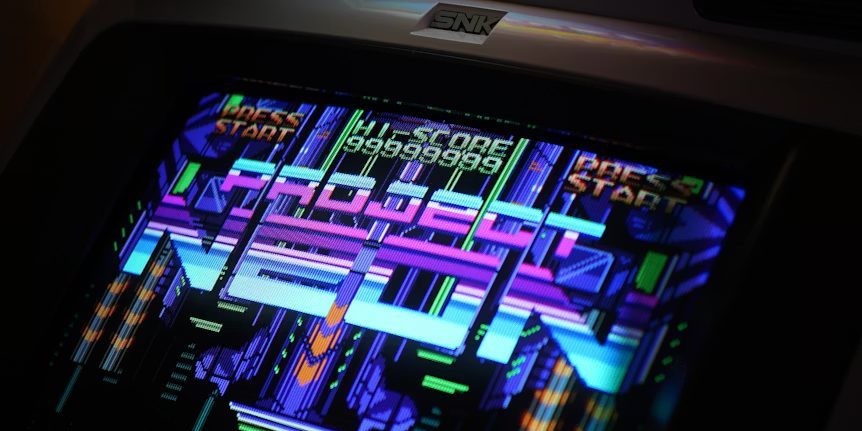
Gaming Writer Jake Riley-Cross discusses whether high scores still hold value in the modern gaming era
For a little while now, I have been enjoying Peggle Deluxe. The gameplay is in the sweet spot of being simple enough to play on autopilot while still remaining engaging and fun. It is a low commitment game, making it great to pick up and put down on a whim. However, one thing that struck me while clearing some challenge levels is the score requirements.
Challenge levels in the game require you to play a certain stage and achieve a set minimum score. Nothing too interesting going on there, right? Actually, what specifically intrigued me was why I actually cared about the score. First, I want to begin with an attempt to define this notion of score.
A persistent, multiple-factor, numerical value attributed to a player’s overall performance
Score here will refer to a persistent, multiple-factor, numerical value ascribed to a player’s overall performance in the game. It may not be a perfect definition, but I wish to capture and examine a certain type of score in this article.
For example, the ‘score’ kept in a game of Pong would not fit. It is determined by a single factor, namely how many times a player has failed to return the ‘ball’. Conversely, the ‘score’ in Super Mario Bros. does fit. It increases with coins collected, enemies killed, time taken per level and more, persisting until the end of the game.
This type of score is present in games of all time periods and genres, from Call of Duty, to Space Invaders, to Hotline Miami. The convention seemingly originated from the arcade era, and ended up sticking around as games adapted for home consoles. Let us begin with analysing Super Mario Bros. for the NES.
As previously mentioned, most actions in the game generate some score, whether that is stomping a Goomba or collecting coins. However, this mechanic never actually contributes to the game. In games like Pac-Man or Donkey Kong where you play until you lose, score serves as a well-rounded measure of performance. Meanwhile, Super Mario Bros. is a finite game by design.

To say no future games should count score would be naive
After reaching the princess in the eighth world’s castle, you can only play again by starting from the beginning. What does this score system actually achieve, if the challenge of the game lies in reaching the end? It is difficult to argue that one run is better than another simply because one player collected some extra coins.
All of this is to say score systems earned their place in gaming by tradition rather than any important function. However, this is only one side of the tale; to say no future games should count score would be naive. Circling back to what that sparked this thought, Peggle is an example of a game that I think does scoring well. So, what does it do differently?
One way scoring matters in the game is via free balls. For the uninitiated, Peggle‘s gameplay revolves around firing a limited number of balls at an arrangement of pegs. The pegs light up and eventually disappear with each hit. Players can receive an extra ball as a reward by surpassing a certain score amount in a single turn.

Generally speaking, the game rewards skilful shots with extra balls for the remainder of the stage. This allows for more room for mistakes, switching the role of score from motivator to resource. Rather than asking you to care for a seemingly arbitrary number, Peggle offers an incentive for and rewards high score.
Score-hunting encourages good play
That said, this alone does not quite address why I find score challenges fun. Another important thing to observe is how score-hunting here encourages good play. In standard play, your only objective per level is to hit every orange peg in a sea of blue pegs. However, the introduction of score thresholds turns the goal into something greater.
Pink score boosting pegs are suddenly much more desirable. Actions granting bonus style points, like hitting pegs by bouncing off the free ball bucket, turn from fun to necessary. Higher scores clearly demand skill, and therefore feel significantly more impressive than any standard run of the game. This heavily contrasts the aforementioned Super Mario Bros. scoring system. Higher scores only stem from collecting extra coins and chaining more Goomba stomps, and so feel nowhere near as impressive.
Peggle is far from the only game that does this. Take Touhou 6: The Embodiment of Scarlet Devil, which adopted a system almost analogous to Peggle‘s free ball mechanic. At certain score thresholds, the player is rewarded with an extra life, or ‘extend’. This reward is extremely valuable and enticing, especially for bullet-hell SHMUP games of the Touhou Project franchise.
The best way of generating such score is ‘grazing’ against a bullet (moving close, but not getting hit by it). With the amount of bullets potentially on-screen at any time, especially in later stages, grazing can seriously bolster score. Even a complete newcomer could recognise the superiority of a high-score run, especially since grazing is visually impressive.
[Style meters are] a more modern take on a scoring system
For a slightly different case, we may turn to games with style meters, such as Devil May Cry and Ultrakill. They are, in some ways, a more modern take on a scoring system. Instead of persistence, they are characterised by fast decay, emphasising a sustained, consistent style of good play. By maintaining a high style, the game rewards the player with a variety of buffs.

Similarly, games like Rollerdrome and Bayonetta include ranking systems that can either replace or supplement score. They offer ranks based on performance, which is a much more digestible way of measuring skill. A player may not care about improving their score by an arbitrary value, but a single S-rank can cascade into S-ranking the entire game.
Of course, it would be remiss to ignore players that consistently attempt to break score records. In any game with a score system, arbitrary or otherwise, there will always be players striving for the best. They will deeply analyse mechanics, optimise runs and find strategies for the highest score possible. For players who like to push game boundaries and limits, a score mechanic may provide enough enjoyment in itself.
A score mechanic may provide enough enjoyment in itself
So, would Super Mario Bros. be a better game without a scoring mechanic? Well, no. It debatably remains useless for most players, and Nintendo themselves have recognised this. After years of including score in every instalment, the recent Super Mario Wonder sees score completely stripped from the game. However, by re-contextualising it, or using it as a vehicle to reward the player for good play, score still remains a very useful tool for designers.
Want to be an S-rank reader? Read more articles here:
Comments