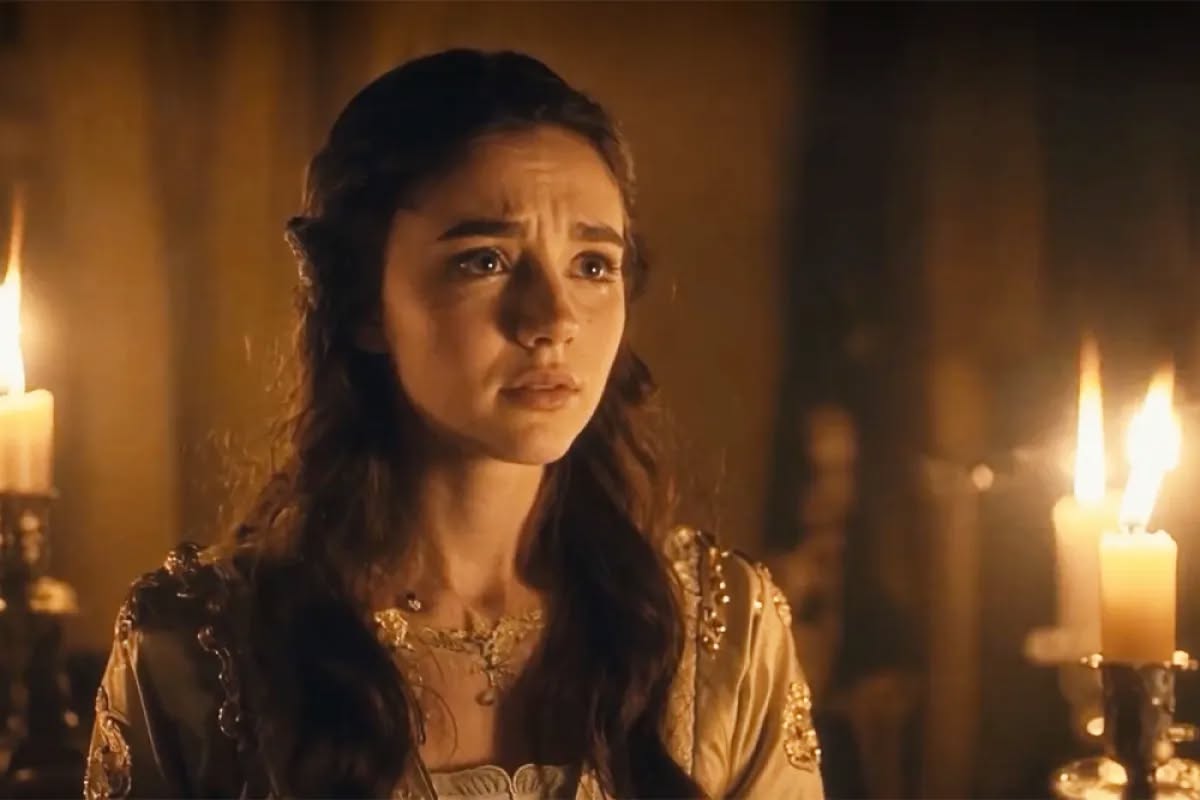
Film & TV Writer Chris Watts delves into the controversy of AI actress Tilly Norwood to dissect the affect of AI on the film industry
On the 27th of September at Zurich Film Festival, Eline Van Der Velden, owner of the AI talent studio Xicoia, announced that multiple talent agencies were in the bidding to represent their first actress, Tilly Norwood. Though the company was only officially announced two days before, Van der Velden’s statement suggested that they had been in discussions around this representation since February. The problem, as the almost instant backlash makes quite clear, is that Tilly Norwood isn’t real.
She is an AI generated actress, described by the company as a ‘Hyperreal Digital Star’. To date she appears only in a three minute YouTube video called ‘AI Commissioner’, along with a collection of headshots. Not exactly a large body of work, but she has sparked interest from talent agents and production companies alike. For them it is obviously a no-brainer; an AI actress doesn’t need to be paid, she isn’t restricted by labour laws, she doesn’t need food or drink or toilet breaks, and she can do anything they want her to do, without needing to give consent. That might sound sinister, which it is, but it also applies to more mundane things like swearing, or being portrayed in a negative light.
But she has sparked interest from talent agents and production companies alike…
Unsurprisingly, there has been a significant amount of backlash. SAG-AFTRA, the Screen Actors Guild in America, have put out a statement saying that to them, creativity ‘is, and should remain, human-centered’. Actress Melissa Barrera took to social media to call for all actors signed to the talent agent who eventually takes on AI Actress Tilly Norwood to ‘drop their ass’, whilst Mara Wilson put it quite succinctly when she asked ‘what about the hundreds of living young women whose faces were composited together to make her? You couldn’t hire any of them?’.
Whilst, obviously, no-one has yet hired the AI actress, Wilson’s point is significant. If the existence of an AI actress is normalised, with the majority of the industry recognising her as a valid actor, what does this mean for up-and-coming actors? Will it replace screen roles? Will existing actors be safe? If it does impact screen roles, will that then lead to an increase in actors trying to get into theatre? And if they do try to get into live theatre, will audiences watch it?
One acting student, currently attempting to break into the industry with some minor roles in adverts and theatre, believes that “humans want to watch other humans do things,” and that therefore if AI does start to take over the screen, viewership will fall, and there will be a rise in theatre attendance. I can’t say I entirely disagree with this opinion, but I would be wary of suggesting people will return to the live theatre en masse. I think generally we are used to watching content at home now, and whilst those who currently go to the cinema regularly might swap it for plays, the general audience who just want to watch something light on TV in the evening won’t start changing their habits.
‘Humans want to watch other humans do things’…
I also spoke to Colombian AI entrepreneur and a patron of the arts, Jacobo Garcia Gil. He has spoken extensively about the uses of AI as it exists today, and the possibilities for its use moving forward. When I asked him about AI actress Tilly Norwood, he pointed to films like The Curious Case of Benjamin Button and its blending of practical effects and AI assisted tools to de-age Brad Pitt as an example of how AI is not a new part of the industry. He says that AI reminds him how “3D animation and stop-motion once redefined the language of cinema”; that it isn’t there to replace human action, but instead to enhance the creativity of the artist.
To him, the financial benefits of something like AI have made it something of an inevitability, and it’s a fair point. The average budget of a large studio film these days is ballooning, it makes sense that large studios will want to reduce their costs. AI is not only a cheaper alternative (for the user at least) but it is also significantly faster. Which would you rather, as a business: spend ninety days paying three-hundred people to shoot (let alone edit) a new Marvel movie, or pay five people for fifty days to work with AI?
It seems an obvious decision, but as Jacobo pointed out when I asked him about the future of the industry, ‘live performance…can’t be replicated’. To him and many others (myself included), AI can never truly replicate performance because it can never truly feel the way a living being can. At least not at the moment. And so filmmakers, he says, will instead have to focus on the unreplicateable; emotion, story, heart. Look at Everything, Everywhere All at Once, despite using Runway AI throughout its production, the film was award winning because it was a heartfelt narrative about family and love.
AI can never truly replicate performance because it can never truly feel…
In some ways, even Van der Velden seems to agree with this. In a statement released only two days after the panel at Zurich, she said that Tilly Norwood ‘is not a replacement for a human being, but a creative work – a piece of art… Like many forms of art before her, she sparks conversation, and that in itself shows the power of creativity.’ This statement suggests she never meant to reduce creativity, only to shift where the work was being done. She is still, to me at least, cutting the actors out of the equation, but she is putting the creative impetus onto the user.
My problem with this though, is that it is not how AI actress Tilly Norwood has been presented to the world. By announcing that she is being signed by an agent, Van der Velden gave her the same status as the actors, the artists, before backtracking on this and claiming she is just the art. But if that’s the case she doesn’t need a talent agent, she needs a distributor. You don’t sign a contract with ‘Sunflowers’, you sign a contract with Vincent Van Gogh. If AI is to be a tool, an artistic expression, it should be treated as such. So perhaps it is time to re-evaluate how we discuss AI Actress Tilly Norwood, to discuss her the way we discuss movies as an artwork, not the way we discuss actors as an artist.
More from Redbrick Film & TV:
Hidden Gems: Lars and the Real Girl
Comments