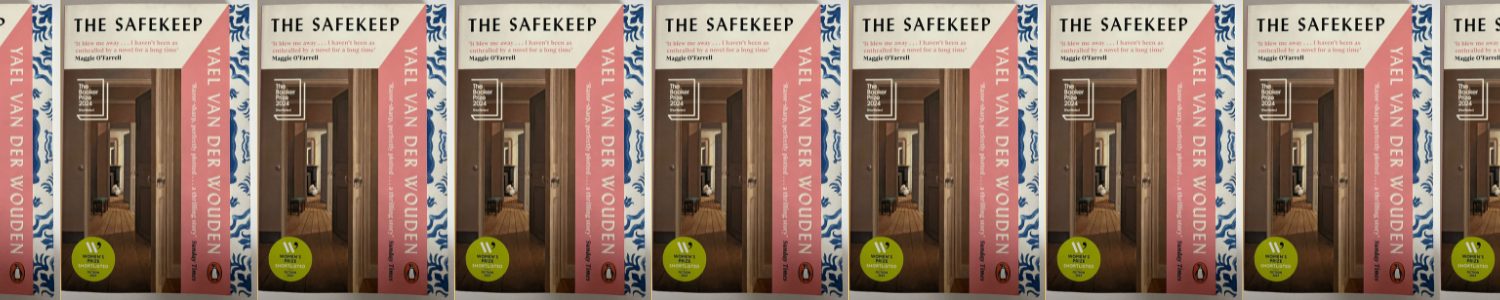
Culture Writer Amelie Reeves reviews Yael van der Wouden’s The Safekeep, praising the author’s skilful writing and exploration of a post-war Netherlands through a queer lens
The Safekeep crafts an unnerving yet deeply intimate study of historical legacy and repressed sapphic desire. In her debut novel, Yael van der Wouden digs into the past through a distinctly queer lens and unearths an uncanny depiction of post-war Netherlands.
She delicately weaves memories of war and family conflict into Isabel and Eva’s relationship
During 1961, in the rural province of Overijssel, Isabel, Wouden’s neurotic protagonist, lives alone. She has condensed her life into a monotonous routine of list-making, gardening, and polishing. However, when Isabel reluctantly allows her brother’s new girlfriend to stay for the summer, Eva bursts into Isabel’s life in a whirlwind of chaos and unanswered questions. Isabel’s unwelcome guest forces her to acknowledge the aftershocks of the war still shuddering through her house.
From the opening chapter of The Safekeep, Wouden presents Isabel as an unlikeable character. Quick to criticise, prone to snarky comments, and unwilling to hold a conversation, Isabel does not have friends, and her family connections are strained. So, when Isabel first meets Eva, she does nothing to hide her disapproval. She is particularly annoyed by Eva’s appearance: her cheaply made clothes, bottle blonde hair, and self-pitying voice. However, as Eva burrows herself deeper into Isabel’s life, she begins to see her façade for what it truly is: a performance for the male gaze.
Wouden’s prose holds Isabel’s idiosyncratic voice
Wouden handles Isabel and Eva’s relationship with patience and skill, carefully balancing the dynamic between historical context and contemporary concerns for queer visibility. She delicately weaves memories of war and family conflict into Isabel and Eva’s relationship. By drip-feeding Isabel’s past into the narrative, Wouden allows readers to understand how Isabel’s unstable childhood shapes her isolation and emotional distance. However, the bond driving the pair towards one another begins to shatter Isabel’s understanding of the past. And, when Eva forces her to piece it back together, the picture it forms is vastly different from the one Isabel remembers.
Much of The Safekeep unfolds in Isabel’s house. This claustrophobic setting haunts the narrative, becoming a character in its own right. With its complex history and overbearing presence, the house is an active participant in Isabel and Eva’s shifting relationship. And, when even its chinaware harbours secrets, the house begins to buckle under the weight of the past.
Isabel’s house […] a character in its own right
Although Wouden’s characterisation and plot are The Safekeep’s foundations, it is her writing style that sews the novel together. Wouden’s prose holds Isabel’s idiosyncratic voice—cynical yet self-conscious, precise yet elegant. And each word conveys much more than what is simply written on the page. They sit within your mind well after finishing the book, making you rethink your own past, urging you to find significance in the mundane.
History is often told through a single narrative. The Safekeep reminds us about the importance of rereading the past through forgotten voices, and questioning what it means to uncover our naivety, or even our complicity, in unburied horrors. And Wouden’s voice, chilling, dark, and poignantly devastating, does just that.
Enjoyed this review? Read more from Redbrick Culture below:
Comments