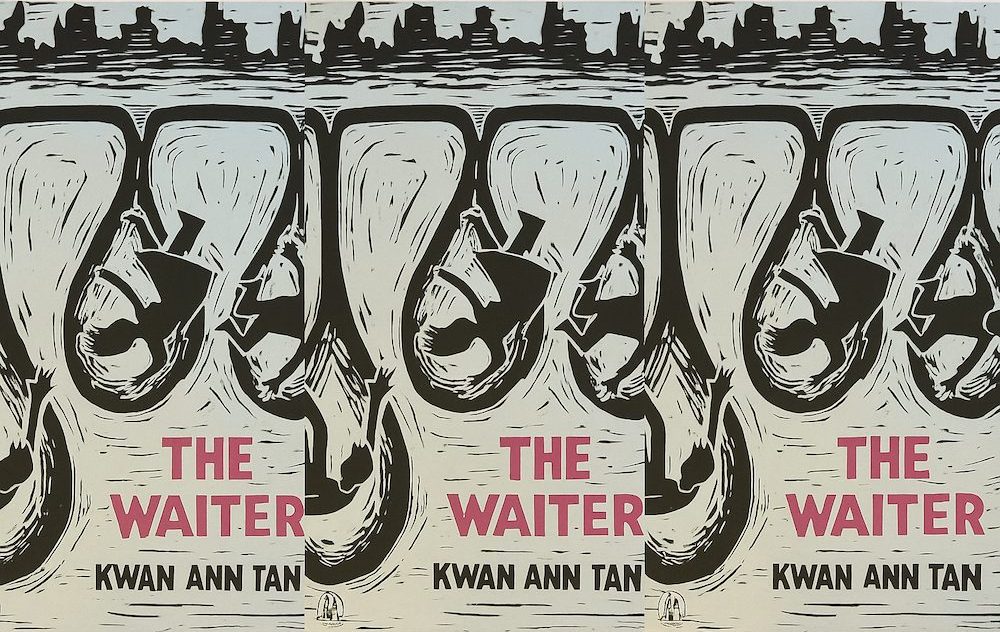
TV & Film Editor Jasmine Davies critiques Kwan Ann Tan’s The Waiter, noting that it leaves much to be desired.
The Waiter’s premise captivated me straight away, yet ultimately left me feeling extremely disappointed.
Set in a dystopian London in the near future, and written in second person, the reader takes the role of The Waiter. Waiters can deliver your luggage, pick up your favourite donut from the bakery, and do any other mundane job that a rich person deems too much of an inconvenience to do themselves. But, this isn’t your regular piece of fiction; this novel is interactive, meaning, as the reader, the control is finally in your hands.
The Waiter’s premise captivated me straight away, yet ultimately left me feeling extremely disappointed
Unlike most books where the ending is the only ending, The Waiter offers twelve different endings. Upset that the story has finished? Read it again. Make unique choices. Embark on a new, different, journey. I myself have never read an interactive novel before, but as someone who is an active player of choice based video games, this book seemed like it would be my perfect read.
When playing choice-based games I usually only play them once, or sometimes revisit them years later, as I hate having my decisions influenced by my memories of a former playthrough. So, when approaching The Waiter, I was unsure how many readthroughs I would do. Whether I would explore all possibilities, or take my first ending as my one and only ending. But, the disappointment I felt from my first ending practically made the decision up for me.
Readers are first drawn in by a few pages of prose, perfectly establishing the bleakness of dystopian London, before they have to make their first choice. Presented with two different options, readers have to turn to the page that corresponds with their choice. I was eagerly getting stuck in and enjoying my journey, until it seemed to end just as quickly as it had begun.
A reader should feel fulfilled regardless of whether they receive a conventionally good or bad ending
When I read ‘ENDING 6/11’ at the bottom of the page, after making no more than five choices, I immediately thought: Is that it? My journey had ended ever so abruptly, and without spoiling, in the most tragic way possible. I told myself maybe my choices had simply led to an unfortunate ending, after all, there are still so many different paths to explore. However, my second readthrough (which resulted in Ending 4) felt just as abrupt and unsatisfying as my first.
After I reached my second ending, my thoughts were: Maybe the other endings are better? But, if that’s the case, arguably the book is just poorly balanced. A reader should feel fulfilled regardless of whether they receive a conventionally good or bad ending. Bad endings don’t have to leave you feeling like you’ve wasted your time – readers are often known for finding pleasure and meaning in tragedy
I only experienced two of the endings of The Waiter, but both were so brief and bleak that I had little motivation to seek out the rest
Furthermore, my immediate instinct was to justify the ending and consider how it might reflect the book’s philosophy. Perhaps my ending did show how the choices we make can lead to disappointing outcomes, but having that perspective doesn’t make it any more enjoyable to read.
I only experienced two of the endings of The Waiter, but both were so brief and bleak that I had little motivation to seek out the rest – which may say more about the structure of the book than my patience as a reader.
Also, for a novel built around choices, it often feels like you have no control. When I read an entire paragraph that questioned whether I should step inside a building, only to be met with ‘You step inside’, rather than getting to make the choice myself, I was left completely confused. Isn’t the reader’s choice the entire point of the book? for a novel built around choices, it often feels like you have no control
Overall, The Waiter would have benefitted from fewer endings but a stronger, more developed storyline. The endings might have felt more satisfying if there was more of a journey to reach them. The opening pages introduce so many interesting ideas, yet I found little out about them. I guess that reflects the inadequate life of The Waiter – but does that make for an exciting novel?
Rating: 2/5
Looking for more?: Check out these articles:
Theatre Review: Slava’s Snow Show
Land Beneath the Waves: In Conversation with Author Nic Wilson and Dr Susanne Boerner
Comments