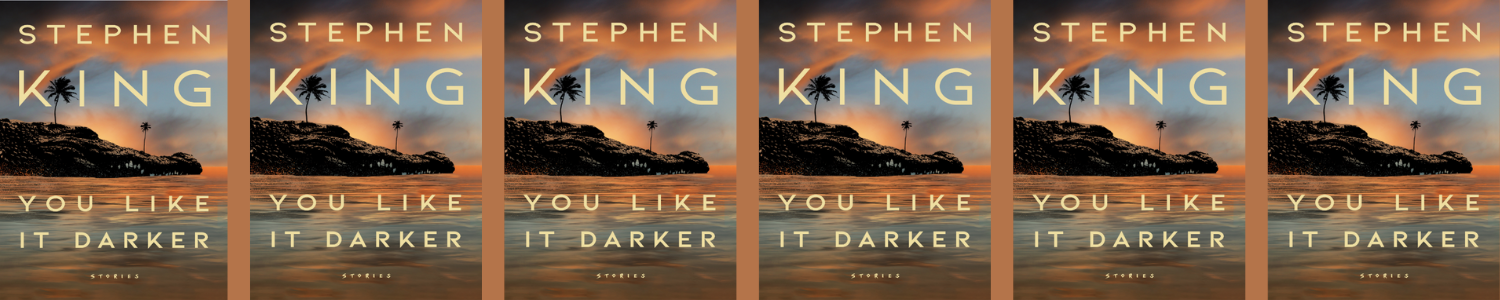
Culture writer Cassandra Fong shines light on Stephen King’s collection You Like It Darker, praising his endurance as an author who continues to write with emotional depth, intelligence, and thrill

Stephen King’s You Like it Darker is not simply a book to read, but it is one that reads you back. King’s latest collection does not merely knock on the door of your imagination; he kicks the door open and settles within the dark corners of your mind – where the light never quite reaches.
The collection is compromised of twelve stories, a dozen doors, and each one creaking open with its own unique crafted room, lights flickering. What is even more remarkable than King’s signature scares is how deftly he moves between genres and tones, between sharp bursts of terror and quiet, and melancholic rumination. In fact, the book’s most haunting moments aren’t always the loudest ones. Sometimes, it’s just the quiet tick of memory, or grief, or the slow, awful realisation that the real horror is just being human.
He kicks the door open and settles within the dark corners of your mind – where the light never quite reaches
From a literary standpoint, You Like It Darker stands tall alongside King’s finest collections: Night Shift, Everything’s Eventual, Full Dark, No Stars. If Night Shift was the blood-splattered voice of youth and Full Dark, No Stars the grim midlife reckoning, then You Like It Darker offers a view of later life, like an older man’s reflection in the mirror, marking the look of unflinching honesty.
A few of the stories subtly nod to King’s earlier works, as if revisiting ghosts from the past. This is particularly thrilling if you have been a long-time fan and can recognise the echoes from decades past. And if you are a newcomer? That is not a problem, as the collection carries a welcoming voice, though exploring darker themes.
The collection feels as though it is a capstone; it is not final, by any means, but certainly a moment of reflection. In these stories, there is a tension between resignation and resistance. A theme of mortality looms over but so does a fierce and unflinching curiosity about what lies beyond. This is not just a man telling ghost stories around a campfire. But it is a writer looking back at the trail he has carved through the woods, while still wondering what is out there hidden amongst the trees.
Across the collection, there are some standouts – though this is not the place for spoilers. Some narratives strike sharply, while others simmer, building anticipation. Either way, King’s stories linger and hum with you, whether one wishes to carry them or not.
Sometimes, it’s just the quiet tick of memory, or grief, or the slow, awful realization that the real horror is just… being human
Almost five decades into King’s writing career, there is an inevitable question that hangs over it: Does he still have that same spark?
The answer, in this case, is yes – though it is not the same as before, this is not Carrie or The Mist or Pet Sematary. This is by the King who has lived through fame, addiction, near-fatal accident, and other personal reckonings. You Like it Darker reads like the work of someone who has come out on the other side. Stephen King is still writing, still restless but now all the wiser; he is less focused on spectacle and more interested in telling the truth – not only about what scares us, but also about what it means to endure.
King’s stories linger and hum with you, whether one wishes to carry them or not
From a journalistic lens, this collection represents a kind of late-career renaissance. While some authors fade into repetition or retreat into comfort, King keeps taking quiet, structural and emotional risks. He is still exploring, still asking questions. And what is most thrilling is that he is not writing for approval—not from the critics, not even from the fans. He is writing because the stories are still knocking. And he answers.
You Like it Darker is a meaningful collection which evidences that Stephen King is still in love with the process of storytelling, still fascinated with human frailty, and still haunted by the dark and the things we find in it. It shows perseverance to keep looking. Yes, you do like it darker, and Stephen King still knows just how to turn out the lights.
Comments