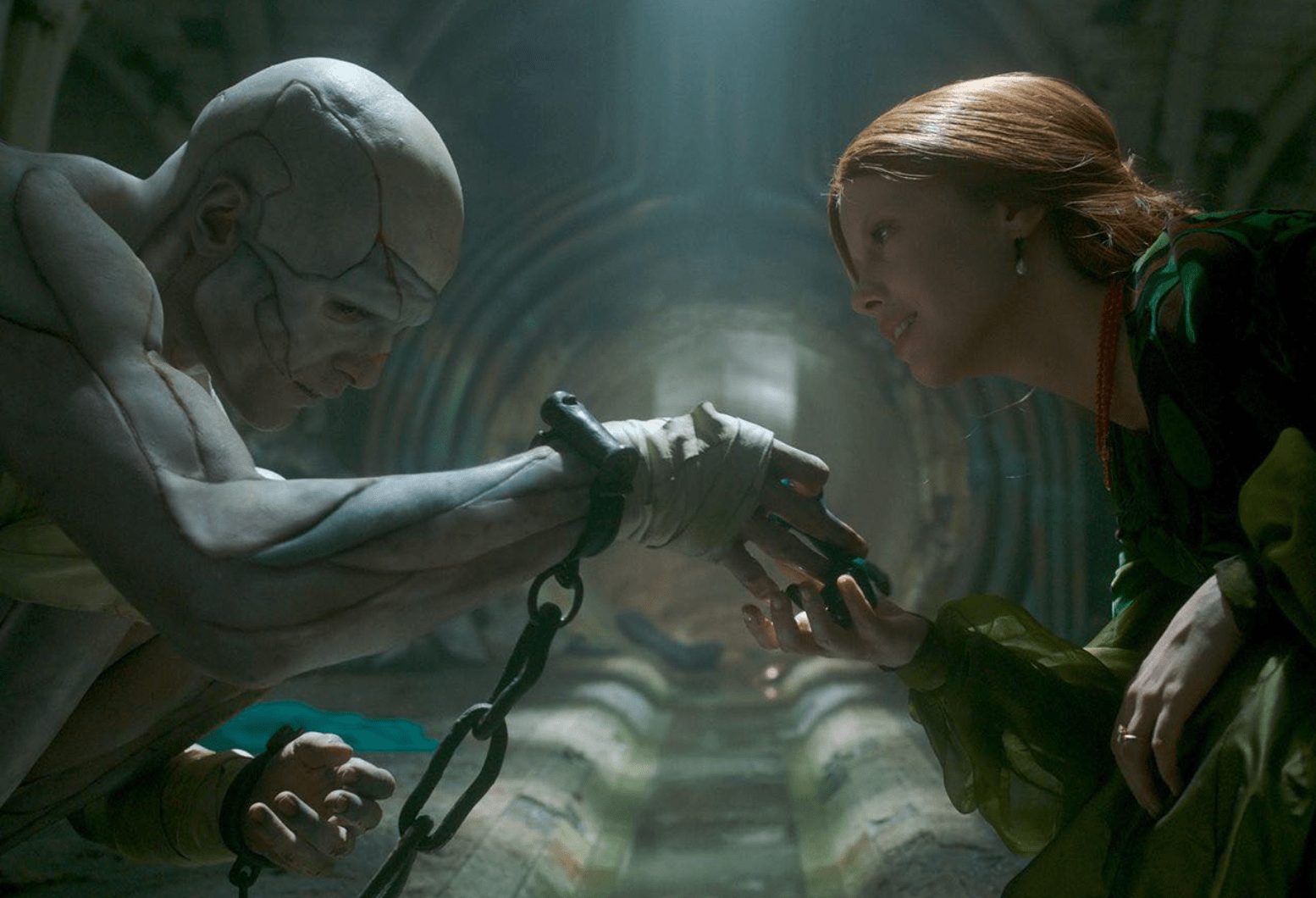
Film & TV writer Esme Chen praises Guillermo Del Toro’s rendition of Frankenstein to be true to the original novel by Mary Shelley yet unique in its own way without disrupting the story’s core concepts
As a devotee of both Guillermo Del Toro and Mary Shelley, I was more than ecstatic when the news broke that Del Toro was finally set to tackle the herculean task of interpreting the most influential sci-fi novel of all time for the big screen – and he did not disappoint. As an extreme Pan’s Labyrinth enthusiast, I have long been aware of Del Toro’s mythopoeic obsession with monster-human hybridity, and of the fact that Frankenstein has haunted him since childhood. Of course, this film was destined for triumph: the core concepts of Frankenstein – identity, inherent suffering, generational trauma – reverberate throughout his previous works, from The Shape of Water to The Devil’s Backbone. And what a gift it is to behold this interpretation with pure, gazing wonderment – for Guillermo Del Toro has, once again, not disappointed.
The film challenges the very notion of what constitutes a “monster.” Inverting the standard “good vs evil” or “malevolent antagonist” trope, Del Toro investigates the primordial roots of evil. And as Shelley does, he forces audiences to confront the structures that impose, mould, and manufacture the monstrous within us. But what renders Frankenstein (2025) to be so astonishing is the creature’s innocence. Rather than repeating the familiar narrative—as in the 1931 adaptation, where the monster is “born wrong” and thus inherently transgressive—Del Toro’s creature is, quite simply, innocent. Evil is not located in the monstrous body, but in the monstrous gaze cast upon it. We are thus led to explore evil’s true complexity.
Innocence is something Del Toro wields with masterful ease; he is both haunted and fascinated by it. Whether threatened, corrupted, or lost, innocence lies in the very fabric of his films. Just as he subverts the traditional horror convention where monsters are intrinsically evil, Del Toro asserts that cruelty is man-made. It is humanity—society—that sins first in Frankenstein and the creature merely responds to the world’s cruelty. Del Toro’s creation becomes the epitome of sanctified innocence, a marked contrast to Shelley’s depiction of a creature born morally and intellectually blank (evoking John Locke’s theory of Tabula Rasa or blank slate). It is this imagery of innocence that makes the film so profoundly affecting.
In an interview, Del Toro remarked, “he is evil because he looks monstrous.” The directorial choice to portray the creature (played by Jacob Elordi – who, I’ll be the first to admit, pleasantly surprised me. I had been in mourning that Andrew Garfield had to drop the project, yet Elordi was fantastic) as confused and vulnerable, radically subverting the horror genre. Evil is not located in the monstrous body, but in the monstrous gaze cast upon it. We are thus led to explore evil’s true complexity.
Del Toro proposes that evil is inherited not biologically but through generational damage; it is moral injury and Victor’s emotional dysfunction that birth the monster. Violence becomes the language of the unloved – another auteur signature that permeates Del Toro’s filmography. “Monsters are the ones who harm the innocent. Appearances are irrelevant,” he famously declared- a sentiment woven through The Shape of Water, Hellboy, and so many others. The creature’s earnest effort is juxtaposed with society’s refusal; it is the world that denies him communication, the world that withholds the possibility of being understood – all due to his appearance.
What intrigues me most however, is the meticulous attention given to the creature’s process of learning language – learning to read, to speak, to understand. Language is the bridge of humanity, a vessel of connection. Yet Del Toro inverts this, showing that language facilitates connection only when someone chooses to listen. The creature’s earnest effort is juxtaposed with society’s refusal; it is the world that denies him communication, the world that withholds the possibility of being understood – all due to his appearance. I would argue that this is why Frankenstein resonates so deeply and does particularly among women.
In countless gothic and folk-horror forums I frequent, it is overwhelmingly women who regard Frankenstein as the most poignant, for women are the ones so often shunned, dismissed, and deemed monstrous. Del Toro captures this poignancy masterfully. Mia Goth’s Elizabeth, perhaps my favourite aspect of the entire film, embodies this impeccably: simultaneously possessing agency and inhabiting the classic gothic-maiden archetype – the quintessential maternal figure that so many reinterpretations fail to execute with nuance.
Del Toro also demonstrates his exquisite use of symbolism – my favourite one being the “Red Angel,” introduced during Victor’s earliest trauma. This grotesque, harrowing figure – far from angelic, more a physical manifestation of suffering – acts as a visual tether to his mother’s death in childbirth and his obsessive yearning to reverse mortality. The motif of childbirth, drenched in pain, blood, and awe, becomes one of the film’s most evocative threads. How can such a hellish rite produce a being of pure innocence? Victor’s angel, like the creature, is born from suffering; she becomes the embodiment of his hubristic obsession, a bearer of dangerous revelation rather than divine truth – Victor’s blood-soaked yearning incarnate. [..] Del Toro diverges magnificently: while Shelley crafts a gothic tragedy, Del Toro shapes an emotional redemption.
But perhaps the film’s greatest triumph lies in its treatment of Shelley’s novel. (Spoiler alert: he does it correctly.) Unlike Emerald Fennell’s infamous reinterpretation of Wuthering Heights which sends every Brontë devotee into a feral rage, Del Toro remains faithful to Shelley’s plot and preserves her revolutionary philosophical core. He honours the idea that monstrosity is socially constructed, that evil emerges from abandonment, neglect, and generational trauma. Yet here, Del Toro diverges magnificently: while Shelley crafts a gothic tragedy, Del Toro shapes an emotional redemption.
The novel’s ending is nihilistic, devoid of reconciliation – ‘he was soon borne away by the waves and lost in darkness and distance.’ But in Del Toro’s hands, the creature gains agency, clarity, and a voice – made all the more powerful through the film’s dual narration. Del Toro transforms Victor from a tragic overreacher into a product of trauma, unlike earlier cinematic versions, which flattened him into a simplistic mad scientist (1931 and Kenneth Branagh’s 1994 version – I am looking at you).
Like Shelley, Del Toro insists that Victor is neither insane nor inherently evil, but a man plagued by grief, societal pressure, and an existential wrestling with God and the machinery of organised religion.
Comments