Film & TV Writer Esme Chen explores the work of Robert Eggers, praising him as a master of the folk horror genre
Robert Eggers. My favourite director of all time, without a doubt, and he is a man whom I owe a lot to. I owe him my budding love and passion for the niche film genre, folk horror, and he is also the man who initially piqued my interest in symbolic and historically authentic films (I could write a whole dissertation on the negative impact of the film series Twilight – I will always be its number one hater, dare I say). It’s this article where I will attempt to compose a few hundred words for why he is the most poignant director of our time, and why in fact, he is so brilliant at what he does.
I owe my budding love and passion for the niche film genre, Folk Horror, and it is also the man who initially piqued my interest in symbolic and historically authentic films…
I mention the genre ‘folk horror’, which is a niche in itself, and so I think it’s useful if I give you an Oxford definition: ‘A genre or style of film or fiction that typical draws on themes of folklore, pagan tradition, superstition, rural isolation, or the sinister power of the natural world to create an atmosphere of dread, menace, or unease’. For film, there is an ‘unholy trinity’ of films to define the genre, and they are: The Witchfinder General, Blood on Satan’s Claw, and The Wicker Man – and what makes these films so good? Or, so terrifying? It’s due to their ability of perverting classic British/Celtic fairytales – emphasising the innate evil in all of us. This is what Eggers does so well in his films, such as The Witch, or The Northman – his usage of historic myths and retellings to awaken something innate and primal within audiences.
But the retelling of folklore is more important now than ever before. With a terrifying rise in far-right extremists, and this idea of ‘reclaiming England’ – they don’t know what they are reclaiming. It’s ironic how folk horror as a genre is booming at the same time these extremists are trying to present Englishness as something which is pure, static and straightforward. English history, so folklore, doesn’t work like that. It is messy, hybrid and shaped by centuries of cultural exchange. Our history is one of hybridity, regional diversity and a long history of cultural blending, and so, importantly, its Folk Horror, which tends to confront these buried histories, revealing how folklore resists any rigid or homogeneous definition.
Eggers leans into this; successfully so – and this is seen most poignantly in The Witch, a film that is so incredibly historically accurate. Set in 1630s rural New England, which was a land made up of British Puritan colonies, fertile ground for the Old World beliefs and Puritan paranoia. This accuracy isn’t just seen in The Witch, but also in The Lighthouse and The Northman. For example, in The Lighthouse, there is mermaid imagery, maritime omens, and a multitude of references to 19th-century sea lore from New England and Newfoundland. In The Northman, there are several mythic sequences of characters, such as Valkyries, Draugr, which come straight from Norse cosmology and classical saga tradition – presented with such care, accuracy and anthropological precision. But ironically, I believe that the pinnacle, the magnum opus of Egger’s work, isn’t the previously mentioned films, but rather his most recent, most terrifying: and that is Nosferatu.
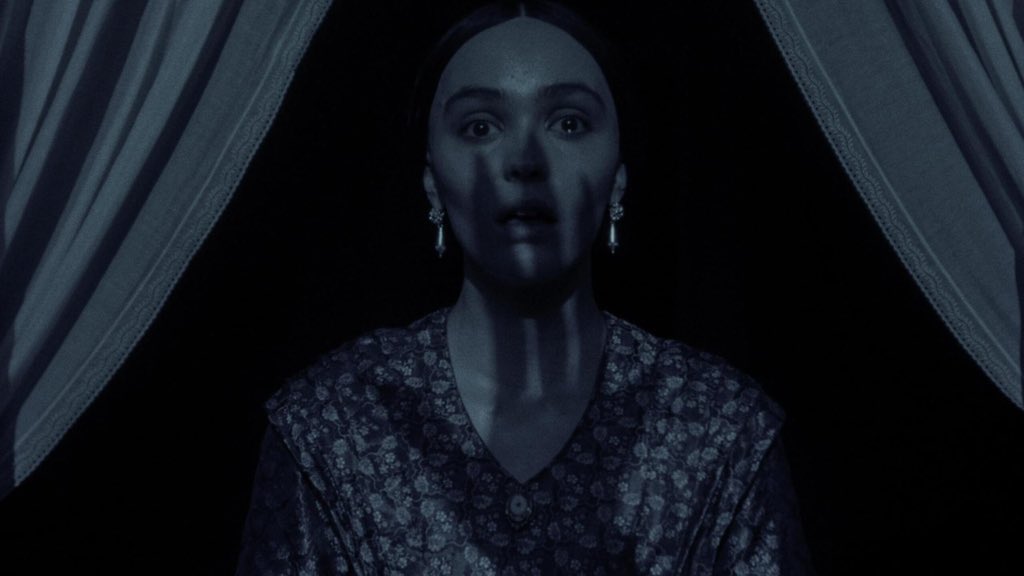
Eggers miraculously hits the sweet spot for the female victim in gothic literature and film – mastering the correct amount of agency and powerlessness.
‘Come to me. Come to me. A guardian angel. A spirit of comfort. Spirit of any celestial sphere. Anything. Hear my call.’ shivers, right? This is said by the main protagonist, our Mina Harker, Lucy Westenra adjacent – Ellen Hutter. Eggers miraculously hits the sweet spot for the female victim in gothic literature and film – mastering the correct amount of agency and powerlessness. The concept of the Vampire is probably my favourite, I love all things to do with it: literature, film, music, theatre – and I can confidently say hand on heart that this is by far my favourite vampire film, and, to which I believe, is the best film of all time (a bold statement from a film student!). Everything about the film is perfect: casting, style, sound, cinematography – and I could talk about it all day.
However, for this article, I only have the space to talk about one aspect of its abundance of perfection, and that is, like what I mentioned previously, Robert Egger’s immaculate literary and historical accuracy. Not to be overconfident, but there’s one thing I can ramble about for days, which is the representation of the vampire. It goes without saying that Eggers does it the best. Simultaneously, the film closely mirrors the narrative structure and character dynamics of Dracula whilst making it distinct that it’s Eggers work – via preserving the episodic feel through letters, documents and fragmented perspectives. Bill Skarsgard’s Count Orlok draws exactly the same design as in 1922, with elongated limbs, corpse-like physicality – emphasising that 20th century folkloric fears of disease. This portrayal of illness, ontogenesis and decay echoes the fin-de-siècle fears of moral corruption, which are central to Victorian Gothic fiction.
Now, my favourite element is the film’s treatment towards the concept of vampirism, which aligns with pre-modern European folklore – the vampire isn’t an erotic figure, it isn’t structured and clean, but rather a corpse-like predator linked to death and pestilence – he is in no way romanticised. This historical accuracy is also seen through the Eastern European setting. Not only is this where the vampire folk tale really gained popularity, but the journey through the Carpathian region reflects the same 19th-century Western European travel writing, reinforcing contemporary anxieties about ‘foreignness’ and the perceived threat of the East. It goes without saying that Eggers strives for accuracy and perfection, and we get nothing else.
It goes without saying that Eggers strives for accuracy and perfection, and we get nothing else.
While Robert Eggers may not be the most mainstream director working today, his fusion of folk horror with rigorous and perfected historical accuracy resurrects inherited, innate cultural fears, proving that horror can function not just as spectacle, but as cultural archaeology and a political spectacle – a way of showcasing our innate fears, and is a physical demonstration on our current political landscape.
More from Redbrick Film & TV:
Comments