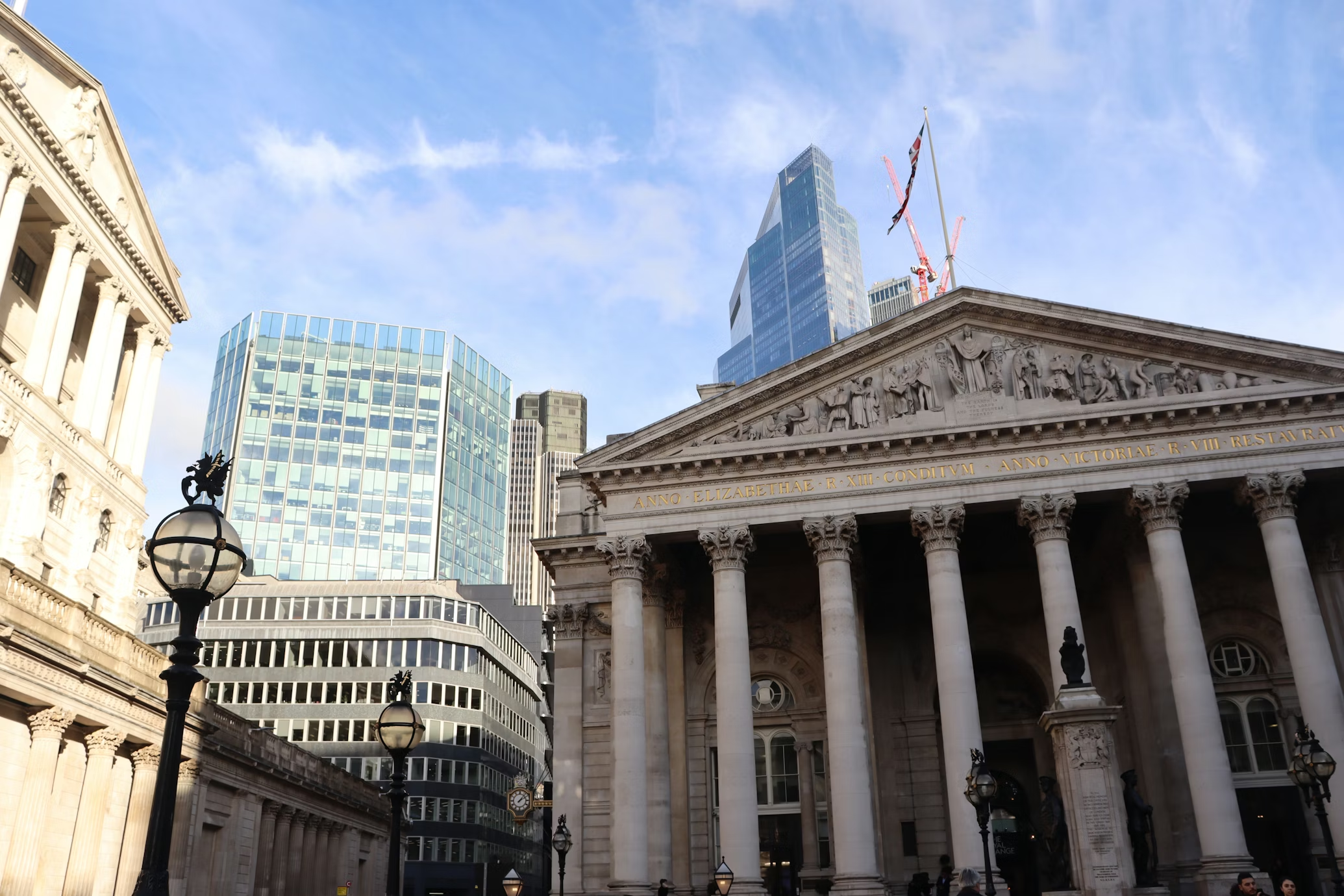
News Writer, Jessica Tite, discusses the direction of the Bank’s split interest decision
Earlier this November, The Bank of England announced that interest rates would be held at 4%, remaining unchanged since August. The decision was made by the 9 members of the Monetary Policy Committee within the Bank of England, with the aim of generating monetary stability, and low and stable inflation to reach the Bank’s target of +/-2%.
However, this was not a clear-cut decision. The MPC voted 5-4 in favour of maintaining the interest rates, with the deciding vote being Andrew Bailey as the governor of the Bank of England. The division within the MPC indicates differing assessments of current economic conditions, reflecting the turbulence of the UK economy itself, and contributes to the sense of uncertainty experienced by consumers and businesses alike. The division within the MPC indicates differing assessments of current economic conditions
The ruling of the MPC indicates there is currently heightened concern around high rates of inflation, which has reached a high of 3.8%. Inflation has been higher than expected for a variety of reasons, such as external factors rooting from post-pandemic strains in global supply, and the war in Ukraine causing rises in energy and food prices.
Domestic factors have also played a role. Faster wage growth, partly linked to worker shortages since the Covid-19 pandemic, along with increases in the minimum wage, national insurance, sewage charges, bus fares, and vehicle excise duty have contributed to rising inflation. These developments illustrate the inflationary impact of choices made in Rachel Reeve’s previous budget, and have contributed to higher living costs across the UK.
It is the role of the Bank of England to respond to this economic climate and set interest rates independently of the government in order to bring inflation down to the 2% target. So, how do interest rates influence inflation? Low levels of growth and high inflation indicates that the UK is currently experiencing stagflation
By setting a higher interest rate, people are incentivised to save money due to increased returns. Additionally, it becomes more expensive to take out loans, discouraging consumers and businesses from spending large amounts of money. When fewer consumers want a product, its value, and therefore price, decreases. This means that there is a resulting fall in demand-pull inflation when demand falls, which is what the MPC aims to achieve.
However, the 4% interest rate will also have some drawbacks, since elevated borrowing costs will reduce business investment, limiting economic growth to an expected 1.2% in 2026 from 1.5% this year. Furthermore, homeowners will be faced with rising costs when renewing their mortgages as high costs of borrowing continue. Low levels of growth and high inflation indicates that the UK is currently experiencing stagflation, a condition which is typically characterised by rising unemployment. Concerns about low consumer and business confidence in the UK economy
So, can we look forward to a brighter economic future? The Bank of England has made it clear that any potential lowering of interest rates will depend upon the assessed impact of the Autumn Budget.
It is difficult to predict what this impact will be amid uncertainty surrounding Labour government policies, which has contributed to volatility in the economy, characterised by U-turns and speculation. For example, the recent confusion around the potential for increases in income tax has added to concerns about low consumer and business confidence in the UK economy.
Despite this, professional assessments suggest inflation has peaked and the MPC predicts inflation will fall to 3.2% in March 2026, but will not reach the target of 2% until 2027.
A more settled UK economy may be emerging, but division within the Bank of England indicates differing views on the most appropriate policy direction.
Looking for more? Check out these articles:
Students Rally to Save Beloved Selly Oak Café from Demolition
Comments