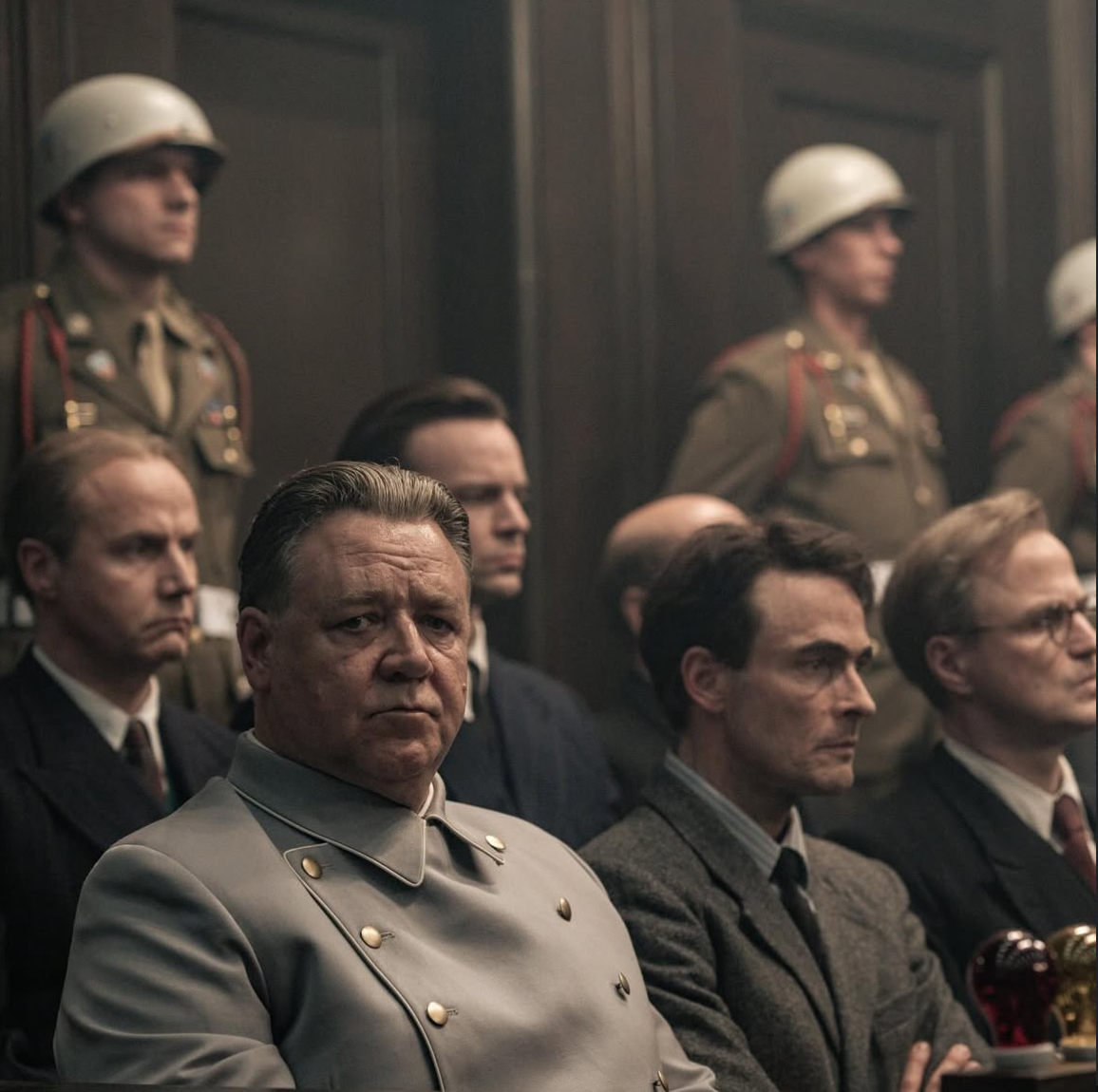
Film & TV Writer Sophie Staley reviews historical biopic Nuremberg, finding it to be a compelling introduction to the Nuremberg trials
Nuremberg is a Historical biopic film directed by James Vanderbilt (The Amazing Spider-Man), chronicling the events of the International military tribunal in Nuremberg, convicting Nazi criminals – including Hitler’s second hand man, Hermann Goering – for their war crimes. The biopics’ leading stars are big names such as Russell Crowe, who plays Goering, Rami Malek playing Douglas Kelley, the therapist who had quite intensive sessions with the criminals, Goering being the main one.
If you do not know anything about the Nuremberg trials, this movie is an educational but engaging introduction to this very important part of history.
If you do not know anything about the Nuremberg trials, this movie is an educational but engaging introduction to this very important part of history. The trials forged the way forward for the world, post-Second World War. There had to be a way of holding people accountable for atrocious war crimes committed against the world, with the attempts to eradicate an entire race of people, through the holocaust. The milestone faced in dealing out this blame was how to condemn the criminals, as it was the allied powers who wanted to hold the trial against German (Nazi) officials. The conflict here is under which state’s law can they lay jurisdiction? They can’t. So it was the American lawyer Giudice Robert H. Jackson (Michael Shannon), who set about writing a new set of laws in order to orchestrate this court case at the Military Tribunal at Nuremberg.
The particular lens provided by the film is a psychological look into the minds of the evil. While Jackson is able to get permission to take these men to court, writing new laws and preparing the biggest case of his life, the criminals have to be kept in custody. The biggest concerns of holding these men in cells is their abilities to commit suicide and escape their trials and punishment. Enter the focus of the movie, Douglas Kelley (Rami Malek), who was a psychiatrist brought in to monitor and interview the imprisoned Nazi officials, looking out for signs that they might take their lives. In the film it is suggested that he grew very close, in quite an uncomfortable way, to Hermann Goering (Russell Crowe), we follow his arrival to the base and introduction to the criminals and the slow and tactical way that he wins their trust. It is obvious that he is up against a mastermind, and as Kelley gets to know Goering, Goering gets to know him.
For Kelley, Goering is a puzzle that he is determinedly trying to work out, he is allured and intrigued, and it is Kelley’s professional stance that almost allows him to see them (specifically Goering) as patients. It is obvious on screen that this is just as Goering wished it to be as he enjoyed the intensity of their relationship, and so he did not reveal to Kelley his leadership role in the concentration camps. The unstable power dynamic is skillfully crafted on screen by the two incredible actors. There is betrayal and anger and an intense build up to the climax of the trials. The trials reveal footage from within concentration camps during and the aftermath of devastation. This is a particular scene to watch with caution as there are details that are explicit and upsetting. The clips are long, lingering, and haunting and, I think, a message reinforcing the extent that evil can go if given the platform to do so. Acting as a warning comment on the current cultural and political climate of the world and a reminder of the horrors of the past.
The unstable power dynamic is skillfully crafted on screen by the two incredible actors.
I hope in trying to summarise and explain, I have not given too much away. I really feel that the most effective way to engage with the portrayal of historical events in this film is with fresh eyes. The casting for this movie is perfect, and the actors’ execution of their roles is exquisite and convincing. Russel Crowe and Rami Malek have so much on screen tension, the fraught texture of the room can be felt through the screen, its palpability adds to the impressiveness of the film. While in the trial room, the camera footage switches to a black and white film, giving the effect of having watched the footage live, which I find is a very impactful touch. I would recommend this movie if you wish to be moved, if you wish to learn something new, or if you are really into history. History will never not be important, and it is important when such a significant form of media remembers this.
Rating: 4/5
More from Redbrick Film & TV:
Comments