Gaming Writer Esme Chen delves deep into the portrayal of Cornish folklore in video games like Skyrim
For members of Gen Z, folklore is a somewhat elusive, unknown quantity. We are often unaware of our ancestors’ storytelling practices, or the figures and entities within all those layers of history. Or are we?
Aggressive guardians of the natural world
You may know more than you think, depending on the media you interact with. Film examples are quite obvious: take Midsommar for example, or even the most recently critically aclaimed Sinners. But what about games? Given the nature of this article, I will deep dive into one figure of folklore, the Spriggan.
The Spriggan is a playful figure featured in Cornish folklore. It is a guardian of ancient, sacred sites such as ruins or standing stones, often tied to the land itself. They are enforcers of morality in folklore; aggressive guardians of the natural world. As such, they not afraid to punish humanity for breaking rules.

The Spriggan is neither villain nor hero
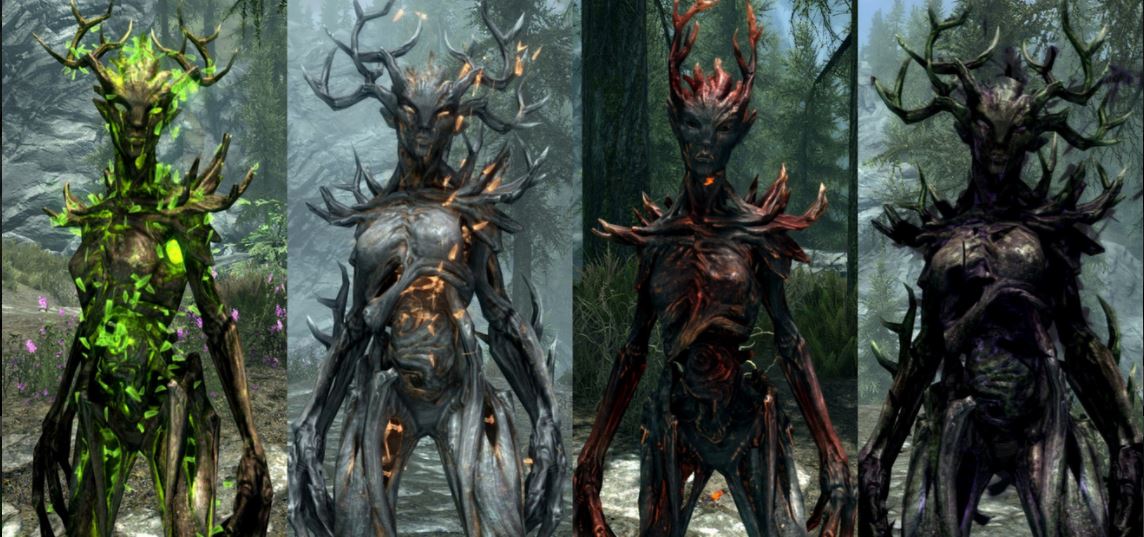
For me, the representation of the Spriggan is, of course, that in The Elder Scrolls V: Skyrim. The Spriggan has an extremely distinct design and aesthetic: antlers, bark-like skin, sap core, and a feminine, humanoid, tree-like body.
Its in-game behaviour adheres to the popular folklore stories. The creature attacks when players trespass in the forests they reside in, and can command animals like bears or wolves. The Spriggan is neither villain nor hero — only becoming hostile when players intrude their forests or attack first.

Games such as Skyrim or the Witcher series preserve mythic function and the folklore aesthetic to curate an engaging narrative. I hence propose the question: why do we not engage with folklore outside of video games or films?
Folklore in games becomes aesthetic texture
More often than not, folklore in games becomes aesthetic texture. Players disappointingly dub these creatures as caricature of the fantasy genre as there is no engagement with their history.
Furthermore, media we engage with as children, such as the aforementioned video games, are often stereotyped as uneducational. No child necessarily goes into a video game expecting educational lessons, yet we subconsciously code games as escapism and play.

The feeling of danger and enchantment
How children engage with folklore characters such as the Spriggan in Skyrim is also inherently important. There is an element of fear and curiosity when you are unaware of its abilities and reasons for attacking. Players soon learn to walk with trepidation in or around the surrounding woodlands.
Hence, games appear to replicate the same trepidation of generations before us listening to folkloric tales, despite the switch in how we consume them. That feeling of danger and enchantment is still relevant — modern audiences are just unaware on how to perceive them, or their relation to Cornish and Celtic ancestry.

Ultimately, the childhood exposure to folklore is extremely culturally meaningful. Folklore did not and has never disappeared, even if the mediums through which we consume it have changed over time. The method of consumption may have changed, but the origins and meanings of folklore still remain the same.
Read more gaming articles here:
Games To Look Forward To In 2026
Tips To Manage Your 2026 Gaming Backlog
Things Aren’t Right in Scarlet Hollow, And That’s Exactly How It Should Be
Comments