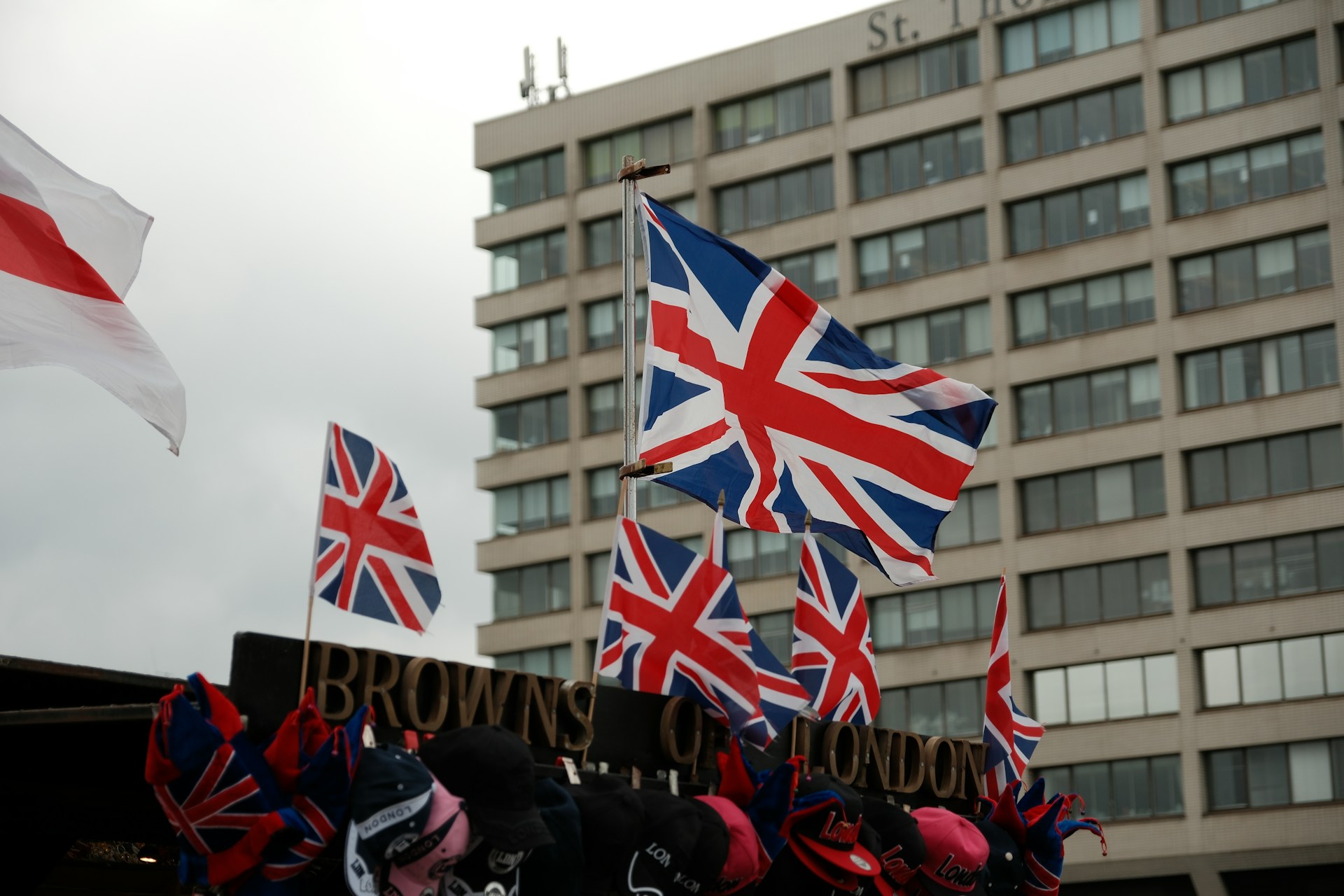
Comment Writer Joseph Helsby critiques the current raising of British and English flags across the nation and contemplates the intentions behind this sudden patriotic display

Written by Joseph Helsby
Published
Images by Claudio Schwarz

Content warning: discussions of racism, assault and discrimination

In the past month, Union Jacks have been tied to lampposts and St George’s crosses painted on roundabouts across the country. The movement, known as Operation Raise the Colours, reached Selly Oak last week, with flags flying along the Bristol Road. For some, this is a harmless display of national pride; for others, it signals a troubling nationwide drift towards nationalism.

…flags have often been co-opted by far-right and racist groups such as the National Front and the English Defence League.

In my lifetime, the use of national flags outside a sporting environment has been something of a taboo. This is largely because the flags have often been co-opted by far-right and racist groups such as the National Front and the English Defence League. Historically, these groups used the flag as a symbol of aggression, particularly towards non-white immigrants. As a result, whenever I see someone voluntarily displaying these flags, I often (perhaps cynically) attribute them to extreme political views rather than to patriotism. In this vein, for many, Operation Raise the Colours is just another instalment of right-wing intimidation tactics towards immigrants and non-white British people. The movement coincides with a period of high tension and anger surrounding asylum seekers and the use of so-called asylum ‘hotels.’ In Portsmouth, the racial undercurrent of the campaign became disturbingly clear: suspects involved in an aggravated assault were found carrying flags. The attack took place at a site where flags had been put up that very same day.

On the surface, this movement seeks better representation for the flag and national pride more broadly.

While we cannot and should not ignore the abhorrent actions of some involved in Operation Raise the Colours, it is still important to understand the motivations of those who want to fly the flag. Many feel alienated from their national identity, deprived of opportunities to express national pride. On the surface, this movement seeks better representation for the flag and national pride more broadly. Unlike the United States and parts of Europe, where national flags are more prominent, in Britain they are largely confined to public offices and government buildings. Moreover, the government guidelines dictate that there are only certain dates for when government buildings must, by law, fly the Union Jack. For patriotic Britons, this absence can feel as if their identity has been silenced. Some even see the representation of other flags and communities, contrasted with the relative neglect of their own, as a form of betrayal.

Personally, I find the concept of national pride difficult to grasp. What exactly are we proud of when we call ourselves patriotic? Does genuine patriotism require embracing the nation in its entirety, including its political and historical baggage, or can it exist in a more selective form? These questions make defining what it means to be British deeply complicated, and the answer often depends on one’s background and community. This is why the raising of flags is so personal, with individuals attaching their own motivations. For some, especially those who attended the Unite the Kingdom rally, the British flag represents a white, Christian nation and a longing for a romanticised vision of Britain’s past. For others, the flag is a simple symbol of pride in their country, their home, and the people they live alongside, unconnected to politics or religion.

It is not the flag itself that I find offensive, but the ideologies and intentions that often accompany it.

This is why I find the debate that underscores Operation Raise the Colours so challenging: the motivations of individuals or groups can be widely different, and at times harmful. It is not the flag itself that I find offensive, but the ideologies and intentions that often accompany it. One set of flags may be raised as a genuine display of pride in the nation and the community, while another, just a few streets away, might be raised in line with aggressively anti-immigrant and exclusionary ideas of what Britain should be. The flags may be the same, but the intentions can be worlds apart. This ambiguity is what makes Operation Raise the Colours so unpleasant to interact with. The line between celebration and aggressive intimidation is a fine one, a line that prompts many to avoid using the flag altogether.


If you enjoyed this, try reading…

Bingate: A Timeline of Everything that has Happened (or Lack Thereof)

Modi and the MAGA Partnership: The Spread of the MAGA Ideology

Escaping the Sudanese War: A Journey of Survival and Displacement

Comments