Print & Features Editor Tamara Greatrix reports on the second year of the Birmingham bin strikes
This month, the city-wide Birmingham bin strike has entered its second year. Birmingham’s union workers began the bin strikes as a series of one-day walkouts on January 6 last year. While most believed this would be a short-term advocacy campaign against working conditions, it became a full strike from the 11 March 2025, and no firm resolution has yet been reached.
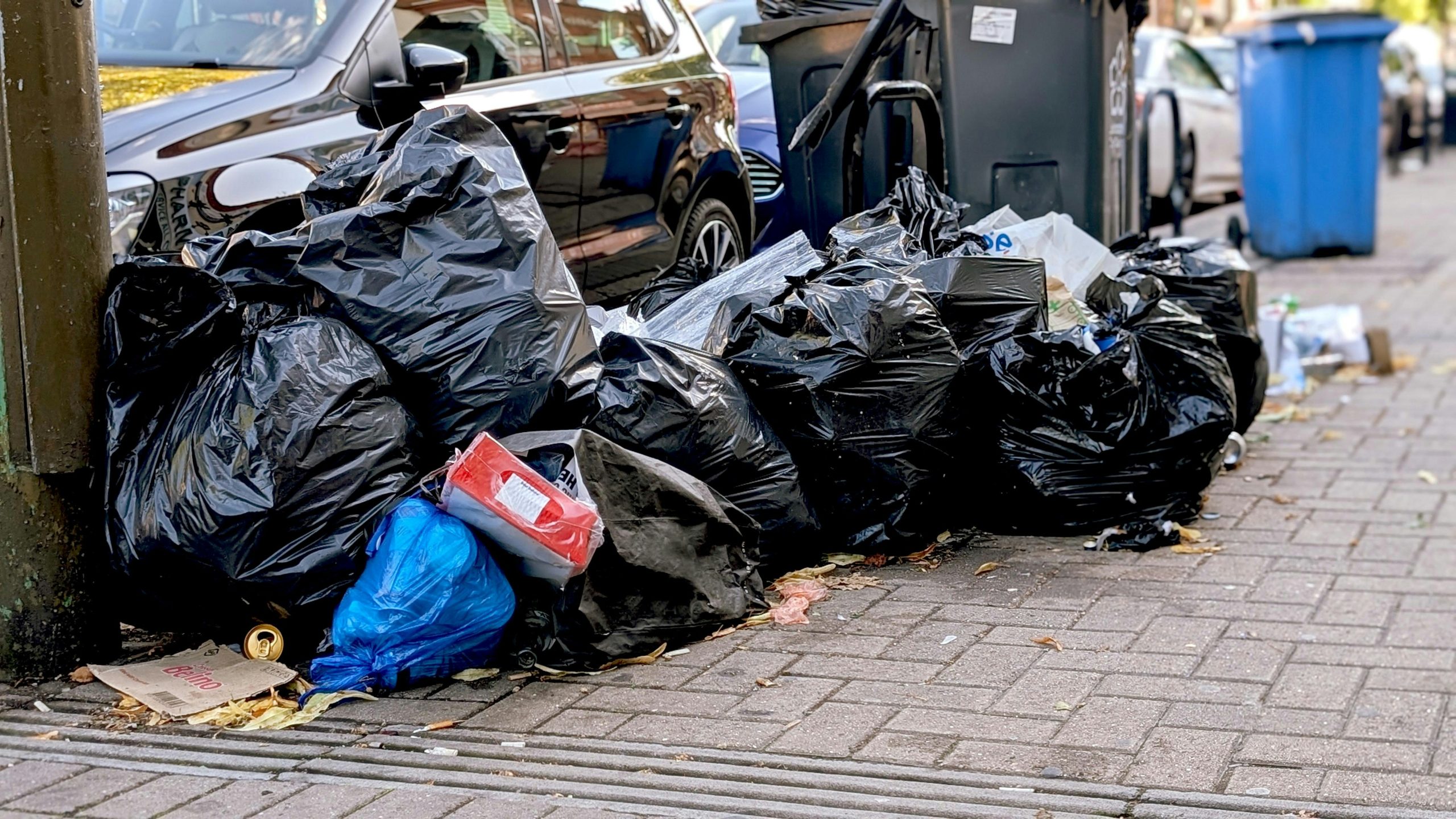
Over a year on, students are still being impacted by the rubbish flooding the streets
The walkout has cost the council, and in turn the taxpayer, over £14.6 million, which includes ‘street cleansing, mobile household waste and recycling centres, security costs and additional support.’ While last year, Lichfield District Council promised to help clear the waste from the city’s streets, this is a costly, temporary fix for residents.
Over a year on, students are still being impacted by the rubbish flooding the streets. Redbrick met with a few to discuss their stances and how they have been impacted.
Overall, students have expressed their dismay at the lack of resolution to the matter. Zoe Lucaski, a third-year student, noted that the waste makes her walk to university ‘miserable,’ with a noticeable increase in rats and mice that make her feel ‘unsafe’ and wary of the spread of disease.
Second year student, Jennifer Sawitzki, shared her general disappointment at the situation with Redbrick: ‘It is a shame to see that the council would much rather waste money on costly agency workers instead of admitting they were wrong to cut the pre-existing bin workers’ (already low) pay. This job is essential, and the government is wasting more money on preventable problems caused by the waste buildup, e.g., fires (two of which happened on my street over the last year!) and health problems. The state of Selly Oak and wider Birmingham is a perfect representation of how much the council prioritises us and their bin workers.’
Despite ongoing negotiations with Unite, many workers remain ‘rock solid’ on their plans for industrial action
However, it is not just students impacted by the city-wide disputes. Bishop Dr Desmond Jaddoo spoke with the BBC in support of a protest later this month, calling on the council to end the industrial action and settle a deal with Unite. Unite said the strikes would continue indefinitely until a ‘fair deal’ was made with Birmingham City Council, and the authority said it would begin a ‘fortnightly rubbish collection’ in the summer while they continued striking. The bishop told the BBC, ‘This situation can no longer be tolerated,’ and urged the council to respect its workers, residents and taxpayers alike.
Despite ongoing negotiations with Unite, many workers remain ‘rock solid’ on their plans for industrial action. While voluntary redundancies have reduced the 370 union members taking industrial action down to 275, there is much progress to be made. In a statement, the union said: ‘There will be no end to the strikes until there is a fair deal for Birmingham’s bin workers.’
A ‘clean our city’ protest has been organised for January 27th, outside the Birmingham Council House at 12:30 GMT, prior to the full council meeting. The union hopes the protest will encourage the council to take accountability and move towards resolving the issue. For those living in Birmingham, a long-term solution feels a long way off.
Searching for more articles? See below:
Why Are The Bins Still Like That?
Bingate: A Timeline of Everything that has Happened (or Lack Thereof)
City-REDI marks ten years of shaping regional economic policy
Comments