Life&Style writer Becca Smith explores how discourse surrounding “performative males” may be overshadowing bigger societal issues
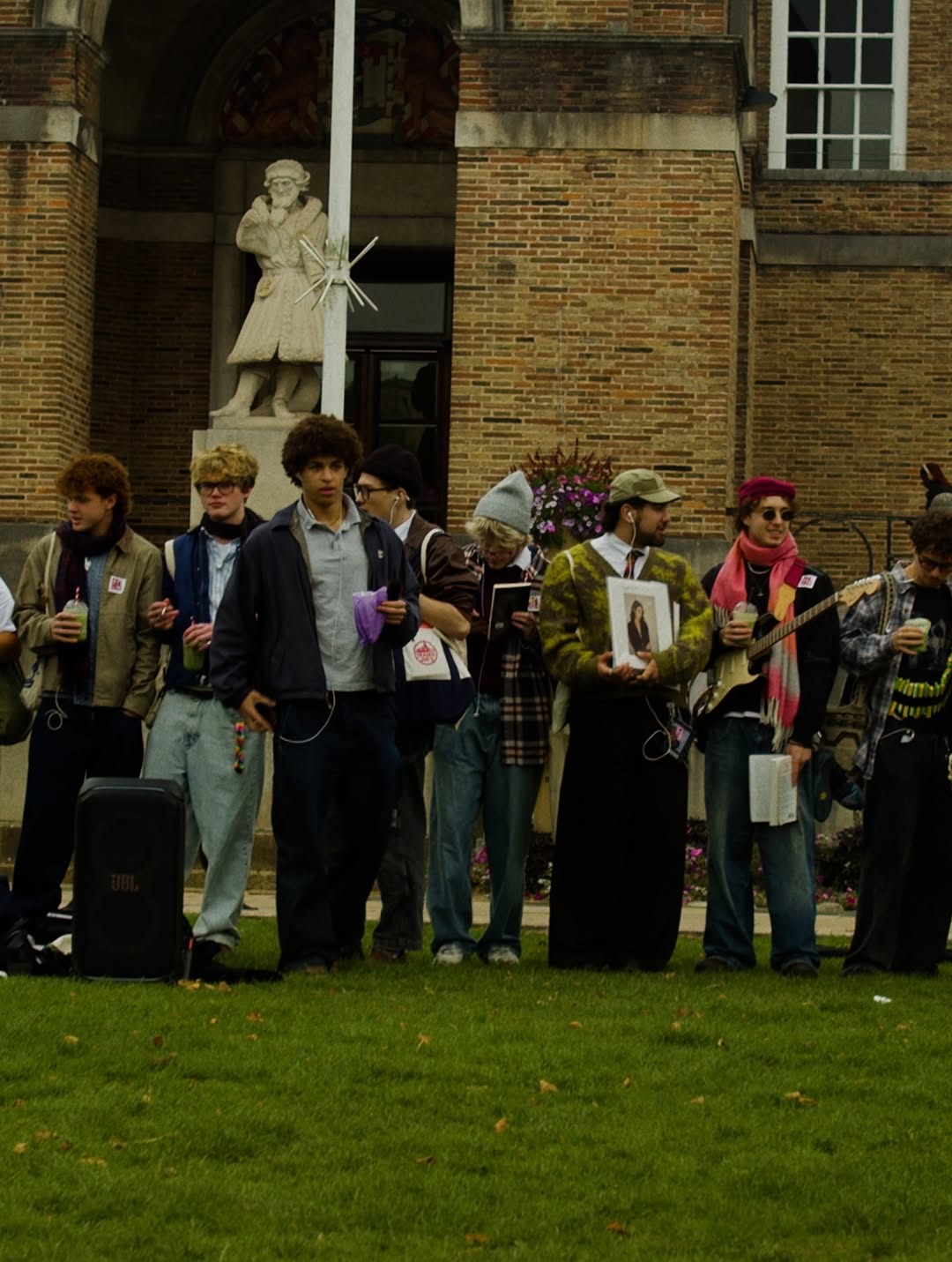
“Performative Males”: those men you may spot carrying ethical-brand tote bags, reading feminist literature, or solemnly sipping a matcha, are the latest subculture being gleefully ridiculed on social media. Are they truly red flags, cynical panderers to the female gaze? Or is the internet simply bored and in need of a new man-shaped chew toy?
Picture it: you’re on the Tube, minding your own business, possibly trying not to breathe too deeply because the carriage smells of despair and Pret. Opposite you sits a man with a single dangly earring (always one, never two) like a pirate who’s recently completed a gender studies module. Resting on his knee is the inevitable tote bag, probably from an indie bookshop that doubles as a café. Attached to it are earnest badges: “Smash the Patriarchy”, “Decolonise Everything”, and perhaps a small illustration of a sad frog wearing Doc Martens.
The pièce de résistance: he is reading The Will to Change by bell hooks, held at an angle clearly optimised for maximum passenger visibility. And if, God help us, you were to glance over at his Spotify queue, you would find Clairo, Phoebe Bridgers, or a playlist titled something like “softboy autumn”.
This, we are told by TikTok, memes, and lifestyle publications from GQ to The New York Times, is the performative male: the new type of allegedly problematic man to avoid. He is a feminist, but may, according to the internet, be equipping this label purely to appeal to women.
Which is, of course, shocking. Imagine: a human choosing clothing and accessories to appear attractive to the people they want to sleep with. Revolutionary. Frankly, I would never. I leave the house each day looking exactly as I feel inside: slightly damp and desperately confused.
Some of the “red flags” associated with the performative male are bafflingly specific. He is frequently described as having big, luscious curls. He always drinks matcha, ideally blueberry iced. He wears Labubus, an item I had to Google because I assumed it was either a niche indie brand or a fungal infection.
Some of the “red flags” associated with the performative male are bafflingly specific
My reaction to this trend was simple: if the great cultural menace of our time is a man drinking matcha and reading Bell Hooks theatrically, then frankly, we’re doing okay.
As Dr Juliet Williams, professor of gender studies at UCLA, points out, the performative male is “really not at the top of the list” when it comes to global concerns. This is academic shorthand for: “Please, I beg you, stop catastrophising the man with the tote bag; civilisation has bigger issues”.
The performative male is “really not at the top of the list” when it comes to global concerns
And she’s right. While we’re busy mocking men for aligning themselves with softness, compassion or (heaven forbid) feminist literature, the wider cultural landscape is being swallowed by a not-so-subtle backlash. The President of the United States is perhaps the embodiment of toxic masculinity, and the surrounding ecosystem (Joe Rogan, Andrew Tate and the wider “Manosphere”) has been pumping out gender regression at industrial levels.
It’s not merely anecdotal. A recent Movember Institute study found that more than two-thirds of young men in the UK, Australia and the US consume content from “male and masculinity influencers”. Of those, 80 per cent think men should be providers, leaders and bosses, and 76 per cent believe men should be heads of their families. The real emergency, then, may not be the lad with the wired headphones.
Against this fireworks display of gender panic, Williams questions the logic of undermining a man who dares – dares! – to show interest in a non-toxic version of masculinity. Mocking the performative male for being “manipulative” or “just performing” doesn’t necessarily come from a desire for authenticity, she argues. Instead, it’s appearing at a cultural moment when masculinity is “doubling down,” trying to retreat into the safest, hardest, least emotionally complicated version of itself.

But even as this critique unfolds, it’s quickly absorbed into a familiar media pattern: the churn that produces an industry of “experts” offering warnings about how women can spot dangerous performative males. One such coach warned that these men are a threat because they “speak the language of emotional availability but doesn’t practice it”. What is the language of emotional availability? Is it English with more sighing? Does it require Duolingo?
The supposed red flags include a constant need for external validation, a mismatch between words and actions, and avoidance of real vulnerability – traits so broad that they apply to almost every living adult. What any of this has to do with drinking matcha remains a mystery.
And so, we arrive back at the real issue: a small but profitable industry is capitalising on the anxieties of young women, encouraging fear, suspicion, and sweeping generalisations. It’s easy content. It’s clickable. But it also quietly suggests that one can avoid heartbreak by analysing a man’s beverage choices, which is, frankly, optimism bordering on medical delusion.
A small but profitable industry is capitalising on the anxieties of young women
Of course, unpleasant people come in all aesthetics. Some toxic men wear Daunt Books tote bags; some lovely men wear tracksuits and eat Rustlers burgers. Humans are complicated. If we decide that every tote bag is a warning sign, we’ll end up misjudging many fundamentally decent people.
Sometimes a man holding bell hooks is simply trying to be better. If he angles the book cover dramatically toward you while doing it, well… perhaps he’s performing a bit. But then again, aren’t we all?
Looking for more? Check out these:
Spotlight On: Victoria Secret’s Fashion Show 2025
Comments