Culture Writer Ociarna Davy reviews Lewis Buxton’s Mate Arias, commending his sonnets for their grounded commentary on the complexities of male friendships and mental health
Lewis Buxton’s anthology Mate Arias unveils the intricacies of male friendships, granting readers an exploration of the dynamics between Buxton and his closest friends. This is presented through a backdrop of pints, football and fancy dress. The collection is formed of twenty-three sonnets spanning over a decade of camaraderie and sociability between men.
There is a noted importance on what is not said between friends — the times that are spent with loved ones when quietness fills the room and invites the mind to wonder. Buxton illustrates the natural and sometimes uneasy emergence of thoughts that query the standings between himself and his friends. This includes the struggles of finding a set definition for his relationships, especially in determining the term that suits the category of male companionship. This is to question if ‘friend’ is the most agreeable term, or if other colloquial labels such as ‘buddy’ or mate’ better compile the fondness and amiability of brotherhood.
There are consistent call-backs to the familiar settings where Buxton’s friendships first kindled their fires — in pubs and bars drinking ale, cold nights spent watching football matches, and casual cinema outings. He explores how these early memories sparked a subsequent continuity in friendship, stretching from their younger years into adulthood and kept alight.
There is a noted importance on what is not said between friends
Each sonnet shares a theme of mental health struggles, featuring various degrees of intensity. However, there are several poems that speak more specifically to the inner turmoil of finding your footing, as well as sense of belonging in the face of social pressures concerning masculinity. Can therapy be sought over drinks in the pub? Or maybe with bouncers in front of clubs? What does it mean to be a good husband? How can a collective be defined, now that their Sundays are spent trudging along nature trails, instead of sat behind the bubbles of their pints?
The use of pseudonyms for Buxton’s characters may simply suggest a desire for anonymity. However, their placement within evocative imagery and poignant metaphors give the names a strong sense of grounding and realism. Furthermore, he earnestly builds and welcomes an immersive space for readers seeking relatability. Even in bleak settings, he constructs emotionally attuned stories: the lasting scars of bullying, overlooked memories of lost friends, and the increasing, burdensome realisation of our ageing bodies.
There are several poems that speak more specifically to the inner turmoil of finding your footing, as well as sense of belonging
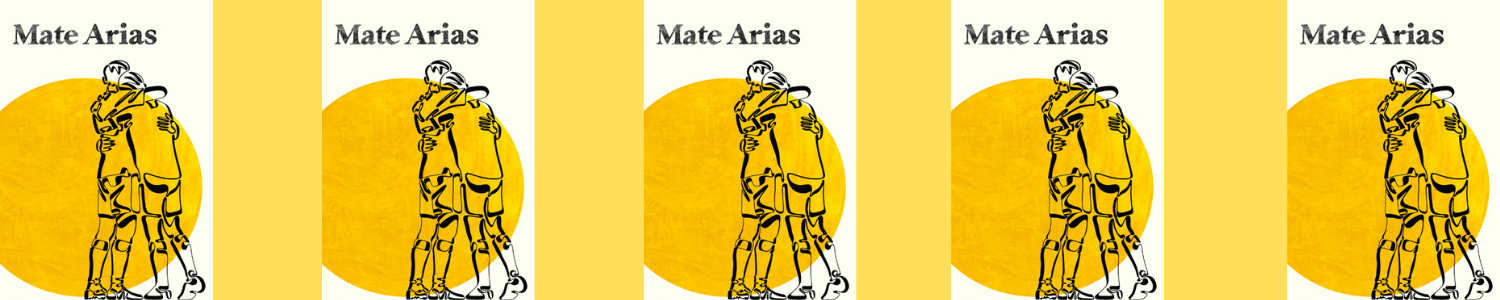
Buxton’s use of pop culture is a wonderful insight into his personality and those close to him — the hilarity and irony of fancy dress in a stag-do gone wrong and the affinity to interpose himself into the likes of Marvel and DC Comic universes. Designed by Mark Andrew Webber, the cover of Mate Arias features an embrace between two people sporting football kits; perhaps, this symbolises a brief moment of intimacy between friends on the field. The image represents that it is not only in the tussle of the sport where limbs entangle and heads are drawn near, but also the infrequent display of affection in male friendships.
Mate Arias was published July 2025 and is available to order on The Emma Press. Buy your copy here.
Enjoyed this? Read more from Redbrick Culture here!
Theatre Review: Marriage Material
Comments