Gaming Writer Jake Riley-Cross takes a shot at a retro-inspired FPS game with an arcane twist
Doom (1993) is inarguably one of the most influential video games of all time. A few years after its release, more computers supposedly had id Software’s second FPS installed than Microsoft’s own Windows 95.
Even the largest library in the world recognises its undeniable impact on the video game medium. The Library of Congress initially selected Doom as one of ten games for preservation in the ‘game canon’.
Love letter to games of a bygone era
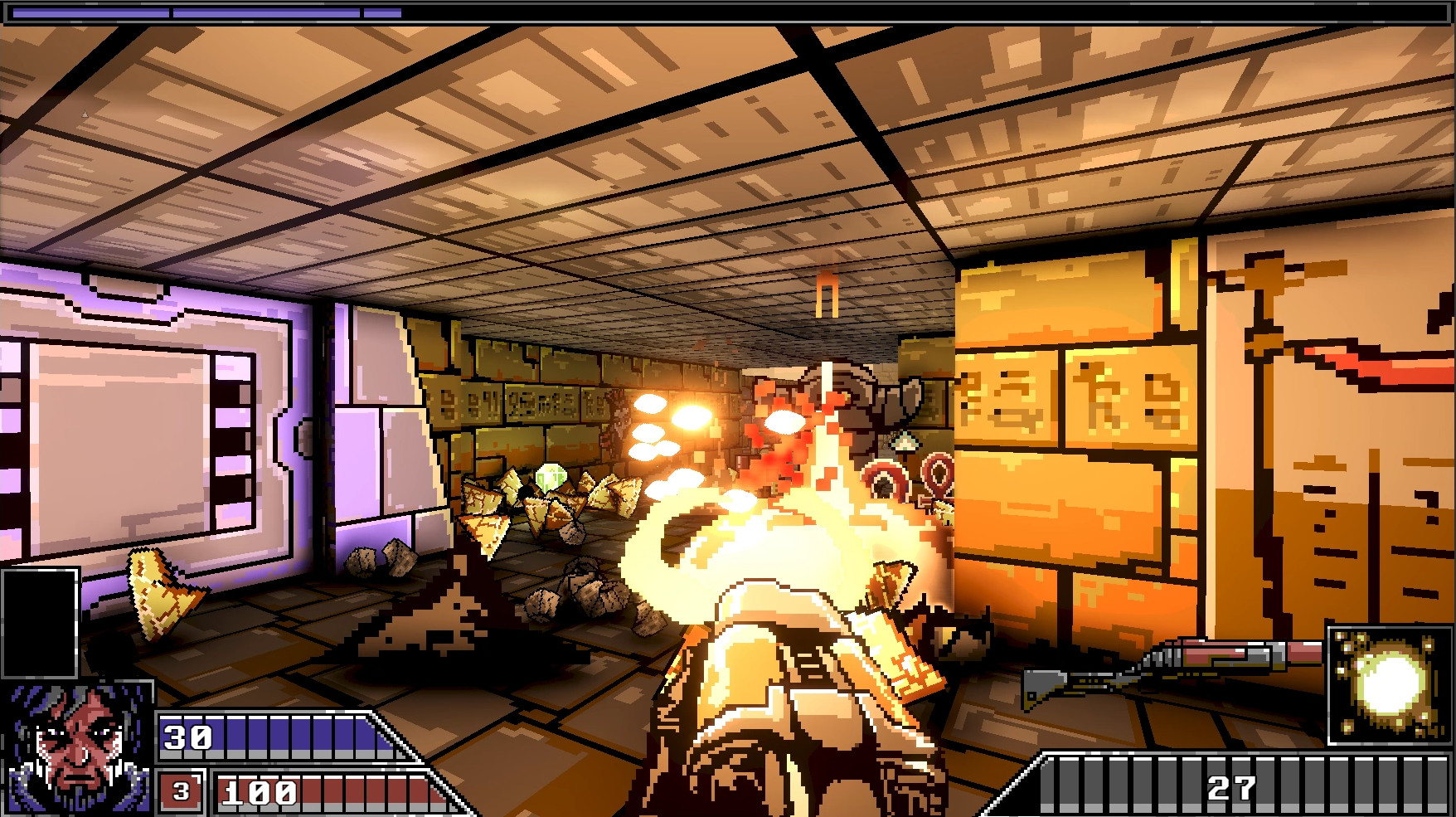
Doom‘s inspiration is more tangibly visible in the fairly modern genre of ‘boomer shooters’. Project Warlock is one such game, developed by Buckshot Software as a love letter to games of a bygone era like Doom and Wolfenstein. Despite its several positive qualities, however, the game sometimes stumbles and seemingly lacks some refinements.
For fans of the originals, Project Warlock is certainly a worthy option. While most of this genre’s contemporaries attempt a modern reimagining, Project Warlock aims to reproduce that retro experience.

The game wears its inspiration proudly
A playthrough of the campaign has a very Doom feeling to it, for lack of a better phrase. The game wears its inspiration proudly between its sprites, faux-3D enemies, doors with multiple locks, and secrets hidden behind walls.
That said, Project Warlock is far from a straight copy, evident by the inclusion a magic system. Players may choose from several spells tied to a mana resource to deal with hordes of monsters effectively.
It is a welcome addition to the formula, yet in practice, it lacks an impact that fails to match its high cost. Spells are often more powerful than a gun, but feel less exciting and as though they should be used sparingly.

A trend of underwhelming innovations
Unfortunately, the game has a trend of underwhelming innovations, including a lackluster stat upgrade system and shallow hub level. However, weapon upgrades are an outlier to this trend — a charming way to encourage and reward repeat playthroughs.
Each type of weapon has two mutually exclusive upgrades, potentially inspired by the weapon modifications in the reboot Doom (2016). For example, submachine gun upgrades transform it into either a nailgun with ricocheting nails or akimbo submachine guns.
Upgrade choices are permanent for the current playthrough, adding variety to future playthroughs. Furthermore, the drastic changes in function inspires players to experiment, even with weapons they were previously not fond of.

Perhaps the least changed aspect is the boss battles at the end of each of five episodes. This is a puzzling choice, given the effort put into enemy variety across each episode to spice things up.
[Boss] fights all boil down to standard bullet sponges
Some enemies summon smaller minions until killed, others shield themselves, and some simply charge towards you. Good play involves efficient target prioritisation and effective strategies against each kind of enemy.
However, this does not appear to translate to boss fights. Besides the second boss, which has a mild gimmick of multiple secondary targets, the fights all boil down to standard bullet sponges from the 90s, which I find disappointing.
The bosses have multiple moves and phases, but fail to pose much threat or meaningfully change the flow of gameplay. I find this strange considering the variety implemented in other areas of the game.

Project Warlock is not without its charms, and is a fairly solid interpretation of a Doom-style game. However, it ultimately feels too derivative and needs more expansion, changes and polish to stand strong on its own legs.
A fun time for those already a fan of retro FPS games, but sadly hard to recommend otherwise.
Rating: 5/10
Gunning for more reviews? Look no further:
Things Aren’t Right in Scarlet Hollow, And That’s Exactly How It Should Be
Comments