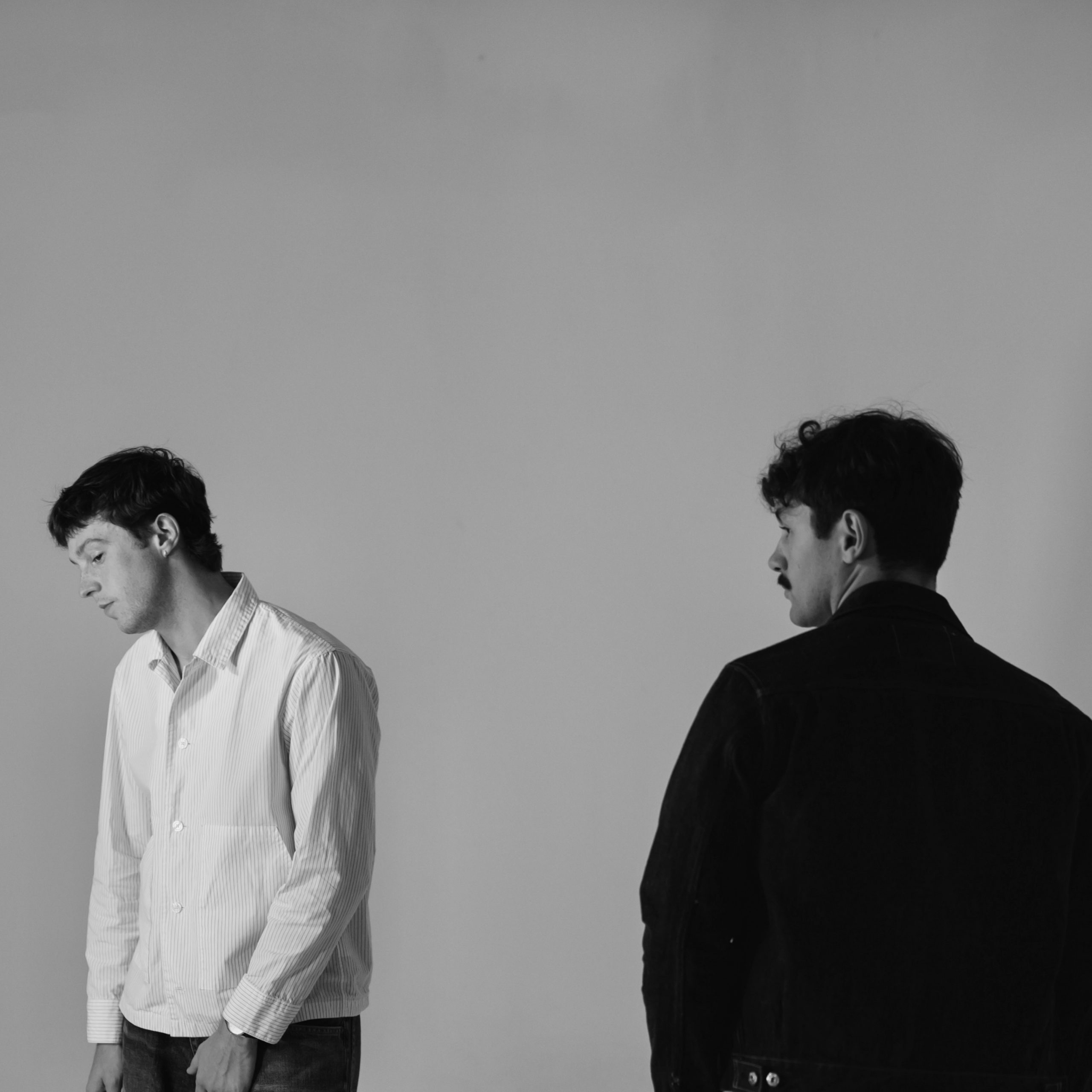
Music Editor Liza Glushak interviews Alex and Ruben of remote, diving into the band’s early days, heteronormativity, and the duo’s artistic process
remote is a genre-bending band taking its roots in Manchester, consisting of duo Alex and Ruben. The two formed remote in 2020, just in the closing weeks of sixth form, and almost immediately, the pandemic began. So their music-making, for the moment, was quite literally ‘remote’. Now, they have released ten singles and an EP, and are set to release their latest EP, Something Human, on the 21st of November.
Redbrick: Let’s start at the beginning: you formed this duo in the closing weeks of sixth form – how exactly did this come to be? How did you discover each other?
Ruben: We both wanted to do music separately at the time, and I was always producing and trying to work with more singers – I’ve been a drummer for years. Though I’d work with different people, it just wouldn’t go anywhere. I’d have three sessions with one person and get bored. Then there was a lunchtime slot in our college where bands could play in a canteen, and one time I saw Alex singing and thought: he’s actually good! Oh wow! And so we exchanged information and started showing each other music, and as we just about started to talk about getting a studio, there was the lockdown.
Alex: We spent the whole of lockdown teaching ourselves production and emailing back and forth over WeTransfer, and that’s how the name ‘remote’ came along. Then we went to separate universities and saw each other every so often, but we were still finding it difficult to find gigs with the COVID protocol. Once we finished university, we decided to dedicate ourselves entirely to the band, write loads of material and put it out.
We spent the whole of lockdown teaching ourselves production and emailing back and forth over WeTransfer, and that’s how the name ‘remote’ came along.
Tell me a little bit about the experience of starting a band during the pandemic – the highs and lows.
R: We developed a lot of techniques that we still use. Whenever we have restraints, it builds new solutions, and we love that. Which is why, during the pandemic we didn’t buy any plug-ins or any effects, we just used logic stock. We always look back to COVID as a time that set up the foundation for what we can do now.
A: Also we weren’t thinking of music as a career and our degrees were our priorities, whereas now the perspective has changed because it’s a full-time job. So we have a lot more focus and creative direction in which we want to take it.
How did you navigate being geographically separated, as you both went to different universities?
R: We were lucky that our styles are quite similar anyway, so a lot of times the choices we’d make independently would match each other.
A: Usually, we would add one step each, and it’d feel very natural. The only problem was that it was really slow. It wasn’t necessarily worse, and though you can bounce off energy way faster when being in the same room, the speed was really the only problem.
R: ‘aMeRiCa’, which was our first track, took ages, almost a year to put out. It was a first for us in terms of absolutely everything; we didn’t even know what mixing was. Now, with songs like ‘5000 miles’, that maybe took about ten days from start to finish, because we had the proper space and time.
It was a first for us in terms of absolutely everything; we didn’t even know what mixing was.
‘aMeRiCa’ was about the experience of growing up in an environment influenced by American media – do you feel like there is a specific character to the British indie music scene?
R: Britishism has more grit. Especially the Manchester scene. There was a point for us where we avoided any massive edits on the drums or the guitar, which is very much inspired by the Manchester scene. American music can sound more producer-heavy and polished.
A: It’s interesting because all of the breakthrough British artists in America, like PinkPantheress or Olivia Dean at the moment, what makes them so intriguing is the authenticity that comes across. I don’t know if that’s biased, and because I myself am British, but I think there is a mix of relatability and introspection that draws people in.
Manchester is one of the UK’s central music hubs. Is there any sense of competition that can be felt amongst musicians?
A: We haven’t come across many people from whom we could sense a competitive nature. I think if you’re a good-hearted musician, you don’t really strive for competition, because your main purpose is to be creative. Creativity is so individual, and so there’s nothing to compete about. Like you can’t have a snail competing with an apple. It’s just two completely different things.
I think if you’re a good-hearted musician, you don’t really strive for competition, because your main purpose is to be creative.
How do you know when to stop going back and polishing a track, and that it’s ready to be out?
A: Some of the best songs we do are the ones that come quickly. If something comes easily, then that’s what should be, and it’s a good example of you as a musician. Letting go of perfection has been a big thing.
R: There were a lot of times where we felt we needed a perfect microphone, perfect set-up, but now and again we’d record something completely wrong, and that would end up in the final take. For example, I went down to London to see a friend who’s a fantastic cellist. I wanted to record a little bit of her playing to feature in the song ‘Company’, and I just completely forgot all my equipment, so I had to record on stereo voice notes on my phone. That ended up on the final track with not much editing, and I always think back to that when we start overthinking.
Your most recent track, ‘The Party’, explores the themes of feeling isolated at a party – could you both recount your first ever house party experience?
R: I remember saying to myself as I walked in, ‘Why are there red cups?’ I remember seeing red cups in American films, and I just thought, ‘Oh no…’ Before that, my friends and I would have get-togethers quite a lot, but it never became a full party, up until I saw that first red cup. There was also a party during Freshers Week, where I walked through the front door, turned left, and saw the sight of three couples making out on a three-person sofa, all sitting next to each other, and then immediately after, I saw someone vomit on the stairs.
A: People were just drinking way too much, getting with people, and so the main crux of the song is sitting in a corner as everyone is necking on around you, and you just think, ‘What, am I ugly, what’s going on?’ [laughs] It’s really about feeling unsure of yourself and what you want in someone, feeling substandard. When we came up with the concept, it was only really in our heads, but now many people have expressed to us that they can really relate to that feeling, which is really sweet.
…the main crux of the song is sitting in a corner as everyone is necking on around you, and you just think, ‘What, am I ugly, what’s going on?’
You also reflect on heteronormative expectations. Could you expand a little on that?
A: I’m a queer person, and writing ‘The Party’ was putting myself back in the shoes of a younger me who didn’t quite know what that meant, was unsure how to react if a girl came up to me, because I wasn’t yet sure of what I even wanted out of a person. All the guys and girls were getting with each other, whether they really enjoyed it or not, just because they wanted to be liked. That was a particularly challenging emotion – doing things for the approval of others, and I only really figured that out as I got older and understood myself better.
If you had to describe your upcoming EP in three words, what would those be?
A: Experience, reflection, development. We’re trying to make more upbeat songs to get people dancing when we’re playing.
R: We’re always going to write what comes to us at the moment, and it’s difficult to explain things in just a few phrases, because it’s a mix of genres and sounds.
Do you each have a favourite song on the album?
A: ‘No News’. It’s a little bit more indie.
R: ‘Football Song’, just because it was great fun how that song came to be.
And what are you most looking forward to in the future?
We’ve got a gig in Yes Bar on November 19th, which is our favourite venue. We’ve got another song that we’re working on as well, and that’s really exciting as well.
remote’s new EP is coming out on November 21st, listen to them here.
You might also like:
Comments