When Walt Disney’s Cinderella premiered in 1950, America was in the midst of profound cultural transformation. The war was over, the Baby Boom was underway, and television was just beginning to glow in the corners of living rooms across the country. Against this backdrop of renewal and uncertainty, Disney’s third full-length animated feature was more than just a fairy tale — it was a lifeline.
Disney’s third full-length animated feature was more than just a fairy tale — it was a lifeline.
Following the enormous success of Snow White and the Seven Dwarfs in 1937, Disney struggled throughout the 1940s. World War II had disrupted overseas box office earnings, and a series of experimental features (Fantasia, Bambi, Pinocchio) had received mixed commercial returns despite their artistic ambition. By the end of the decade, the studio was facing a dire financial crossroads. Disney needed a hit desperately.
Cinderella was that hit.
It was both a return to the familiar princess format and a technical tour de force that blended traditional hand-drawn animation with newly refined techniques such as live-action reference footage. The animators filmed actors performing key scenes to serve as a guide, a strategy aimed at saving both time and resources.
The result was a film of extraordinary polish and emotional resonance, one that recaptured the public’s imagination and, crucially, brought in the revenue Disney needed to fund future projects. With Cinderella, the studio was not only reborn, it was redefined.
From the first musical note to the final sweeping shot, Cinderella evokes a tone of quiet dignity. Unlike the more outspoken heroines of later Disney films, Cinderella is not a firebrand. Her strength lies in her calm endurance, her unshakable kindness, and her faith that things will improve. She is, in many ways, a reflection of postwar America: tired, tested, but stubbornly optimistic.
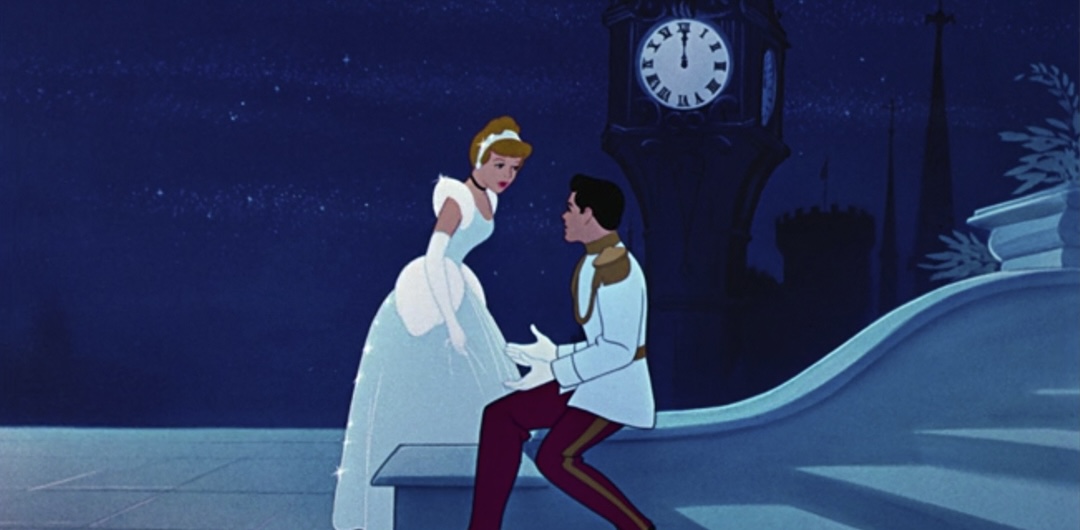
The animation complements this emotional core. The backgrounds are dreamlike: soft pastels and deep blues that create a sense of a world just slightly out of reach. The animators, led by legends such as Marc Davis and Frank Thomas, used restraint rather than excess. Every movement, every facial expression, is deliberate and emotionally true.
Particularly notable is the transformation sequence, one of the most iconic moments in animation history where ordinary objects become magical with a few flourishes from the Fairy Godmother. This scene is not just technically impressive but emotionally cathartic: a reward for endurance, a visual metaphor for hope realised.
Much has been said about Cinderella as a character. She’s often mischaracterized
Much has been said about Cinderella as a character. She’s often mischaracterized as passive, but in truth, her strength is in her endurance, her composure, and her refusal to become hardened by mistreatment. She dreams not of wealth or revenge, but of freedom, dignity, and love. She is graceful without being fragile, resilient without being defiant. This quiet strength sets her apart from both her tormentors and many fairy tale leads of the time.
She is also genuinely kind: not saccharine or naive, but principled. Her care for the animals in her life, her ability to find joy in small moments, and her calm wit all lend her complexity beneath the surface simplicity.
While the central narrative is focused and emotionally rich, Disney adds levity through a host of animal sidekicks. Chiefly, the lovable mice Jaq and Gus, and their ongoing battle with the household cat, Lucifer. These characters do more than fill space: they provide charm, humor, and a sense of found family. Their subplots are interwoven with the main story and often mirror its themes of underdogs persevering against impossible odds.
The Fairy Godmother, whose presence is brief but iconic, infuses the story with magical warmth. She represents hope and timing, showing up not to fix everything, but to offer a nudge at the right moment. Her magic sparkles not just on screen but in the story’s structure: the shift she triggers feels like a reward for Cinderella’s patience, not a deus ex machina.
Over the past 75 years, Cinderella has evolved from a single film into a cultural archetype.
But it’s impossible to discuss Cinderella without noting its music. The film’s songs are deceptively simple, often structured like lullabies or daydreams. Yet their staying power is immense. “A Dream Is a Wish Your Heart Makes” became an anthem of sorts for the studio itself, appearing in theme parks, fireworks shows, and modern reinterpretations.
The score, composed by Paul J. Smith and Oliver Wallace with songs by Mack David, Al Hoffman, and Jerry Livingston, walks a delicate line between whimsical and wistful. It’s not just catchy, it deepens the emotional world of the film, adding texture to what might otherwise be a straightforward fairy tale.
Over the past 75 years, Cinderella has evolved from a single film into a cultural archetype. It has inspired books, merchandise, and several remakes, most notably the 2015 live-action adaptation. But the original remains definitive. Not because it is the flashiest or the most progressive, but because it touches something universal.
For first-time viewers, it’s a window into the power of traditional animation to tell deeply human stories. For returning audiences, it’s a reminder that grace in form and in character is a kind of quiet revolution.

Comments