Film Critic Cassandra Fong revisits Kill Your Darlings, seeing in it a film that resonates deeply with contemporary audiences

Kill Your Darlings (2013), directed by John Krokidas, is a period drama that explores the early lives of the Beat Generation’s most famous literary figures. Based on true events, the film weaves a tale of youthful rebellion, intellectual awakening, and emotional entanglement that culminates in a real-life crime. Although it received modest attention upon release, the film has found renewed cultural relevance in 2025 through its prescient themes of identity, counterculture, and the enduring tension between conformity and authenticity.
the film weaves a tale of youthful rebellion, intellectual awakening, and emotional entanglement that culminates in a real-life crime.
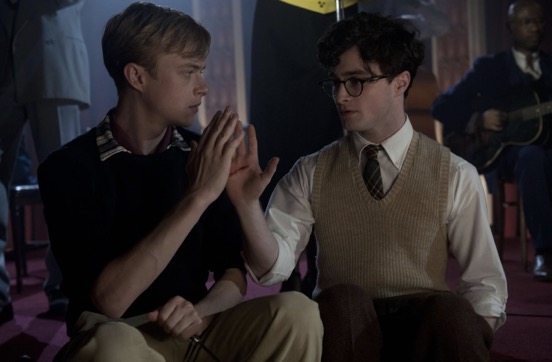
Set against the ivy-covered walls of Columbia University in the early 1940s, the film doesn’t just tell a story—it exposes one. At the centre is a young Allen Ginsberg, portrayed with quiet intensity by Daniel Radcliffe, as he arrives on campus and finds himself swept into a storm of intellectual rebellion led by the enigmatic Lucien Carr.
Lucien, played with magnetic volatility by Dane DeHaan, isn’t just another bright student. He’s a firestarter—a provocateur who challenges authority, bends minds, and, as it turns out, leaves a trail of trouble behind him. His relationship with Ginsberg is both deeply personal and ideologically charged, pulling the young poet into a world of literary radicalism and emotional risk.
As the film unfolds, viewers are introduced to familiar names—Kerouac, Burroughs—not as legendary figures, but as flawed, searching young men. Kill Your Darlings isn’t a nostalgia piece. It’s a coming-of-age story sharpened by the threat of real-world consequences, all set against the backdrop of a society not ready for the ideas these men were about to unleash.
Director John Krokidas makes a bold debut, crafting a stylish yet grounded portrait of youth on the edge. His visual style is smoky and intimate, matching the film’s tone: beautiful, troubled, and simmering with tension. Period details are carefully woven in, but they never outshine the raw emotion that drives the narrative forward.
The film tackles issues of sexuality, identity, and mental illness with a maturity that refuses to look away.
Radcliffe’s performance is a revelation—not flashy, but deeply human. He plays Ginsberg as a young man caught between the safety of tradition and the thrill of breaking every rule he knows. Opposite him, DeHaan is electric—unpredictable, seductive, and, at times, terrifying.
There’s no sugarcoating here. The film tackles issues of sexuality, identity, and mental illness with a maturity that refuses to look away. And just when you think it’s settling into a moody coming-of-age tale, Kill Your Darlings delivers a chilling turn—one based on real events—that reframes everything that came before it.
More than a historical drama, Kill Your Darlings is a film about the cost of becoming who you are in a world that demands conformity. Its exploration of rebellion, queer identity, and the psychological toll of artistic pursuit feels more relevant in 2025 than perhaps it did in 2013. As audiences continue to seek stories that challenge and inspire, Kill Your Darlings stands as a haunting, beautiful reminder that some voices are forged in fire—and some truths are only spoken when everything else is at risk.
More from Redbrick Film:
Redbrick Rewind: Lost in Translation
Comments