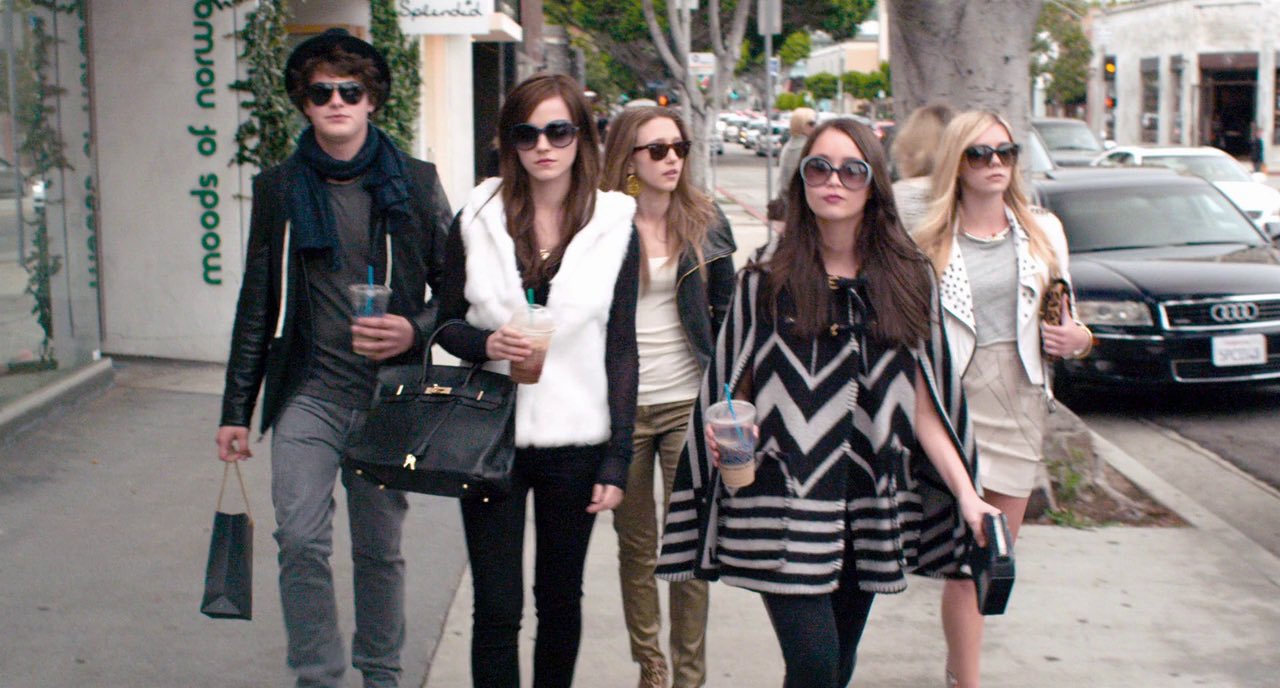
Film Critic Cassandra Fong revisits Sofia Coppola’s The Bling Ring, seeing it as a mirror into modern celebrity culture

Sofia Coppola’s The Bling Ring is less a traditional crime story and more a mood—a hypnotic drift through the glossy surfaces of modern celebrity culture. It’s a film that sparkles with diamonds and detachment, whispering rather than shouting, letting you drift inside its world like smoke through a cracked window. Based on real events, it could’ve been salacious, sensational, fast. But in Coppola’s hands, it becomes a dreamlike meditation on image, desire, and the soft emptiness that lies beneath a perfectly filtered life.
Coppola invites you into a surreal Los Angeles, where every moment feels poised for Instagram
From the very first frame, Coppola invites you into a surreal Los Angeles, where every moment feels poised for Instagram, and every teen seems to float just slightly above the ground—buoyed by fame’s gravitational pull. There are no loud morals, no harsh judgments. Just beautiful kids moving through beautiful houses, lit by the soft glow of stolen luxury. The camera drifts with them as if enchanted, capturing the stillness of glassy pools, the hush of high-end boutiques, the sterile perfection of celebrity closets. Everything is gleaming, untouched, as though the world has been dipped in gold and held in place.
The characters themselves—based on the real-life teens who burglarized celebrity homes in the late 2000s—are presented not as villains or heroes but as products of a culture that equates self-worth with style and fame with virtue. They are both empty and full: full of yearning, but empty of understanding what it means to actually be someone, rather than simply appear to be. Coppola captures that contradiction with aching clarity.
Emma Watson delivers a quietly brilliant performance as Nicki, a character so immersed in her own curated image that she speaks in motivational soundbites even when confronted with serious consequences. Her performance, like the film itself, is both razor-sharp and eerily weightless—funny, disturbing, and uncannily familiar. The rest of the ensemble blends seamlessly into Coppola’s world: they feel real, not exaggerated, with blank stares and half-smiles that say everything about the times they’re living in.
The Bling Ring is a mirror held up to the age of illusion. And like all good mirrors, it’s both dazzling and a little bit devastating.
Coppola’s strength lies in what she leaves unsaid. The Bling Ring doesn’t preach. It lingers. It observes. It captures a generation raised on celebrity blogs and reality TV, one that knows the layout of Paris Hilton’s house better than their own values. The film floats between fantasy and critique, mirroring the way social media itself can blur performance with identity. One moment, you’re laughing at their absurdity; the next, you recognize some part of yourself in their longing.
The soundtrack is a thing of its own—a glittery, pulsing mix of hip-hop anthems and melancholic electronica that perfectly scores the emotional contradictions on screen. It’s the sound of reckless nights and quiet comedowns, of a youth chasing something they can’t quite name.
In the end, The Bling Ring feels like slipping into a shallow pool at midnight—cool, luminous, and a little eerie. It’s not about what happened. It’s about why it happened, and what it says about all of us. About what we worship, what we chase, and how fame has become the modern fairy tale—shallow, addictive, and always just out of reach.
A meditation more than a movie, The Bling Ring is a mirror held up to the age of illusion. And like all good mirrors, it’s both dazzling and a little bit devastating.
More from Redbrick Film:
Redbrick Rewind: The Virgin Suicides
Comments