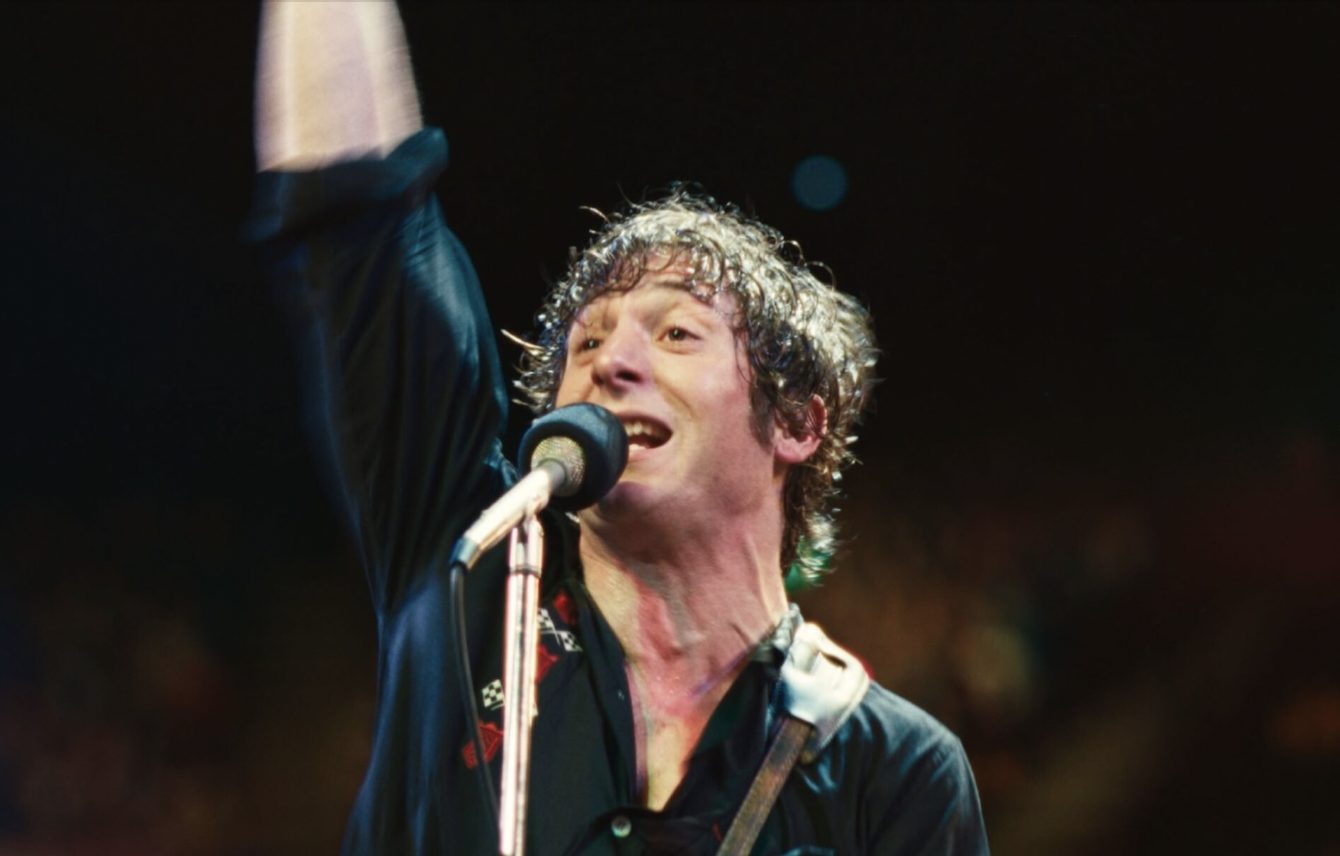
Film & TV writer Chris Watts reviews the new 2025 music biopic about Bruce Springsteen, praising it for giving the audience a fresh and deeper look into his life beyond being a Rockstar yet still keeping his music at the forefront
After a black and white prologue set when Bruce Springsteen (Jeremy Allen White) is around nine years old, the film opens with the final song of the final show of Springsteen’s record breaking tour, The River. The rest of the film, Deliver me From Nowhere has a very different energy, much more subdued and contemplative than your usual music biopic. It’s a nice change, a story that feels more real than the usual, strangely twisted stories built around a rise, a fall then a rise again. It is one of the film’s strengths. […] the film takes the time to examine Springsteen’s mental state as he struggles to come to terms with his past and his place in the world.
Following Springsteen as he returns to his hometown to begin work on his next album, the film takes the time to examine Springsteen’s mental state as he struggles to come to terms with his past and his place in the world. Whilst his manager (Jeremy Strong) tries to protect him from the studio executives, Springsteen begins a relationship with Faye (Odessa Young), whilst being haunted by memories of his father (Stephen Graham).
All of their performances are spectacular. Despite his relatively small screentime, Graham embodies the troubled nature of Douglas Springsteen; though he is aided by an excellent first performance from Matthew Anthony Pellicano, who plays a young Springsteen in the black and white Flashbacks. Strong’s performance is especially interesting, giving us an insight into how the rest of the industry sees Springsteen. The conversations he has with his wife (Grace Gummer) along with the compassion in which he views Springsteen, show a man torn between his friend and his work obligations.
But the actor who truly holds the film together is Allen White as Springsteen. For the vast majority of the film he sinks well into the role as his second biographical performance. While a few times he seems uncertain of the accent he intends to use, slipping back into his own. His physicality is what brings the character to life. He is a man hounded by demons, and you can feel the conflict within him even as he seems to enjoy himself. He even sings many of the songs himself, the film blending his performances with the real recordings. His imitation of Springsteen’s singing is very good, however once or twice the song playing over the top is quite obviously sung by Springsteen.
And for a film about the weight of performing, we get a good amount of it. We see Springsteen researching the material he used to write his songs, like reading newspapers about the killer Charles Starweather, or reading the short stories of Flannery O’Connor. We then get to see him record these songs, quiet scenes where the director, Scott Cooper really allows the songs to speak for themselves. And three or four times, almost as a break from the weight on Bruce’s shoulders, we get to see Springsteen playing with a local band at The Stone Pony, a venue famous for launching his career. He is a man hounded by demons, and you can feel the conflict within him even as he seems to enjoy himself.
That said, there are a few weak points. As mentioned, sometimes Allen White is uncertain of his accent, which can be jarring, especially early on. And as they take the songs into the studio, a number of the characters have lines which feel like they don’t belong. A few times people talk about losing their jobs if they fail to do what Bruce asks of them. It’s a strange moment that implies a personality other than the one Springsteen is presented to have through the rest of the film. It makes the scenes feel like they exist to give these characters more of a role, when they don’t really need it for the story.
The film brings out a new perspective on Springsteen, making the viewer appreciate him as more than just a Rock and Roll star, but reminding them that he is a story teller, and a human above all. A refreshing approach to the music biopic, and while the film possibly lost some of the nuisance present in the book by Warren Zanes, it’s a beautifully shot exploration of the struggles of an icon.
Rating: 4/5
More from Redbrick Film & TV:
Art or Artist: The Question of Tilly Norwood
Comments