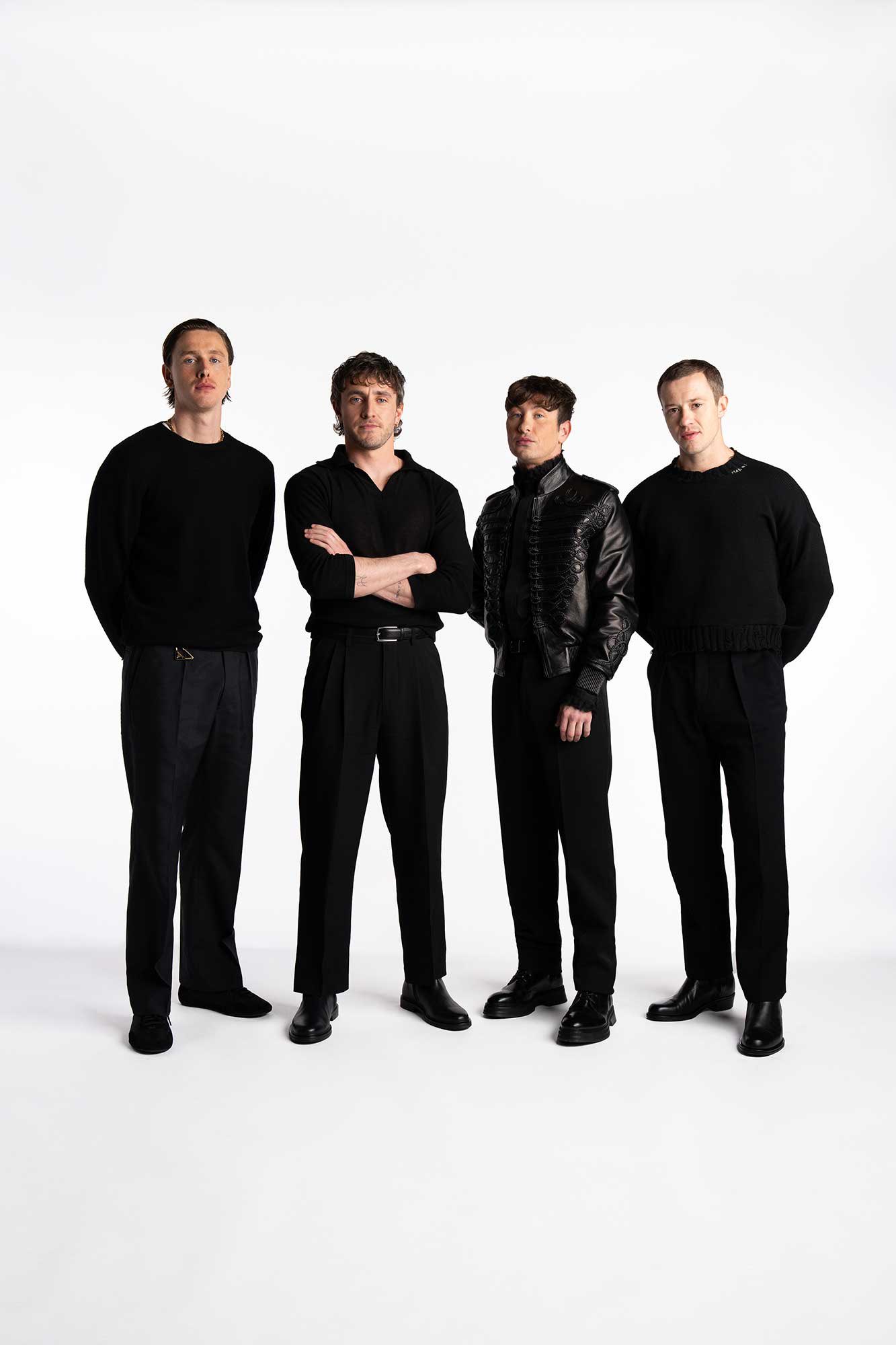
Film & TV Writer Kaia Bailey discusses Sam Mendes’ upcoming Beatles biopics, arguing that the opportunity to cast unknown Liverpudlian actors was missed
At CinemaCon 2025, Oscar winning director Sam Mendes stood on a stage in front of the world to announce a cast that would have many wondering the same thing: where are the Liverpudlian actors?
[Mescal’s] ubiquity raises a question which echoes across the rest of the casting: are we watching The Beatles, or a version of them filtered through the lens of modern-day Hollywood?
When I first heard Paul Mescal would be playing Paul McCartney in Mendes’ upcoming Beatles biopics, the choice seemed glaringly obvious and yet glaringly divisive. There is no doubt in my mind that Mescal’s acting talent will deliver a standout performance. His roles in Normal People, Aftersun, and many others have cemented him as one of the great emerging talents. Yet, Mescal’s lingering presence in modern-day cinema is hard to escape. His ubiquity raises a question which echoes across the rest of the casting: are we watching The Beatles, or a version of them filtered through the lens of modern-day Hollywood?
Barry Keoghan, Joseph Quinn, and Harris Dickinson will be playing Ringo Starr, George Harrison, and John Lennon respectively, completing a cast of four star-studded actors all with immense success already in major films. This casting is not designed to catapult new talent. Instead, I argue it is a cast intended to sell, to drive people to the cinema even if they have never heard of The Beatles before. Each actor brings undeniable skill. Yet, despite their talent, I and many other Beatles fans felt a sense of disappointment when seeing the casting announced. Not necessarily because these actors are unworthy or incapable, but because the decision felt like a missed opportunity to honour Liverpool’s legacy, elevating new voices from the very community that birthed the band.
The Beatles are a revolutionary band whose music transcends notes on a staff. Their sound is stitched into the fabric of modern music, and their legacy is inseparable from Liverpool. The city shaped them as much as they shaped it; singing through the cigarette smoke of The Cavern Club, the relentless Merseybeat circuit, the crowds of working Liverpudlians who filled those venues. Liverpool is not just a city where The Beatles learned to perform, it is a city where four lads on a stage became Liverpool personified.
Therefore, when Sam Mendes stood on the stage at CinemaCon and announced his cast, the choice felt less like honouring that legacy and more like ignoring it entirely. Mendes could have used this project to do what The Beatles themselves represented: taking a chance on four boys from Liverpool. The city is filled with young actors waiting for their big break, actors who understand Liverpool like The Beatles did. Casting established stars sacrifices authenticity: The Beatles’ story is the story of unknowns becoming icons. Mendes could have done what Brian Epstein gave four lads from the Cavern: a chance. Instead, he has cast actors Hollywood is already invested in promoting, choosing the safe bet, not the revolutionary one. Which leaves me in an odd position: criticising a project I desperately want to love.
Mendes could have used this project to do what The Beatles themselves represented: taking a chance on four boys from Liverpool.
I am approaching this as a fan, not a sceptic. Abbey Road is in constant rotation, and I have watched Peter Jackson’s Get Back more times than I care to admit. I want these films to succeed, and I want to see the band as they actually were. Mendes has committed to four separate movies for a reason, presumably because he could not contain their four distinct personalities into one appropriate length film. His ambition is exciting and daring. But what is ambition worth if the foundations are wrong.
Biopics themselves also have a troubled track record. Moments of genuine insight are often paired with repeating Hollywood cliches. Films like Bohemian Rhapsody and Rocketman both had instances which shined, most notably Rami Malek’s and Taron Egerton’s performances as Freddie Mercury and Elton John respectively. But they also faced criticism for their sanitisation of the troubled stars lives, turning messy, complicated lives into a tidy narrative arc. However, maybe that is the problem that all biopic movies face: life is not tidy, and Mendes’ challenge with these four films is finding a way to bypass the neatness. Many questions then remain about the direction Mendes will choose to go: will we see the brilliant, yet cruel side to the band? Or will Hollywood win the battle and produce a rose-coloured version where everything is Beatlemania and holding hands?
That being said, I am not calling for unrelenting grimness. I loved Richard Curtis’ Beatles romcom Yesterday, perhaps because of its nostalgic sentimentality. But Yesterday worked because it was not trying to be The Beatles, rather it pays homage to the greatness of their music. The films fantasy setting gave it freedom to take liberties, a luxury Mendes does not have. These biopics claim to show us the real thing, meaning every choice (casting, accents, mannerisms) will be scrutinised against what we know to be true.
Talent can deliver a performance, yet only authenticity can deliver The Beatles.
Which brings me to my central concern: will these films lose their roots? Four films means an immense opportunity for scope, but without grounding, scope easily becomes spectacle. The films will be most successful if they capture the working-class grit, the sharp edges, and the specifically Liverpudlian irreverence that made them who they are. One of the first tests of that grounding will be the accents. In the film Saltburn, Keoghan’s Liverpudlian accent wavered throughout, slipping back into his natural Irish lilt more often than not. An accent is a powerful thing, and if they do not hold, neither will the immersion. We will not be watching The Beatles, we will instead be watching four talented actors trying to be The Beatles, something which will be impossible to ignore.
Nevertheless, these films are not doomed. Mescal, Keoghan, Quinn, and Dickinson are immensely talented actors, and Mendes is a skilled director. But talent does not guarantee authenticity. Stripping away what made The Beatles them would be the greatest disservice these films could commit. So, by asking where the Liverpudlian actors are, I am not questioning the cast’s ability. Talent can deliver a performance, yet only authenticity can deliver The Beatles.
More from Redbrick Film & TV:
Hidden Gems: Lars and the Real Girl
Comments