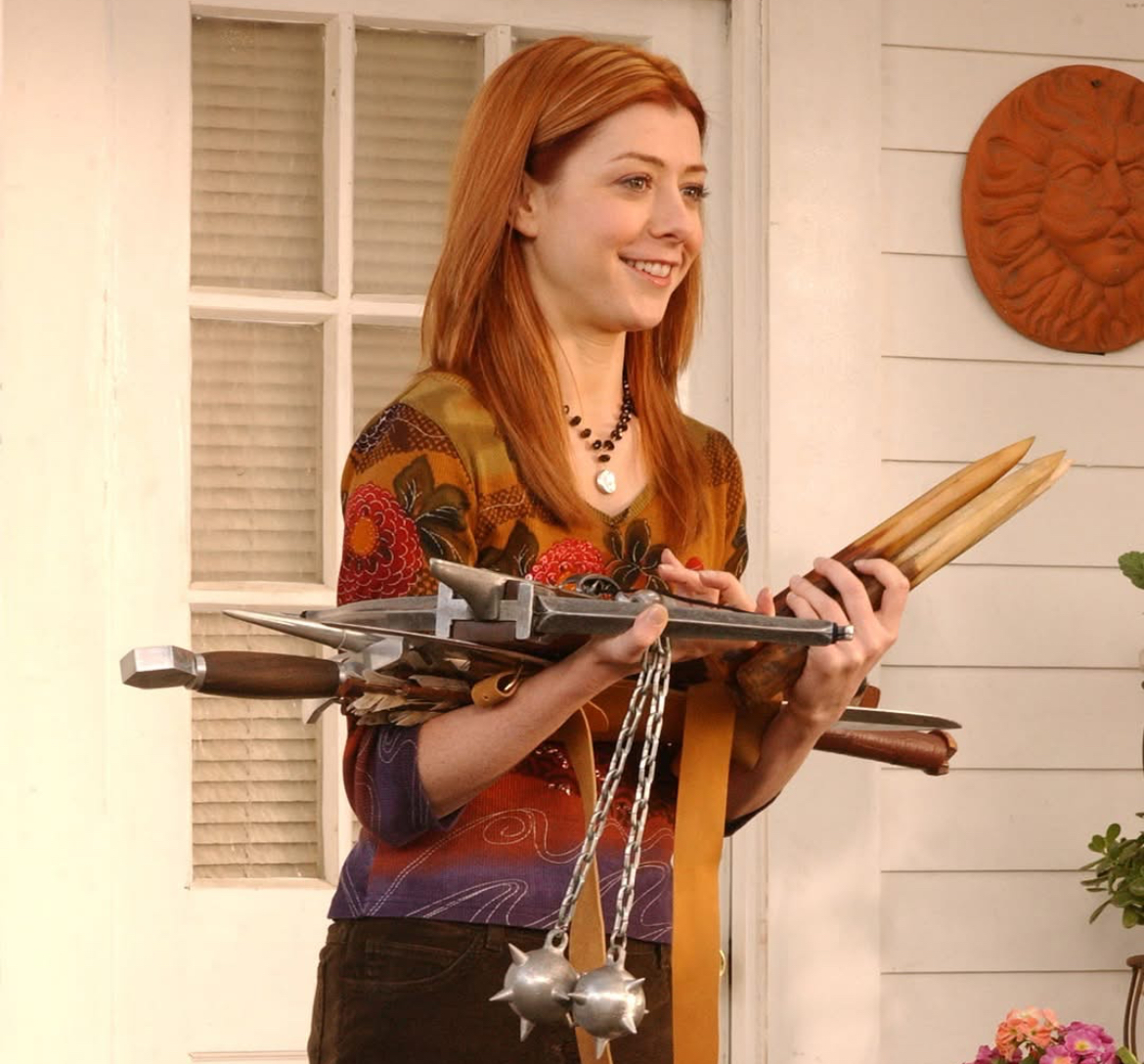
Film & TV Writer Tabitha Tremlett spotlights Buffy the Vampire Slayer’s Willow Rosenberg, praising her for breaking boundaries in queer representation
Buffy the Vampire Slayer is one of the most influential 90s TV shows, its supernatural themes and strong characters inspiring shows such as The Vampire Diaries and Charmed. Sarah Michelle Gellar plays the protagonist Buffy Summers, who fought vampires on the daily with wooden stakes, witty comments, impractical shoes, and a tight-knit group of friends. Only two of these friends stuck by her through all seven seasons, the mildly annoying Xander Harris (Nicholas Brendon) and smart but shy Willow Rosenberg (Alyson Hannigan).
Their relationship broke many barriers for queer representation in TV, being the longest lasting lesbian relationship shown, and the first lesbian couple to ever have sex on TV.
Willow begins as the nerdy sidekick and best friend of Buffy, great with computers and bad with socialising. Her character changes as the show progresses, gaining confidence and realising that she has a knack for witchcraft. In season 4, she meets fellow witch Tara McClay (Amber Benson), and slowly their relationship becomes romantic. Their relationship broke many barriers for queer representation in TV, being the longest lasting lesbian relationship shown, and the first lesbian couple to ever have sex on TV.
Aside from these milestones, their relationship is genuinely a beautiful representation of a complex, loving partnership. They move in together quickly, own a cat together (although this cat mysteriously stops appearing after a few episodes…), and are loved by all on the show, especially by Buffy’s younger sister Dawn (Michelle Trachtenberg) who they often act as surrogate parents for.
They avoid the common arc of a token gay relationship, which often results in the sidelining of characters and an overly perfect relationship which lacks reality. Willow becomes addicted to her magic, an addiction plotline which is handled very well, causing issues between her and Tara. Willow starts using her magic to alter Tara’s memories of their arguments, and Tara soon realises and breaks up with her. Willow slowly works through her issues, and they finally reconcile. Especially in early queer representation, it is uncommon to get a truly gritty, tumultuous relationship. Real mistakes are made, arguments happen, things are resolved but not forgotten; their relationship has immense depth.
However, their relationship does fall into the classic ‘bury the gays’ trope that so commonly haunts lesbian representation. Tara is killed, brutally and pointlessly, with Willow in the room. This ending is devastating, causing Willow to spiral into her magic, kill people, and nearly end the world in her grief. Although the trope of lesbian relationships ending in death is now overdone, I think that this time it was very well written. Their love is undeniable in the extent of Willow’s grief, and Alysson Hannigan gave an incredibly real and raw performance throughout.
However, their relationship does fall into the classic ‘bury the gays’ trope that so commonly haunts lesbian representation.
My main issue with Willow as a queer representative is her relationship with the mildly insufferable Kennedy (lyari Limon) which happens in the final season; it seems a superbly rushed end to her long, nearly world-ending mourning period. Despite this, I think Buffy the Vampire Slayer is one of the most enjoyable TV shows to exist, merging campness, action, horror, sadness, love, and comedy into a wonderful, sometimes confusing seven seasons.
More from Redbrick Film & TV:
Comments