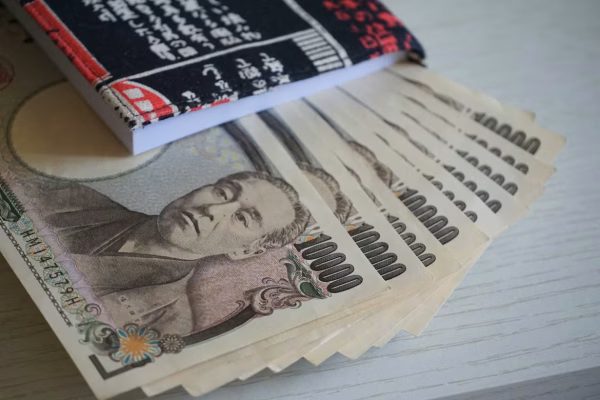
Business & Finance Editor Aman Sekhar Prasad analyzes the structural collapse of the ‘Japanese Exception,’ dissecting why the Bank of Japan’s policy inertia has turned the ‘Widowmaker’ trade into a new economic reality.
Spurred by Japan’s “Lost Decade” in the 1990s, investors looked at the soaring debt-to-GDP ratio and applied standard economic logic. A massive, rising supply of debt combined with a stagnant economy meant that Japanese government bond (JGB) prices must fall. For more than two decades, the “widowmaker” trade: shorting JGBs, was a graveyard for macro investors. But in January 2026, the trade finally paid off. The 30-year JGB yield has touched a critical 4.0%, while the JPY has collapsed 50% against the USD since the pandemic. This is not merely volatility; it is a structural repricing of Japanese risk. Markets have signalled they are potentially stripping Japan of its developed market privilege and treating its debt dynamics with the skepticism usually reserved for emerging markets.
The current situation traces back to March 2024, when the Bank of Japan (BoJ) formally ended Negative Interest Rate Policy (NIRP). While this was a sharp pivot away from the radical stimulus used to combat the deflationary effects of the “Lost Decade”, the pace of normalization after, has been slow, a phenomenon that critics term “monetary inertia”. As the U.S. and Europe held rates near 4-5%, the BoJ kept real rates deeply negative, forcing capital flight from low pressure to high, a fatal policy incoherence. The Ministry of Finance has spent billions attempting to support the currency, but the BoJ’s reluctance to hike aggressively undermines these very interventions. The government is effectively fighting a proxy war against itself, destroying the credibility required to anchor the Yen. The government is effectively fighting a proxy war against itself
The anomaly that allowed Japan to defy economic gravity for thirty years was “Home Bias”. Domestic giants, pension funds and life insurers recycled national savings into JGBs, insulating Tokyo from bond vigilantes. However, that social contract has shattered, with four of Japan’s top ten life insurers reducing JGB holdings by over ¥1.3 trillion last year. Simultaneously, JGB auctions have seen an evaporation in demand as a reaction to Prime Minister Sanae Takaichi’s proposed tax cuts (viewed as unfunded spending).
This capital flight has created a paradox, as noted by Trium Capital. Japan’s macroeconomic indicators are actually improving, with the debt-to-GDP ratio having fallen from 415% to 377% and the primary deficit shrinking. Despite these structural improvements, yields are spiking. Why? Because the market has shifted from a solvency framework to a confidence one. With domestic institutions now prioritizing higher foreign yield over patriotic duty, the insulation has disappeared, leaving Japan to face the raw numbers without its historical safety net.
The primary transmission mechanism for this dangerous volatility is the unwinding of the “Yen Carry Trade”, a massive global liquidity pump where investors borrowed cheap Yen to buy higher yielding foreign assets. As Japanese yields rise, this trade is reversing. With Japanese investors holding the most U.S. treasuries amongst countries, the risk of repatriation creates a dangerous feedback loop. Volatility in Tokyo could spike yields in Washington, exporting Japan’s crisis globally. U.S. Treasury Secretary Scott Bessent has expressed the same concern, calling on Japan to address bond market volatility. The U.S Treasury even went so far as to take preliminary steps towards intervening in the currency market, with the Federal Reserve Bank of New York asking banks about the cost of exchanging yen for dollars on behalf of the Treasury Department on the 23rd of January 2026. The likely path ahead is soft intervention
Domestically, the weak Yen has gone from being a competitive advantage to a regressive tax. As exporters book gains, households are being crushed underneath the weight of the “imported inflation”. Corporate bankruptcies in Japan exceeded 10,000 in 2025, for the first time in 12 years, with a record number driven by high import costs. Real wages fell for the 11th consecutive month in November 2025 as a result, despite strong growth in nominal wages.
The BoJ now faces a trilemma: sacrifice the bond market, the currency or the corporate sector. The likely path ahead is soft intervention, a shift from rigid yield caps to unscheduled liquidity injections. This strategy aims to shield the estimated 228,000 “zombie firms” that account for 17% of corporate firms, and face immediate insolvency if rates rise further. Japan’s plight offers a grim lesson in political economy: sovereignty may allow a state to print money, but it cannot mandate the confidence required to hold it.
Looking for more? Take a look at these articles:
Division in Bank of England as Interest Rates Held at 4%
Comments