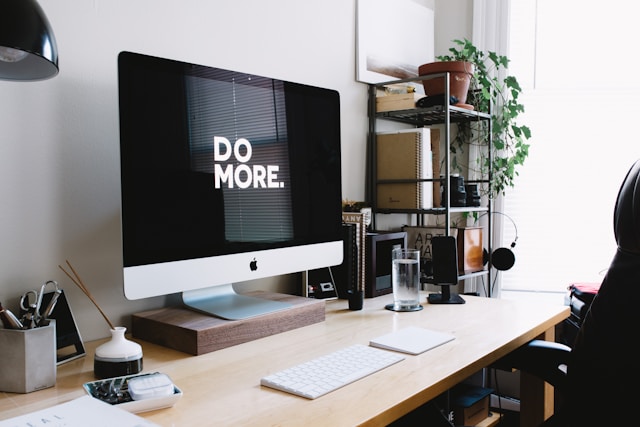
Life&Style Writer Carly Cannarozzo reflects on the ‘Winter Arc’ productivity trend

October has arrived, and with it, autumn is officially here. Longer nights and shorter days are approaching, leaves are beginning to turn, and everything is slowing down—everything except every twenty-something woman on your For You page who is going to “save your life with this winter arc routine.”
For those fortunate enough to avoid the corner of the internet that loves dictating how you should live your life, the “Winter Arc” refers to a period between October 1st and December 31st where you are “locked in.” You rise with the sun, a thick journal now lives on your bedside table, and you follow a meticulously planned fitness routine (completed before 8 a.m.). You become the picture of discipline and a source of endless envy to those still shaking off the last of summer while attempting to outmanoeuvre the inevitable dread of the sun setting at four in the afternoon.
The problem with these trends is not the intention behind them … but rather the inevitable outcome: burnout.
As an (attempting) retired perfectionist, I was immediately unimpressed with this trend. Do not get me wrong—I see its appeal. I understand the benefits of a rigid routine. You are hearing from someone who cannot start a single day without a detailed to-do list or risk falling into task paralysis and ending up scrolling on the couch all day. However, the problem with these trends is not the intention behind them—accomplishment—but rather the inevitable outcome: burnout.
Trends like this are not new. There was a time when wellness culture was not very attainable for the average person (I would argue it may be even less so now that its popularity has exploded). Expensive gym memberships, athleisure sets in every colour, reformer Pilates classes—it was all more of a novelty, something we watched celebrities do rather than a lifestyle everyone was expected to adopt. Then, of course, as with most things, this phenomenon was transformed by COVID, which triggered two major shifts.
Wellness culture was not very attainable for the average person
First, health was no longer something many took for granted. The pandemic shattered the illusion that health could sit on the back burner while we focused on our careers and goals. Shrouded in misinformation, conflicting claims, and governments seemingly ill-prepared to respond, people began to lose trust—not only in official health institutions but also in brands that appeared indifferent to consumers’ actual well-being. The Global Wellness Institute reported that the global wellness economy grew from $4.6 trillion in 2020 to $5.8 trillion in 2022, reaching a record $6.3 trillion by the end of 2023. The numbers continue to climb. Consumers have become enamoured with brands promising to sell them “health.” Whether that’s truly what’s being sold is a conversation for another time—but the point remains: everyone has become obsessed with being their “healthiest” selves.
Secondly, ‘wellness’ was no longer exclusive to celebrities—because suddenly, everyone was one. Stuck at home with little else to do, many turned to social media and discovered that content creation was not only a plausible income stream but perhaps one of the few available. Even those without ambitions of fame began posting for an imagined larger audience rather than just friends and family. Health became not only a personal pursuit but also a performance.
Heightened obsession with self-optimization
From this heightened obsession with self-optimisation came trends like “75 Hard” and the “90-Day Glow-Up Challenge.” But the sceptic in me can’t help but ask: do these trends even work? And if they do, why do they keep resurfacing in the same form—just repackaged with a shiny new name every few months?
Substack writer and podcaster Anna Howard explored this question in her video essay “Your Life Is Not a Self-Optimization Problem.”In it, she quotes a Tumblr post that reads:
“Your life is not a self-optimization problem. As in, you’ll never achieve the perfect daily routine, sleep schedule, coping mechanisms, mannerisms, fashion sense, etc. Even after years and years of healing, improvement, and self-discovery, you will never be so good at life that you manage to utilize every waking moment. It’s great to be productive and all, but sometimes you’ll suck ass. Sometimes you’ll take eight hours to finish a 20-minute job. You’ll prioritize the wrong thing. You’ll sleep for twelve hours just to avoid being awake. You’ll relapse and you’ll relapse again. You’ll forget to turn in the assignment. You’ll order too little food. Life is far too large and complex for you to even experience it completely, much less control it. You can’t. Please give up on that and be at peace with the hours you lose. They are not separate from your life.”
The question I am trying to get at is this: do you really need another hundred posts telling you to take your life seriously in order to do that? Is trying to “optimise” your life in such a drastic way even possible—or realistic? Was “locking in” worth the nights you lost with friends?
Do you really need another hundred posts telling you to take your life seriously in order to do that?
I am sure there are benefits to this alpha form of productivity; I am sure those who participate get plenty of things done. But I also caution people against engaging with a “routine” that promises to boost your productivity yet offers nothing for your joy. I am not convinced that bullying ourselves into becoming “the best versions” of ourselves actually makes us that. More often, it just makes it harder to live in our own heads without being in constant motion. And when there is no room left for joy, I am not sure productivity is worth it.
Comments