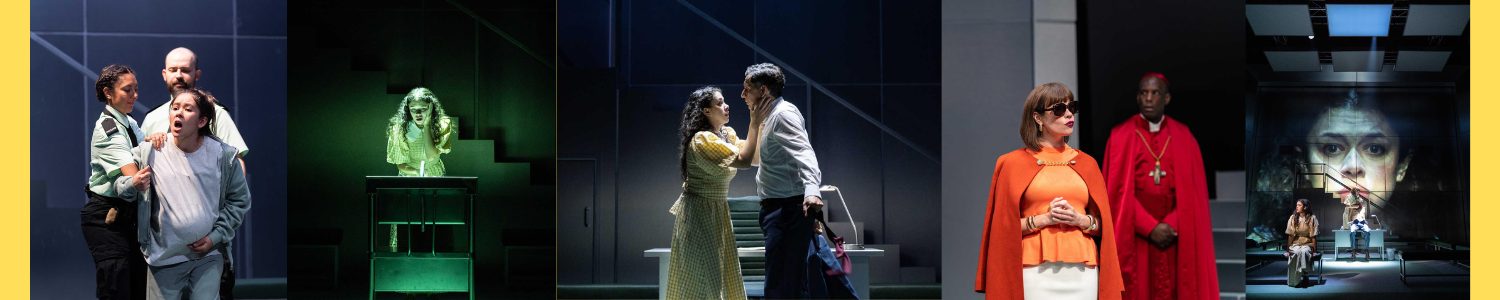
Culture editor Lyra Vincent reviews the RSC’s Measure for Measure, praising its costume design and pertinent message in the current political climate but finding its humour misplaced
Content Warning: Mentions sexual abuse, and abuses of power.
Measure for Measure, while not one of Shakespeare’s most famous plays, is certainly one of his most thought-provoking. The RSC have taken its themes of hypocrisy, morality and abuse of power, and reimagined them in the context of a modern-day political sphere.
Reintroduced themes from the 1600s and made them relevant
The play follows Angelo, played excellently by Tom Mothersdale, who has been newly appointed to take over from Duke Vincentio, performed by Adam James, who perfectly gesticulates and expresses himself as a leading politician would. Angelo resurrects the city’s ancient rules to imprison Cesario and Juliet for premarital sex, illustrating his traditionality and misuse of power. Isabel, Cesario’s sister, begs for Cesario to be pardoned, and Angelo states he will forgive Cesario in return for her virginity. The friar, who has been helping Cesario come to terms with his imminent death, assists Isabel in conducting a plan that prevents Cesario’s death and the loss of her virginity.
Hypocrisy, morality and abuse of power […] in the context of a modern-day political sphere
Balancing moments of light humour with dark and emotional scenes, the production provokes the audience to reflect upon the themes in the context of recent political scandals. The play begins with clips and photos of powerful men – varying from Bill Clinton to Matt Hancock – who are known for their deceit and denial of their abuse of authority, typically for their own, often sexual, gratification. These situations echo Angelo’s hypocrisy for condemning a couple for having sex before marriage, yet willingly forcing Isabel to participate in this act with him.
Although humour is often expertly placed throughout the production, the comedy used within a particularly sombre scene detracts from its message. Featuring the reversal of power dynamics, Angelo is depicted in a place of vulnerability and the musical choice of ‘Can’t Help Falling in Love’, paired with Angelo’s humiliation, distracts the audience from his despicable behaviour. This scene concludes act one, so it is particularly important that the play’s themes of integrity and abuse of control are emphasised, leaving the audience with a lot to consider during the interval.
However, the beginning of act two helps realign the production with its intended messaging, depicting Isabel frantically washing herself after her interaction with Angelo, emphasising her discomfort. However, the scene could have continued for a few seconds longer to maximise its emotional impact.
Leaders’ frequent use of religion as a justification for their actions
While the set is nothing spectacular, the costuming is brilliantly done. Juliet and Claudio’s vulnerability is exacerbated through their costumes; dressed in baggy, grey tracksuits, they are in a softer colour and silhouette than the rest of the cast, signifying their lack of autonomy. Frankie Bradshaw’s choice to dress the religious characters in vibrant and bold colours, whilst those in a position of power are dressed in suits of black or navy, highlights the authority religion carries throughout the plot. As the play explores the definition of morality, it highlights the leaders’ frequent use of religion as a justification for their actions.
Overall, the RSC have once again successfully reintroduced themes from the 1600s and made them relevant to a modern audience. Isis Hainsworth’s portrayal of Isabel is emotive, emphasising the impact that politicians’ abuse of power has on the vulnerable. As figures like Trump and Farage gain more authority, Emily Burn’s decision to reframe the narrative within a political context is particularly powerful. The RCS’ production of Measure for Measure is informed and impactful, with a strong message that we can only hope will eventually have no relevance, particularly within politics.
Rating: 3.5/5
Enjoyed this review? Read more from Redbrick Culture below:
Theatre Review: The Talented Mr. Ripley
Comments