Culture Writer Maile Agai reviews the Battle, appreciating the comedic dramatisation of the tense feud between Oasis and Blur
In August 1995, two leading English rock bands, Blur and Oasis, released singles on the same day, both in a bid to claim the number one spot on the charts. 30 years later, this competition has been dramatised and transformed by writer John Niven and director Matthew Dunster into a sharp, but intensely comedic play.
The insanity inherent in the competition between Blur and Oasis
The Battle is described as a mostly true story that tracks how the tense feud between Oasis and Blur unfolded in the months leading up to their chart competition. While the play’s scheme of events generally aligns with what occurred in 1995, the show’s script is concocted. Still, these alterations don’t leave The Battle feeling artificial; rather, they heighten both the show’s humour and tension.
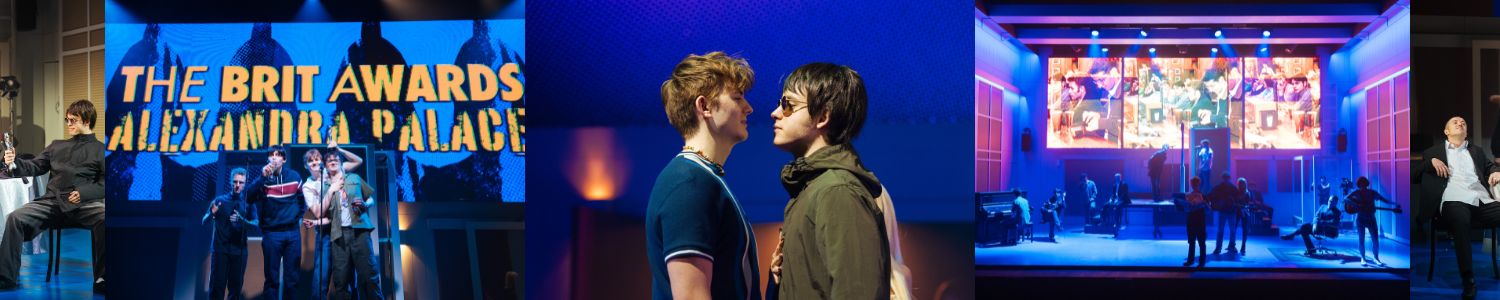
This tension is further emphasised by the production’s brilliant set, designed by Fly Davis. Davis excelled in constructing settings that felt timely and perfectly harmonised with the bands who inhabited them in any one scene. In a play about division, the set, amplified by purposeful lighting, was thematically on point. As scenes changed, which they did quite quickly, the set was modified seamlessly, allowing The Battle to maintain its velocity and fast pace.
Their combined skill resulted in powerful character dynamics
One part of the set that remained constant was a large, elevated video screen. This screen played the well-curated music that accompanied scene changes, as well as animated news clips that preceded new scenes. Often interacting with the scenes they heralded, these clips were helpful contextual tools and added a multimedia element to The Battle.
Each actor in The Battle carried their weight, and their combined skill resulted in powerful character dynamics. Two actors, however, stood out. George Usher, who plays the boisterous and temperamental Liam Gallagher, committed to his role entirely. From his hilarious gestures to his expertly irritating delivery of lines, Usher transformed Liam into a truly compelling character. The second stand-out performance is Will Taylor’s portrayal of a smart, yet cowardly Graham Coxon who is skeptical about Blur’s involvement in their chart battle with Oasis. Taylor’s acting is convincing, and despite playing a very silly character, his performance is certainly not a joke.
Jokes that err more towards slapstick comedy than clever humour
The Battle’s main objective is balancing tension and humour, and largely they are successful in this goal. The play’s jokes don’t take away from the movement of the plot; instead, they enhance audience engagement and intensify the cultural and personal division between Oasis and Blur. Still, there are jokes that err more towards slapstick comedy than clever humour, often being drawn out too long or falling a bit flat. Ultimately, however, Niven successfully uses comedy to highlight the insanity inherent in the competition between Blur and Oasis.
Near the end of The Battle, a big twist leaves the audience delightfully shocked. The twist, along with The Battle’s other elements, is successful in producing a silly, endearing, and engaging play. In an era obsessed with the music and style of the 90s, and one that has seen its fair share of music feuds in the past few years, this play is undeniably relevant.
Rating: 4/5
Enjoyed this review? Read more from Culture below:
Comments