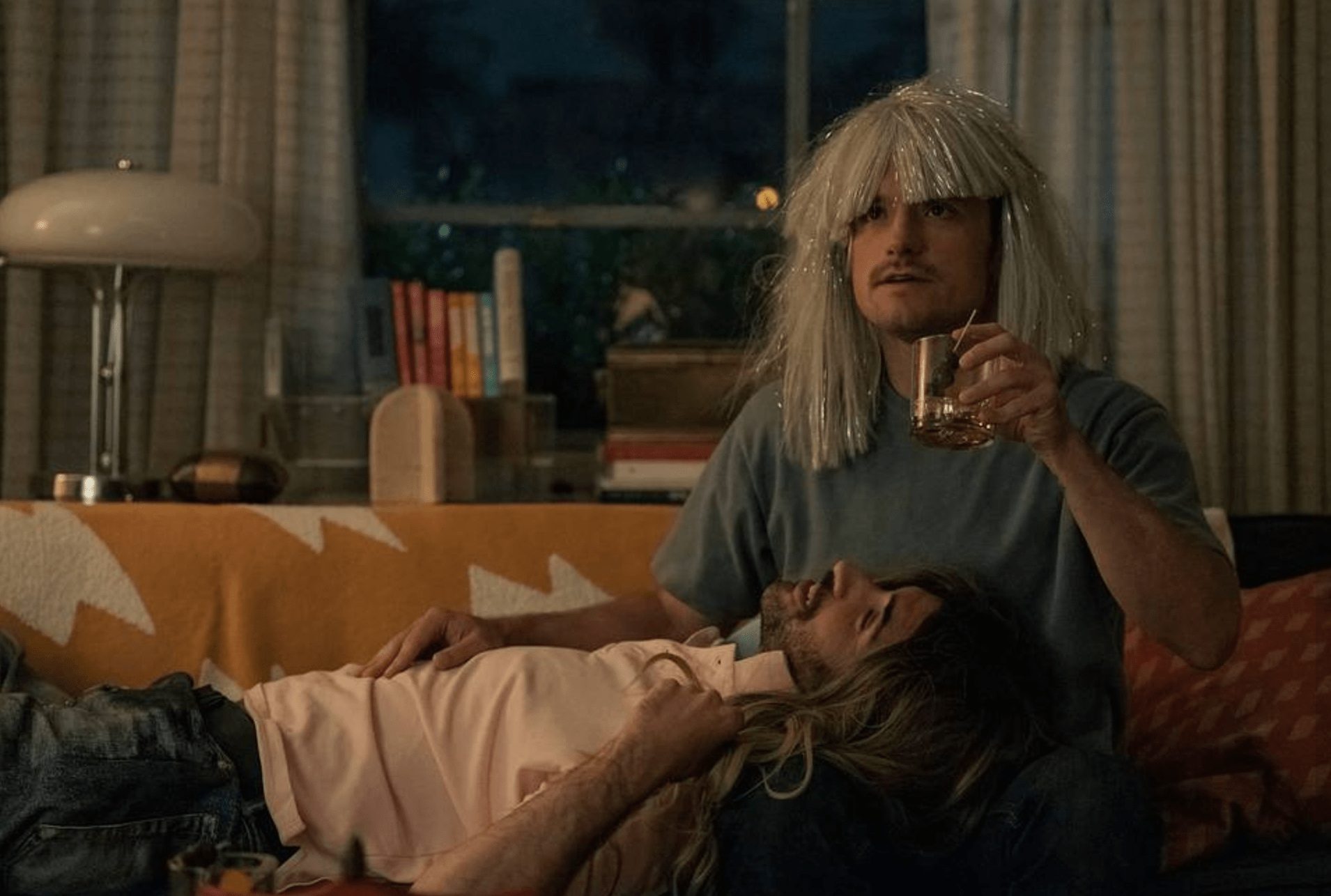
Film & TV writer Amelia Long finds I Love LA to be a comedic commentary on the present state of influencer culture, noting the show for its strong theme of friendship, irony, costume choices and satire
Contains spoilers for I Love LA
Rachel Sennott’s mini-series I Love LA is a whirlwind of influencer drama, current celebrity gossip and a group of 20 year-old somethings trying to make it big. Against the saturated backdrop of Los Angeles, Maia Simsbury (Rachel Sennott) strives to prove herself as a social media manager. Her only client being her best friend turned enemy turned best friend, Tallulah Stiel (Odessa A‘Zion). Across eight episodes we see Maia’s desperation to be successful, especially as seen by her boss Alyssa (Leighton Meester), at the cost of having discarded friendships, opportunities and her boyfriend Dylan (Josh Hutcherson) in the process.
Reception to the show has been severely mixed, I Love LA has cemented itself as a love it or hate it show. However, those with criticisms often miss the satirical tone and intent of the show. I Love LA is full of unlikeable characters who make horrible and selfish decisions with little to no comeuppance, but Sennott does not paint any of them in an overly positive light. Their humour is always in irony to their own characters; at an influencer party at Elijah Wood’s house Tallulah and Maia take turns making fun of the way influencers’ dress and behave in front of the camera.
Even the casting choices made are ironic to the characters, True Whitaker daughter of actor Forrest Whitaker, plays Alani, who is an almost exaggerated version of herself, a clueless nepo baby daughter of a director. This slightly annoying, biting and satirical humour has become a staple of Sennott’s work and her writing keeps evolving as she does. She has become a master of current cultural critique, perhaps my favourite storyline being the relationship between celebrity stylist Charlie (Jordan Firstman) and viral singing sensation Lukas Landry (Froy Guiterrez), a thinly veiled Benson Boone/Alex Warren reference. Throughout the show Sennott pulls the sentimental rug out from under the audience’s feet,
Across two episodes, an unwitting friendship blossoms– mostly from Charlie’s desire for fame when he learns who Lukas is– we see the typical ‘dudebro’ behaviour from Landry which at first rubs Charlie the wrong way but he comes to embrace it, joining their hilarious ‘accountability partner’ group chat. In typical Sennott fashion however, this friendship ends abruptly with Landry’s accidental death in an ATV accident, found out by Maia in the last thirty seconds of episode five through a tabloid-esque article on it. Throughout the show Sennott pulls the sentimental rug out from under the audience’s feet, reverting back to its sardonic tone. The humour is consistently strong and disarming, quips come from all directions making it feel as though the main characters are truly part of this codependent friend group.
Fashion is also an integral part of the show, Maia wears almost inappropriately short miniskirts to her office, allowing her to stand out among her millennial coworkers. More than anything, the wardrobe of each character is both quintessentially themselves and LA. Maia is seen wearing pastel, muted colours and a lot of white whereas Tallulah is primarily in black, wearing more daring and revealing outfits – thinking specifically about her Rick Owens Prong Midi dress, worn for Lukas’ funeral. Charlie’s outfits are in varying degrees of insanity, choosing to wear bright and garish colours with clashing textures– an oversized fluffy pink jacket, a white tank top and knee length black shorts to a party and still managing to somehow pull it off. The costume choices are heavily inspired by the current cycle of fashion trends, specifically 2020s redoing the 90s’ y2k look, with kitten heels and baby tees when the characters dress themselves. [..]the wardrobe of each character is both quintessentially themselves and LA.
The ending of the finale, like with the rest of the episodes, is abrupt. Maia makes a difficult decision and does not show us the consequences, leaving that for season two. We see the fallout of Dylan and Maia’s relationship, unsure whether they will reconcile. Sennott leans into the satirical tone by contrasting these more serious scenes with Alani accidentally meeting her dad’s stalker in their New York apartment. What is most heartwarming though is the focus on Maia and Tallulah in the final scene, because ultimately the show is about their friendship and how it has changed and continues to do so. Sennott writes their relationship to be as real and grounded as possible, not denying their faults and always emphasising their love for each other.
Verdict:
I Love LA has amazing humour that will often make you laugh out loud whilst watching and feel disorientated at the same time as the jokes keep coming with no break. The unrelatability and sometimes horrible behaviour of the characters is perfect for the narrative, since at their core they all just want that taste of fame and wealth. While they simultaneously mock others for it, and in turn have the audience mock them but continue watching, to root for them all the same. I was so glad to hear it has been renewed for a second season (and hopefully a third) and cannot wait to see what becomes of Maia and Tallulah. Who I would have loved more from is Alani, her character is currently resigned to being the out-of-touch rich girl comedic relief and I am eager to see more of True Whitaker’s amazing comedic timing. Overall I Love LA is a comedy on our current cultural state, with impeccable writing and sardonic performances from the whole cast.
Rating: 4/5
More from Redbrick Film & TV:
TV Review: Stranger Things Season 5
Comments