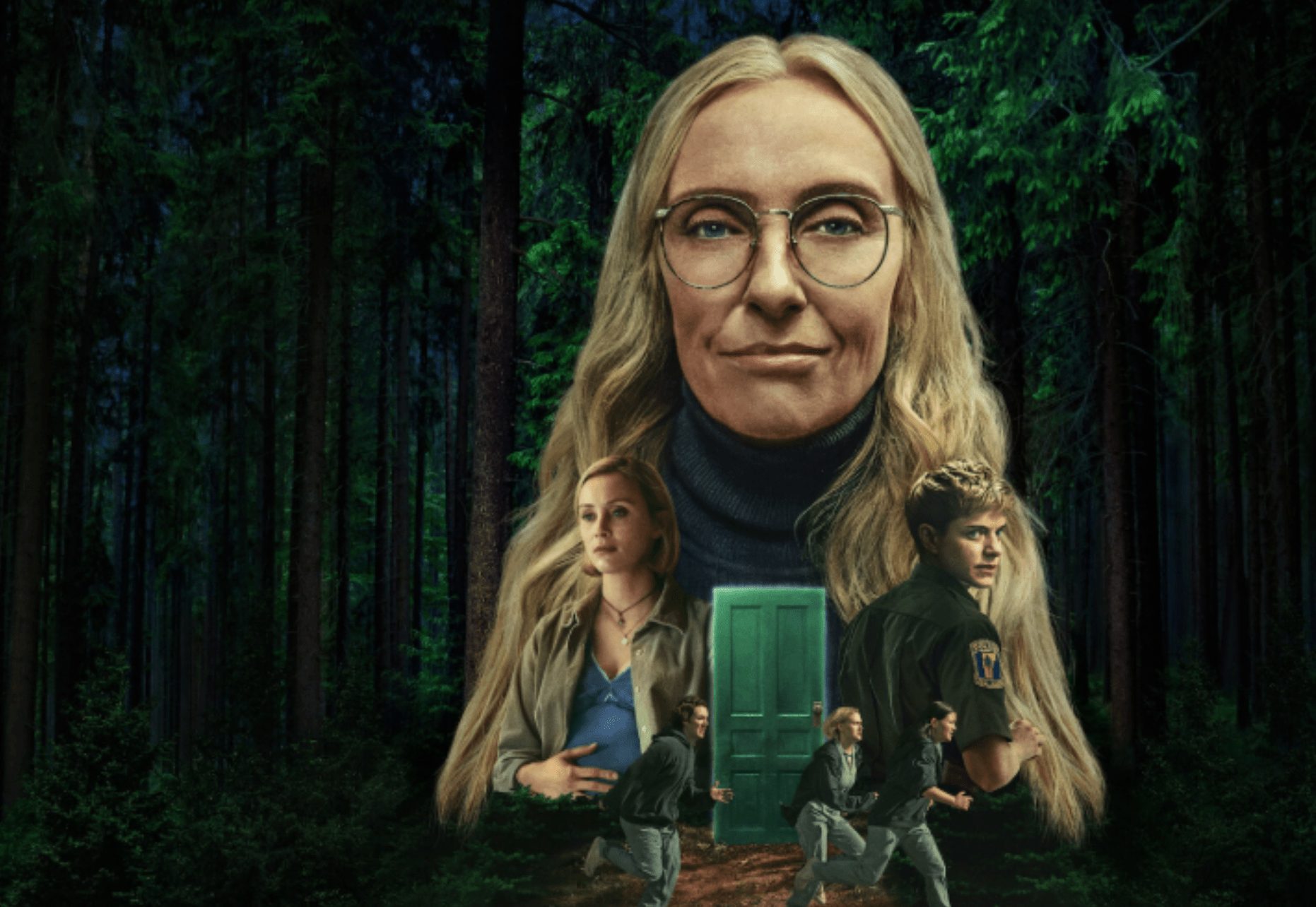
Film & TV writer Amelia Long gives a balanced review of Wayward, a Netflix mini-series, praising the concept and the initial thrill and further noting, the predictability and ambiguity towards the end of the show
Released on Netflix on the 25th of September, starring and produced by Mae Martin, the new mini-series Wayward unravels the mystery of a series of disappearances and strange happenings against the backdrop of the ominous yet cheery town of Tall Pines.
Inspired by the Troubled Teen Industry in the United States, Martin creates a narrative that consistently keeps the audience at the edge of their seats. The story is an interweaved narrative of Alex Dempsey (Mae Martin) and Laura Redman (Sara Gadon) moving to Tall Pines. The place where Laura herself attended the enigmatic Evelyn Wade’s (Toni Collette) Tall Pines Academy and teenagers Leila (Alyvia Alyn Lind) and Abbie’s (Sidney Topliffe) attempt to break out from the school uncovering a horrifying truth as they do so. The fascination with cults and holistic practices are focal to the mood and theme of the story.
The fascination with cults and holistic practices are focal to the mood and theme of the story. Wayward follows the genre of true crime and teen thrillers, falling under the category of psychological thrillers on Netflix, leaning into the long term effects of hypnotic therapy with a side of psychological torture. Although the narrative struggles to combine recognisable symbols of the strange – frogs, doors and circles – into a coherent theme specific to the show. It instead uses general imagery of cults expecting the audience to piece everything together, which leaves us more questions than answers.
The town of Tall Pines itself is a whirlwind of stereotypes; everyone knows each other, people leave gift baskets at your door, there is an old police station where the only crime happening is petty theft. However, Martin disrupts this by hiding the truth in plain sight, which Alex soon catches onto. Unfortunately Wayward falls at its own predictability, though there are some interesting plot twists, around episode 5 the rest of the action is easy to guess. This combined with the heavy handed way in which Martin presents the ambiguity of the characters’ futures with match cuts and this one over-the-top home birthing scene which really disrupts the suspense the show began with, giving the audience no catharsis.
Another drawback of the show is the set design, though set in 2003, the clothing, props, and production does not feel true to the time period. It rather portrays a small town that has not caught up with the times; aside from the lack of mobile phones and the occasional 90s reference, the year could be easily mistaken for 2025. The ending lets down the rest of the series, characters making rash and unlikely decisions ruin narrative arcs. Martin’s choice to write an ambiguous ending – whether that be for the chance at a second season or not – feels frustrating, so much is left unanswered that it does not feel like an ending at all. […] though set in 2003, the clothing, props, and production does not feel true to the time period.
Despite this, what stands out the most throughout Wayward is Toni Collette’s performance. She expertly appears as nurturing, only hinting at her true identity of a cult leader as the show progresses. Collette’s ability to evoke discomfort in Alex whilst being welcomed and celebrated by the rest of the town goes beyond the screen, felt by the audience with the help of quick cuts to her appearing somewhere she should not and close ups of her wide eyes and hypnotic smile. The costuming and props given to her are excellent, with big glasses emphasising her eyes, always being draped in layers subtly nudging at how little is known about her.
VERDICT:
At only eight episodes it is the perfect binge, especially with company to shout at the TV alongside you. However it fails to be anything more than that, I found it somewhat forgettable aside from Toni Collette – whom one could watch as anything and end up finding it amazing. Martin’s writing is often rushed and opens up plot holes along the way but ignoring that Wayward is an enjoyable short watch with interesting characters and a fun mystery to unravel.
Rating: 3/5
More from Redbrick Film & TV:
Film Review: The Conjuring: Last Rites
Comments