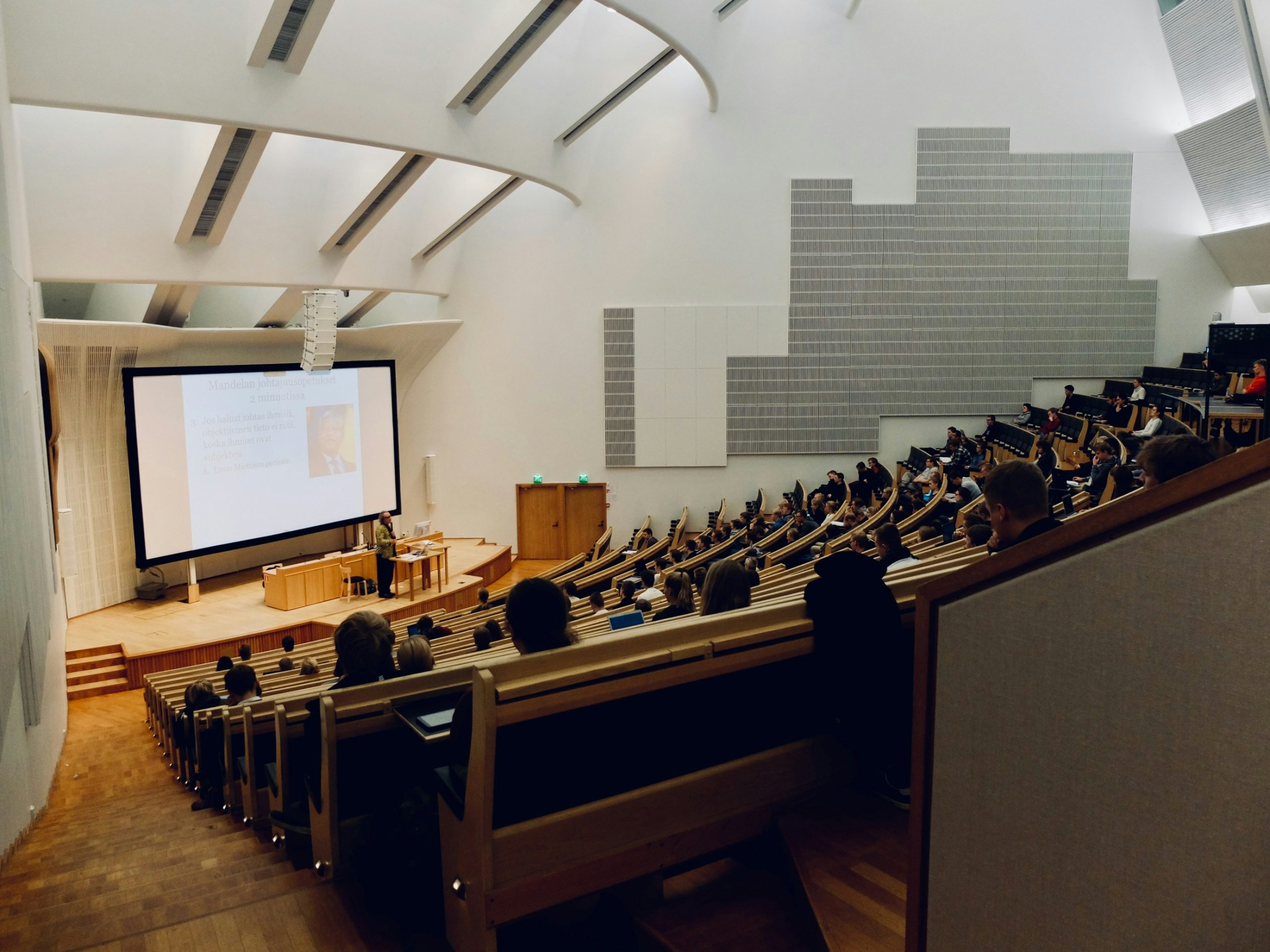
Comment Editor Ed Bettles discusses the University of Nottingham’s recent course closures and what it suggests about a larger disregard for the arts
In November 2025, the University of Nottingham (UoN) announced that it would be suspending sixteen degree courses, including modern languages, music and nursing, for prospective students enrolling in 2026-27. A press release from a university spokesperson reports that the decision was made to suspend subjects “where demand is low or where they are not meeting the benchmark against a number of other criteria” in reaction to the institution’s increasing financial struggles. They continue to explain that new government policies are to blame: cutting funding to higher education by billions and imposing levies on international students, while the value of tuition fees is eroded by inflation, and the general student population is shrinking, opting instead for full-time employment or apprenticeships. Your degree isn’t real… you’re never going to get a real job with that.
Of course, this appears to be a very logical, strategic decision on UoN’s behalf, reflective of the increasingly impossible positions that universities are finding themselves in nowadays, and for which they cannot be blamed. That said, we cannot help but notice a trend in the types of courses most affected by these cuts. For example, modern languages, music, and nursing degrees were also suspended by the University of Cardiff in February 2025, while arts, humanities and health-related departments in general have suffered cuts in Kent, Wolverhampton and Sheffield, just to name a few. Furthermore, this phenomenon is not just limited to universities; course cuts and college and sixth-form levels are equally widespread, contributing to lower university enrolment. While I’ll concede that, as the universities claim, these decisions are largely objective, defunding subjects with lower student demand and lower field research profitability, I fear that this is nonetheless a very sad loss for future generations of students and symptomatic of a larger disregard for these fields.
In my personal experience of studying the arts and humanities, I’ve often been met with scoffs or eye rolls when telling a new person or family member the subject of my degree. I’ve often heard “your degree isn’t real” or “you’re never going to get a real job with that”. While I’m happy to put my hands up and say that subjects like medicine or engineering are much more likely to save lives or change the world, the value of the arts and humanities is undeniable and increasingly overlooked. Taking funding away from these subjects can harm, discourage or even vilify independent thinking.
Arts and humanities subjects promote individual critical thinking and analysis, as well as freedom of expression, in ways that are uniquely supportive of social advancements in STEM. We need only look at historical, artistic, and cultural movements to see how these core values have driven societal progress and evolution for the greater good. For example, Motorola’s first flip-phone was inspired by Star Trek’s telecommunicator; the first scuba gear was invented by Cousteau, who referenced the writing of Jules Verne as his inspiration; the Modernist artistic and literary movement in the early 20th Century could be considered as one of the main contributing factors to the technological revolution. Creativity and pop-culture has and will always push the boundaries of STEM. Furthermore, in the current political climate, with the increase in censorship, the privatisation of media and the rise of the far-right across the globe, promoting these skills has never been more pertinent.
I asked a close friend and English Language student what her thoughts were on this matter, and she responded: “Arts and humanities are subjects that challenge; they are based less on facts and more on interpretations. They are inherently political, even rebellious. Taking funding away from these subjects can harm, discourage or even vilify independent thinking. Funding to these subjects must be continued as a defence against the right-wing echo-chamber which threatens it”. Thus, a devaluation of these fields is inherently political too, and reflects government indifference towards promoting values that might challenge them. How long can we go unscathed?
This is particularly true when we consider the cuts being made to modern languages courses in relation to the linguistic imperialism that the English language possesses in our increasingly anglophone world. But, and I cannot stress this enough, learning languages, fostering cultural awareness, as well as the awareness of how languages work as a tool of expression, persuasion and power, and nurturing not just international, but also interpersonal relations, can never be rendered obsolete by machine AI translation or the effort made to learn English abroad.
These patterns all bring to mind the struggles and dwindling support that Redbrick itself and student journalism in general have been facing in recent years, and institutions’ continual failure to recognise the importance of its platform and contribution. It would be a tragic cultural loss for investments in the arts and humanities to dwindle into insignificance.
At the moment I am writing, the University of Birmingham has given no indication of plans to suspend courses, but in this economic climate, how long can we go unscathed before the university is forced to follow suit? And more importantly, at what cost to our society?
If you liked this, read more from Redbrick Comment:
In Conversation with FemSoc: Redbrick on Spiking Against Students
Comments