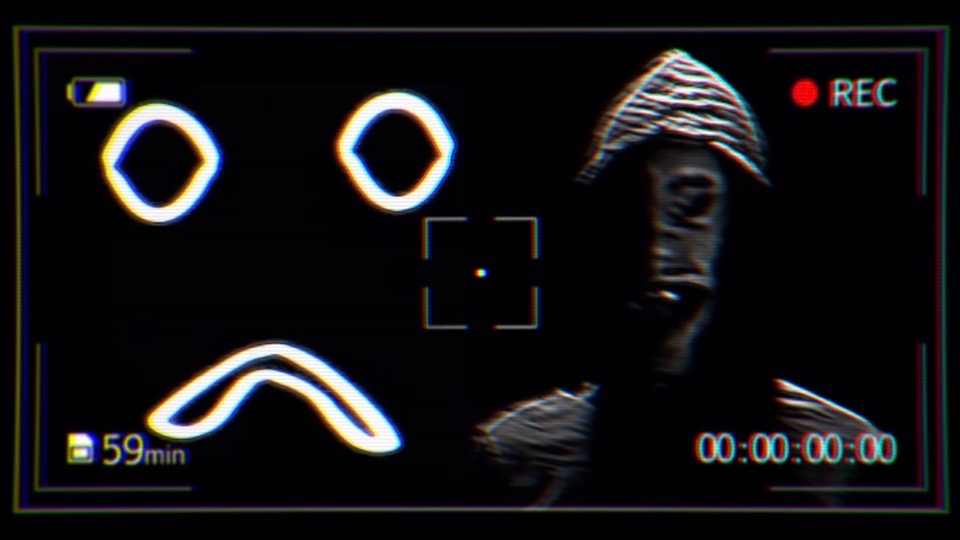
Film & TV Writer Harry James introduces us to The Mandela Catalogue, finding it to be a trailblazer of a new horror sub-genre
Content warning: discussions of body horror, mention of death
The Resurrection of Analogue
Film genres are always changing and reinventing themselves, with horror being no exception to this unwritten rule of cinema. With the ever-increasing rise of the internet (and more specifically, video-uploading websites), the bell calling for the death of the conventional, jumpscare-ridden horror of the past has been tolled. However, what rings back is the drone of a landline, the sliding of magnetic tapes and the stifled screams of VHS static.
The rise of ‘analogue horror’ has slowly increased its presence on YouTube since Kris Straub’s Local 58 in 2015. Whilst Straub’s series is a staple of the genre in its short history online, the widely accepted poster boy for analogue horror today seems to be Alex Kister’s psychological body horror, The Mandela Catalogue.
With its rich layers of storytelling, fleshed out characters with varying relationships to each other, as well as copious themes and allusions – all presented through the medium of analogue and digital media, I would argue it is currently one of the highest quality analogue horror series currently online.
“I Will Fool the Shepherds”: A Synopsis
So, we are thrust inside Wisconsin between two timelines: one in the early 1990s, where analogue media reigns supreme, and one in the late 2000s, where digital media is on the rise. Whilst everything should match reality, Kister poses a biblical nightmare to us: What if God were overthrown by Satan, who then deceives the Mortal into believing he is the true King of Heaven? This is answered in the first instalment of the series, ‘overthrone’, where this demonic being poses as an alternate version of Archangel Gabriel, biblical characters into believing he is their messiah. The widely accepted poster boy for analogue horror today seems to be… The Mandela Catalogue.
Fast-forward to the 1990s, we discover that this alternate Gabriel has found means of mass deception and communication with humanity through the means of analogue media and devices. We are made aware of other ‘alternates’ which Gabriel has been able to manifest into existence via television communication with children, weaponising their innocent imaginations to create ‘friends’ with uncanny, mutilated features as a result of a child’s undeveloped perceptions.
These creatures appear inside their homes, killing and replacing those inside with doppelgängers, ready to lure others to death, slowly replacing the human race. Whilst it is suggested this is occurring all across the USA by the late 2000s, it seems the fictional Mandela County, Wisconsin, is the epicentre of the Alternates’ invasion.
“I Will Know Their Fear”: The Horror of Body-Snatching
Horror writers have always seemed to have a fascination with the uncanny, and the idea of a real threat staring back at us with stunning familiarity is something which has deeply troubled humans for centuries. Take the skin-walkers, a mythological creature feared by the Navajo people, indigenous to the Southwestern USA. These skin-walkers would deceive tribe members by appearing human before transforming into animalistic monsters through witchcraft, sounding awfully familiar to Kister’s Alternates. Horror writers have always seemed to have a fascination with the uncanny…
Even in more recent times, writer of sci-fi body horror The Thing (1982), Bill Lancaster, crafted gripping paranoia by having the deadly threat to the scientists as a shapeshifting alien lifeform – which imitated dead crewmembers that lured the living in, before revealing its true, mutilated form.
We see this constantly in The Mandela Catalogue, with the first plot point of ‘Volume 1’, showing how an Alternate version of Cesar Torres (Andrew Long) lures Mark Heathcliff (Alex Kister) to his home, at which point Mark is relentlessly pursued by the Alternate. Presented to us through various forms of physical media (cassette tapes, camcorder footage, even the use of a journal), viewers see Mark’s descent into madness, praying to a God long overthrown.
The final piece of evidence? A dispensed handgun with a cold barrel.
Whilst death is unsurprisingly a feature of many horrors, not just in theatres, but online too, Kister perhaps highlights a fate worse than death – the removal of identity. It is something we see in ‘Volume 3 3 3’, where viewers watch Lieutenant Thatcher Davis’ (Thorne Baker) bodycam display the message: “There’s not enough room for the two of us, Thatcher.”
We see in the next instalment to the series that Thatcher has locked himself away, terrified of death, whilst a carbon copy of himself has stolen his entire life from him. Perhaps Kister is prompting us to look inwards – an introspective exercise in which we consider whether we could truly live if somebody (or something in this case) took what makes us our real selves away.
‘Digital Technology Has Come and Saved Us All’: A Verdict
Perhaps the most intriguing aspect of The Mandela Catalogue is how ridiculously easy Kister can completely unnerve me, all through slight manipulations of the analogue and digital media which is strewn out in front of me: Irregular text, which pitches and yaws in unconventional ways, blown out images – gone chiaroscuro in such heavy contrast – which remind me of German Expressionist classics, such as The Cabinet of Dr. Caligari (1920).
Whilst there are certainly loose plot ends and unexplained character roles which require tying up as audiences wait for the next instalments of the series, I would highly recommend giving The Mandela Catalogue a watch this Halloween.
It is through Kister’s genius story world, in which these demonic, alternate forces can manipulate and communicate through digital media for malevolent purposes, that the video I am physically watching can threaten me through its own formulation.
Unholy monsters, crafted by ‘contorted flesh and broken bones’, lie on the other side of a thin layer of screen, yet when that fourth wall is hijacked by those same malevolent forces, I truly felt as if I – by watching this series – was next in line to be pursued, and replaced.
The Mandela Catalogue can be found by visiting Alex Kister’s Youtube Channel.
More from Redbrick Film & TV:
Web Series Highlights: That Library Show
Comments