Film & TV Writer Chris Watts explores the future of Doctor Who and why the beloved British sci-fi series might need a break
(Writer’s Note: The body of this article was written before the announcement of the return of Doctor Who. I am excited to see the show return in 2026, though the rest of this article will argue, as I believe, that this might do the show more harm than good in the long run.)
There seems to be a sense of fatigue around Doctor Who. Since David Tennant left the show in 2009, there has been a slow and steady decline in viewership. That first Russell T Davies era was magical, and his understanding of the show’s strengths meant that it is considered by many, myself included, to be the strongest period in the reboot’s history. So after the sharp drop in quality that came with the Chris Chibnall/Jodie Whittaker era (not that I blame Whittaker), many fans, myself not included, were excited for the return of RTD. But it didn’t quite work out, and has actually driven the show to, what I believe is, an even lower quality than it even fell to under Chibnall. So, what needs to change?
That first Russell T Davies era was magical, and his understanding of the show’s strengths meant that it is considered by many (…) to be the strongest period in the reboot’s history.
If it were up to me, Doctor Who shouldn’t return for a few years, giving audiences breathing space to appreciate the changes within the show. I also think the show needs to experiment with a wider variety of well written companions. Chibnall tried this, with little success, but the show could do with a wider variety of points of view. Whilst we’re at it, Doctor Who should reduce its reliance on ‘Legacy Characters’, like old companions. They’re great for an established fan, a little reward for watching, but it forces the show to explain their presence – which has recently been done incredibly badly. But I think the most important thing Doctor Who needs is an overhaul of how it’s being written, and by who.
When Doctor Who returned to screens in 2005, your average season had twelve to fourteen episodes – each around forty minutes in length. This changed under Chibnall, with the newer seasons having ten or less episodes at around an hour. There have been exceptions to both rules (the 2012-13 season was fifteen episodes across two years, and 2021 was a continuous story across six episodes), but this had a greater impact on the show than you might think.
By reducing the episode count, you reduce the amount of time spent with the characters. Less screentime means less opportunity to invest in the characters, which, when combined with a decline in the quality of the writing (something we will return to), leads to less interest in the show. Doctor Who has always been a character driven series. The history of operating on low budgets, reducing the opportunities for vast and sweeping plots, led to the focus being on the ideas and characters.
A lower episode count is also a problem, because they change the nature of the show’s writing process. When Doctor Who returned in 2005, the series had a large cast of writers, who came up with stories and the overarching character arcs in a writers room. In 2006 for example, there were twelve stories across fourteen episodes, written by seven different people. In 2024 however, there were eight stories across nine episodes, with four writers. This ratio already sounds bad, but when you consider that Steven Moffat (2010-2017 showrunner) only wrote one episode, and Kate Herron and Briony Redman co-wrote their episode, you are left with six stories and seven episodes written by showrunner Russell T Davies.
Regardless of what you think of RTD as a writer, I would argue it is greatly to the show’s detriment that one voice has become so dominant. Now admittedly, this has become significantly more common industry wide, but explaining the phenomenon does nothing to rectify the issue.
Regardless of what you think of RTD as a writer, I would argue it is greatly to the show’s detriment that one voice has become so dominant.
The relationship between companion Ruby Sunday (Millie Gibson) and the Fifteenth Doctor (Ncuti Gatwa), in season fourteen, is almost identical to the relationship between Rose (Billie Piper) and the Ninth and Tenth Doctors (David Tennant, Christopher Eccleston) – in RTD’s season one and two. Putting aside the romantic undertones in the early seasons, the buddy cop-esque double act of Tennant and Piper feels copy-pasted onto the Doctor and Ruby. It makes the season feel stale, and though it is not the largest issue with season fourteen (that being the reveal of Ruby’s mother in the final episode), it is a contributing factor as to why people were switching off.
This issue is the result of bringing back RTD, and then having him write almost every episode. He had a proven formula in the early days, and it feels to me like he was looking to repeat that. Which is why a return to a bigger writers room is important if the show is to continue. For a show built on ideas, new ones are its lifeblood.
But with new ideas must also come a better quality writing. In a YouTube video by Popcornsoups, he explains part of the issue with the new seasons quite well. The characters are no longer allowed to show how they feel, instead they tell us outright what is going on, or they won’t act the way they should. When the Rani (Anita Dobson) appears in Unit HQ in ‘The Reality War’ everyone just… stands there. In a room full of soldiers, no-one even takes a shot.
For a show built on ideas, new ones are its lifeblood.
To show the failings of society, Doctor Who used to transplant those ideas into other situations. In Season 4, Episode 6 ‘The Doctor’s Daughter’, the message is ‘Choose Peace, Not War’. To do this they show how the fighting has twisted the old general into being unable to see a world without it. At the end he tries to keep the fight going, killing Jenny (Georgia Tennant) instead. The Doctor therefore is angry, but he uses this as a teaching moment. By contrast, in Season 11, Episode 4 ‘Arachnids in the UK’, the message is ‘Dispose of Industrial Waste Properly’.
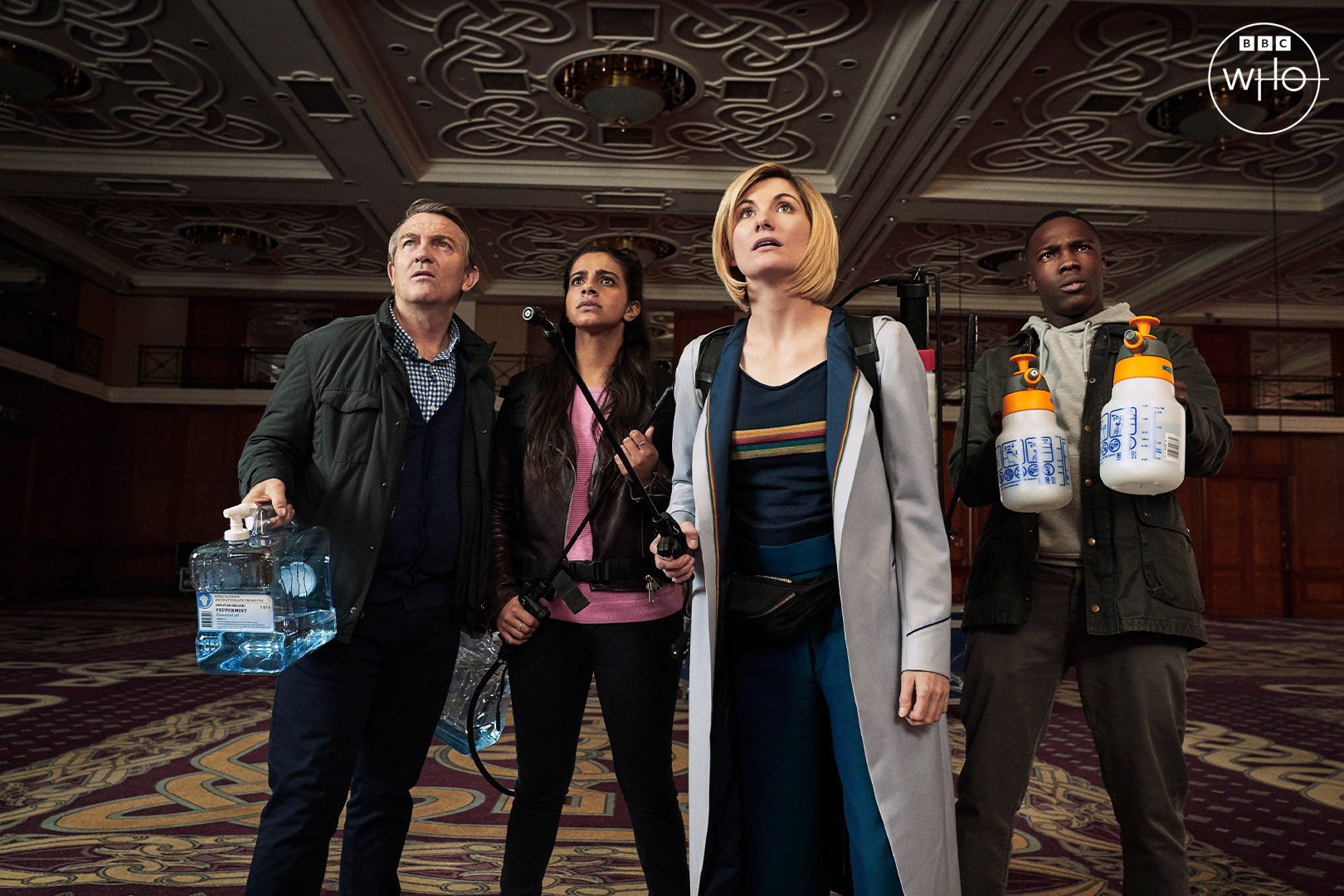
Not only is the messaging unclear, the ending feels hollow. When the episode’s villain, Robertson (Chris Noth) kills the giant spider, the Thirteenth Doctor (Jodie Whittaker) just sort of gives up, and lets them gas its offspring. Robertson then goes back to the USA, and the Doctor leaves Earth. Nothing about this is satisfying. None of this feels consequential, it was just an event that happened. Like much of the show since 2018, the episode just feels like it is knowingly wasting my time.
To conclude, I think that the future of Doctor Who needs time to develop. Take a few years away, then return with fresh ideas that focus on story and not legacy. The show has become too concerned with its history, and needs to return to the ideas that made it great.
More from Redbrick Film & TV:
Not Your Average Romance Film: A Review of Materialists
‘Not Another One!’: The Upcoming Wuthering Heights Adaptation
Comments