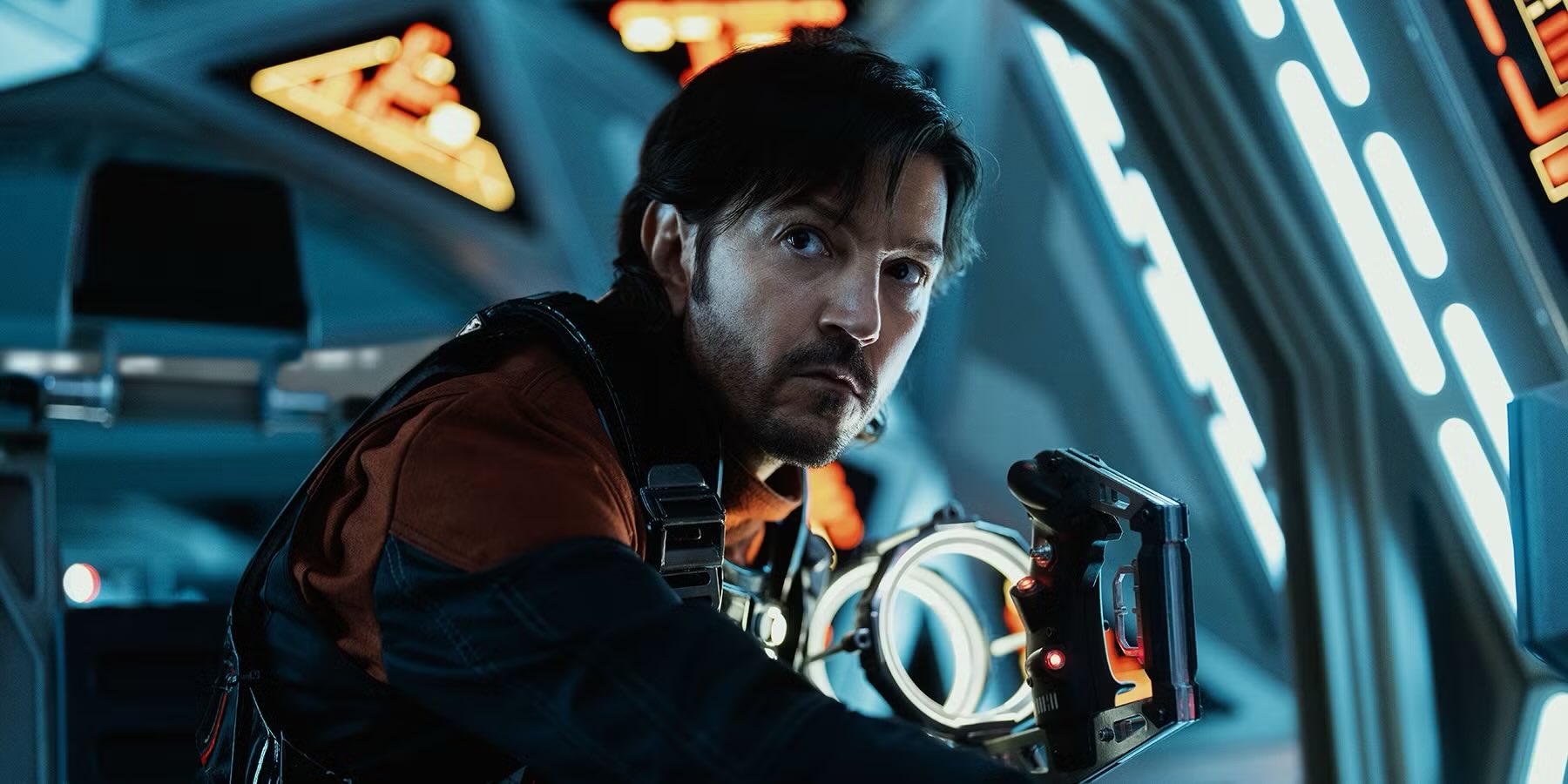
TV Writer Cameron Bowles reflects on Andor Season 2, praising its bold divergence from the classic formula of Star Wars
*Spoilers for Andor Season 2 and Rogue One*
I remember watching the first episodes of Andor, hunched over my desk, eyes trained to the laptop. It was late September; freshers week was coming to an end and the leaves had started falling. I put on the first episode, presuming it would lull me to sleep, but I watched the three-part opening in one and stayed awake far longer than I hoped to. This was not the most groundbreaking, revolutionary opener that had graced television screens, but there was an odd kind of verisimilitude that caught me off guard, pulling me through the haze of a hangover and into a genuinely impressive TV experience.
Andor depicts the galaxy from a ground-level perspective, spending as much time in corner stores and dinner parties as on the battleground.
Two and a half years later, the same feeling remains. The first season came at a time when Star Wars seemed to be on its last legs, with blockbuster trilogies replaced by television efforts shot on small soundstages in Southern California. The previous shows, mainly of the Mandalorian brand, look shoddy in retrospect, fan service fare with little long-lasting value. Andor represented a fundamental departure from this model. No longer playing with action figures, the show’s narrative and subject matter was always directed towards something closer to reality, aiming to reflect historical crises and genuine human conflict.
As described in a previous review: “there’s a deeper interaction between the characters and their sci-fi world that only shooting on-location can provide.” Andor looks, sounds and feels closer to a BBC production than a Disney one. There are, of course, the obvious British locations – backwater planets simulated through expansive countryside landscapes, the cityscape of Coruscant pieced together from London’s brutalist Barbican landmark and the sleek environs of Canary Wharf. In this second season, more continental influences are introduced with Valencia’s contribution of a central senate plaza and the planet Ghorman’s distinctly French feel. By tying these extra-terrestrial settings to real, familiar locations, Andor depicts the galaxy from a ground-level perspective, spending as much time in corner stores and dinner parties as on the battleground.
Patient yet uncompromising, bloody without being gratuitous, the showdown at Ghorman Plaza is the crown jewel of what the show has been working towards.
Season 2 aims to convey the formation of the Rebel Alliance over five years in the run-up to the original Star Wars, already preluded by 2016’s Rogue One. Rather than getting bogged down in canon and lore technicalities, Andor’s writers – headed by screenwriting veteran Tony Gilroy – opt for what Gilroy describes as a “European model”, where arcs of three episodes each cover a year. The season’s final two arcs are imbued with a rigorous pace and sense of inevitability, speeding us towards familiar events without losing any of the show’s care for character, tone and emotional impact. All paths converge on Ghorman, where every character, plot thread and emotional beat comes to a head in a climax of terror and bloodshed. Patient yet uncompromising, bloody without being gratuitous, the showdown at Ghorman Plaza is the crown jewel of what the show has been working towards.
The original Star Wars trilogy is a fairy tale, relying on mythic tropes and repurposed archetypes beneath its veneer of science fiction. Andor diverges from this classical formula by asking how and why these events occur. If a hero’s journey fails, then what truly motivates them to resist tyranny? What are the consequences for their friendships, families and communities? How does such a vast organization as the Empire physically function, on both bureaucratic and military levels? The attention and detail given to these questions shed a light on the physical processes of governments and militaries that guided the events of previous films. In lesser hands this would feel mundane – Gilroy and co. make it fascinating.
Andor diverges from this classical formula by asking how and why these events occur.
Andor ends on a quiet note. The season finale opens with a short burst of action, leaving the rest of the episode to ruminate in the aftermath of violence and prepare for the inevitable. The audience likely knows what happens after the credits roll; Cassian (Diego Luna) will die, other characters will fade into the background as minor players, and the events of A New Hope and the subsequent films will unfold. Certain knowledge of this is what makes the finale’s tone so morose without losing pace. We conclude with a propulsive montage where Andor walks across the runway of Yavin’s rebel base, slowly moving towards his death, unable to escape but willing to sacrifice his life for a better future. As it cut to black, I felt myself transported back to first-year halls, wrapped up in a show I thought I wouldn’t care for, suddenly thrown back into reality.
More from Redbrick TV:
Review: Doctor Who – ‘Wish World’
Comments