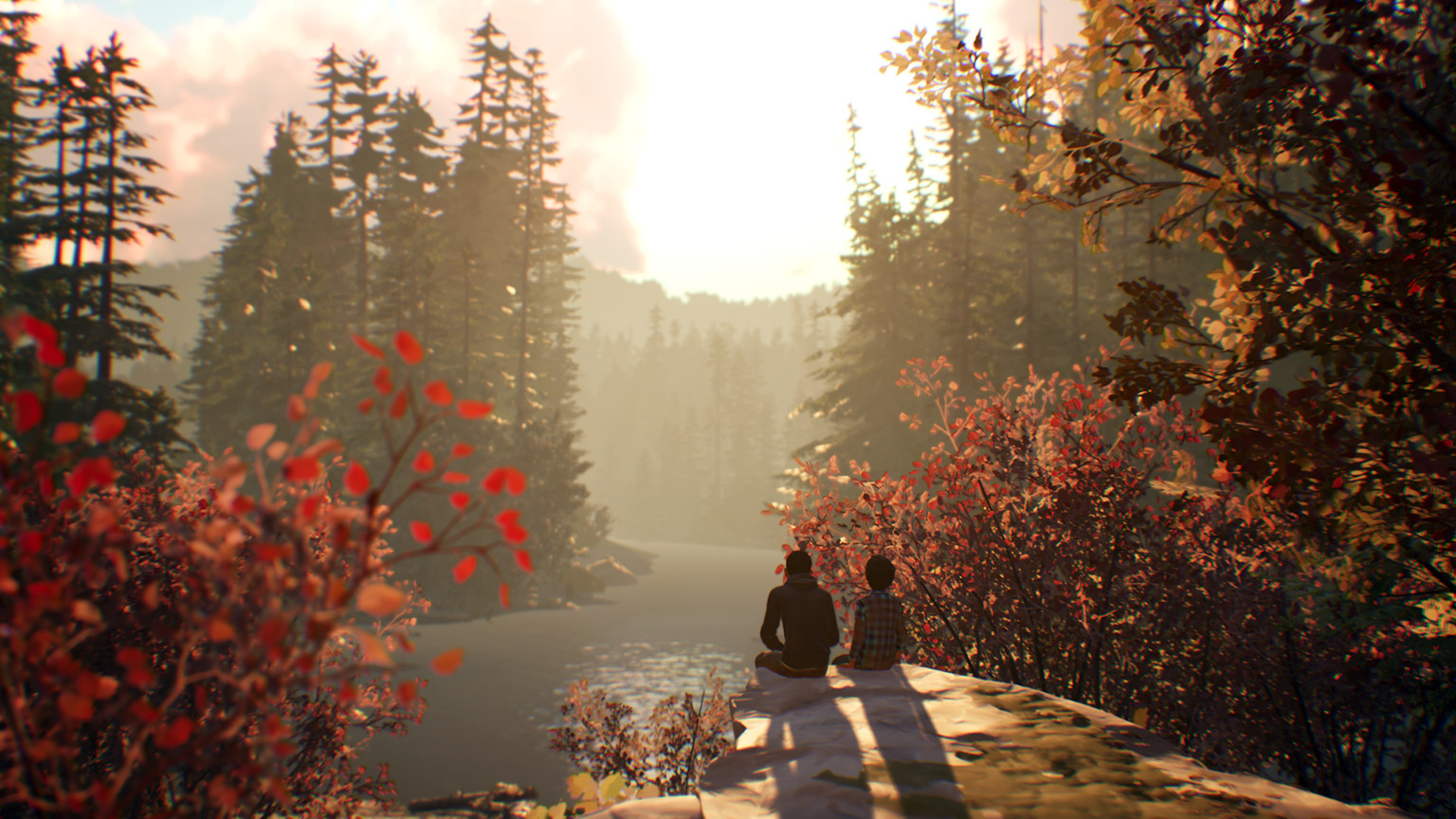
Gaming Writer Esme Chen reflects on how the politics of a 2018 game still resonate today
Content warning: discussions of racism, police violence, abuse
Life is Strange 2 is often overlooked compared to the wildly popular Life is Strange and Before the Storm. However, to me, it remains as one of the most politically poignant games of the last decade.
Life is Strange 2 centres its story around two immigrant Mexican brothers, Sean and Daniel Diaz, and their journey from Seattle, Washington, to Puerto Lobos, Mexico in 2016 — during President Trump’s first term, amid the ‘build the wall’ campaign. Their father, Esteban, is involved in a fatal murder via police brutality to ‘protect’ a white man.
Brotherhood, love, and all-too-familiar political turbulence
Sean knows they stand no chance against the police, and so ventures to a familiar place and perceived haven: Mexico. The journey comes with its expected trials: racial discrimination, fundamentalist cults, and rekindling with an estranged parent. This story, one of brotherhood, love, and all-too-familiar political turbulence, stands out as one of the most politically rich and heartfelt narratives of the video game medium.
The political contexts within the game irrefutably drive the narrative, particularly through its exploration and defiance of gendered expectations. Life is Strange 2 analyses and represents gender through brotherhood and masculine vulnerability — a rarely expressed topic in the video game medium.
Sean and Daniel frequently confide in each other, and Sean steps into Esteban’s role as a father almost immediately — for he knows that if he wants to survive, he must reject his childhood completely. Sean’s vulnerability and expressed emotion are a portrayal of maturity rather than one of weakness and shame. It is a brave act of resistance against the American society that dehumanises him and Daniel.

Despite this, Sean’s character is what I consider the epitome of masculinity and what it means to be human. Sean is more than his aforementioned vulnerability – he reflects a whole spectrum of differing emotions through his relationship with Daniel. He is authoritarian (a reflection of Esteban, unafraid to discipline harshly), permissive (lets him act impulsively), or empathetic (a teacher).
These characteristics, of course, are all up to the player’s choices — in what cards they decide to play. The player is consequently participating in a study of ‘masculine formation’, for we decide the type of ‘man’ Sean becomes.
A metaphor for the volatility of male outrage
For Daniel, however, we can take this argument even further. He mainly controls his telekinetic powers through emotion; for a nine-year-old suffering extensive trauma, this mostly manifests as anger. Daniel’s telekinetic powers are a metaphor for the volatility of male outrage; his anger, like his power, is uncontrollably dangerous.
Sean and Daniel are then two opposing sides of masculinity, but it is Sean who teaches him about emotional regulation, echoing contemporary discourses on raising and becoming emotionally mature, literate men.
Both boys are able to reclaim their emotions, despite the racial, patriarchal and classist environment they are surviving against. Life is Strange 2 hence complicates the stereotypical male in video games, physical and violent, for a form of masculinity which takes precedence over moral practice and nurture.
Viewing through the lens of race and class also reframes Sean and Daniel’s representation of masculinity. Their tenderness starkly contrasts the systemic oppression of 2016 Seattle that subjected victims to emotional burden, abuse, and ridicule. Sean’s ability to reclaim tenderness as a strength becomes a quiet act of resistance against such structures.

History evidently repeats. Released in the wake of the 2016 election, the election of a Republican political party marked a shift in a resurgence of nationalism, border politics and racialised violence. Today, Life is Strange 2 is not set in the distant past, but unfortunately in our present.
Police brutality, polarisation, xenophobia and the demonisation of the immigrant struggle are adversities we all know too well. Rather than an escapist narrative, the game becomes a metaphor for our failure to learn from history.
There is no sign of a utopia, just loss
It feels as though from 2016 to today, a repetitive cycle is trapping us, reflected by the game’s structure itself. For each episode the player experiences, the same themes permeate throughout: fear, isolation, violence, survival, and so on.
Even the end does not provide players with the satisfaction of narrative closure. No matter what the ending, there is no sign of a utopia, just loss and the ambiguous continuation of struggle.
The game presents the concept of the American Dream not as an opportunity, but rather as a looming threat. The brothers’ journey through America becomes a desperate act of survival instead of one of empowerment or self-discovery.
Even at the beginning of the game, depicting peace and tranquility, Esteban is struggling for mobility as a working-class mechanic. His death strips the brothers of security and exposes them to a morally fractured America.
A critique of the capitalist and colonial ideologies
In contrast to the mythic, apocryphal ‘road to freedom’ ideology that American culture consistently forces on citizens, the brothers’ narrative journey is corrupted. The game is therefore a critique of the capitalist and colonial ideologies embedded in the dream itself.
Life is Strange 2 perverts all aspects of the ‘classic’ American videogame structure, genre, and enjoyment: themes of exclusion, systemic discrimination, and displacement replace representations of masculinity, the American Dream, and a self-actualising journey.
All of these negative experiences still occur in the lives of real Americans today, highlighting just why Life is Strange 2 holds up as one of the most compelling narrative games of our generation.
Read more game retrospectives here:
Comments