Gaming Editor Hanna Rumowska praises Riddlewood Manor for its unique approach to puzzle-horror games
Riddlewood Manor was provided to the author for free for the purpose of review.
When you open Riddlewood Manor, its titular building is looming against the red sky, surrounded by gnarly tree silhouettes. As you approach, following guidance from monks and a cow (obviously), the door stands tall in invitation, or perhaps challenge. The question arises: should you take it?
Riddlewood Manor is a point-and-click puzzle horror game centred around the mystery of the Riddlewood family’s fate and history. This description, however, is incomplete, as the game skirts the line between absurdist comedy and unsettling horror very effectively. Riddlewood Manor‘s jump scares serve as a ‘game over’ state, unlike many horror games that often use jump scares as a crutch.

I found myself genuinely unsettled
This game is at its scariest when you’re alone in these rooms, waiting for the other shoe to drop. I found myself genuinely unsettled upon first entering the manor, my heart somewhere beside my stomach, and I do not know if I could explain exactly why. To me, that is horror at its best.
The game offers the option to turn on pre-jump scare warnings, which I did not use but deeply appreciated. Horror games often suffer from a particular lack of accessibility options. This typically manifests under excuses such as: ‘Why are you playing a horror game if you can’t handle a jump scare?’ What these people fail to consider, unlike Peanut Button, is that horror lies in far more than just jump scares. To ostracize people who cannot or are reluctant to engage with jump scares is inconsiderate at best, needlessly cruel at worst.
I really wished that the developers incorporated a hint system
The puzzle difficulty varied immensely. This was occasionally to the game’s detriment, because the satisfaction at solving them did not vary quite as much. When I got stuck, it was completely my fault — I was too tunnel-visioned, or thinking about the puzzle backwards. At those points, I really wished that the developers incorporated a hint system into the game.
The game instead gives you the link to the developer Discord to ask for guidance, but I felt truly mortified. I did so twice, but banged my head against the wall at a puzzle for three extremely frustrated hours before reaching out the second time. The puzzles were not imbalanced; I just much prefer easily accessible hints to the shame of publicly admitting my failure. The developers were very kind — my shame was all internal, but I imagine highly relatable to other players.
At other times, the solution was so absurd that I could never imagine it in a million years. This was primarily the case with post-initial-endgame content. While I appreciate more difficult content, solving the puzzles did not feel satisfying because of how convoluted they were. I looked up the solutions to about half of them and was incredulous at the results. This was disappointing because the game previously presented me with challenging yet rewarding puzzles, but these did not match up.

You feel small in the face of the manor itself
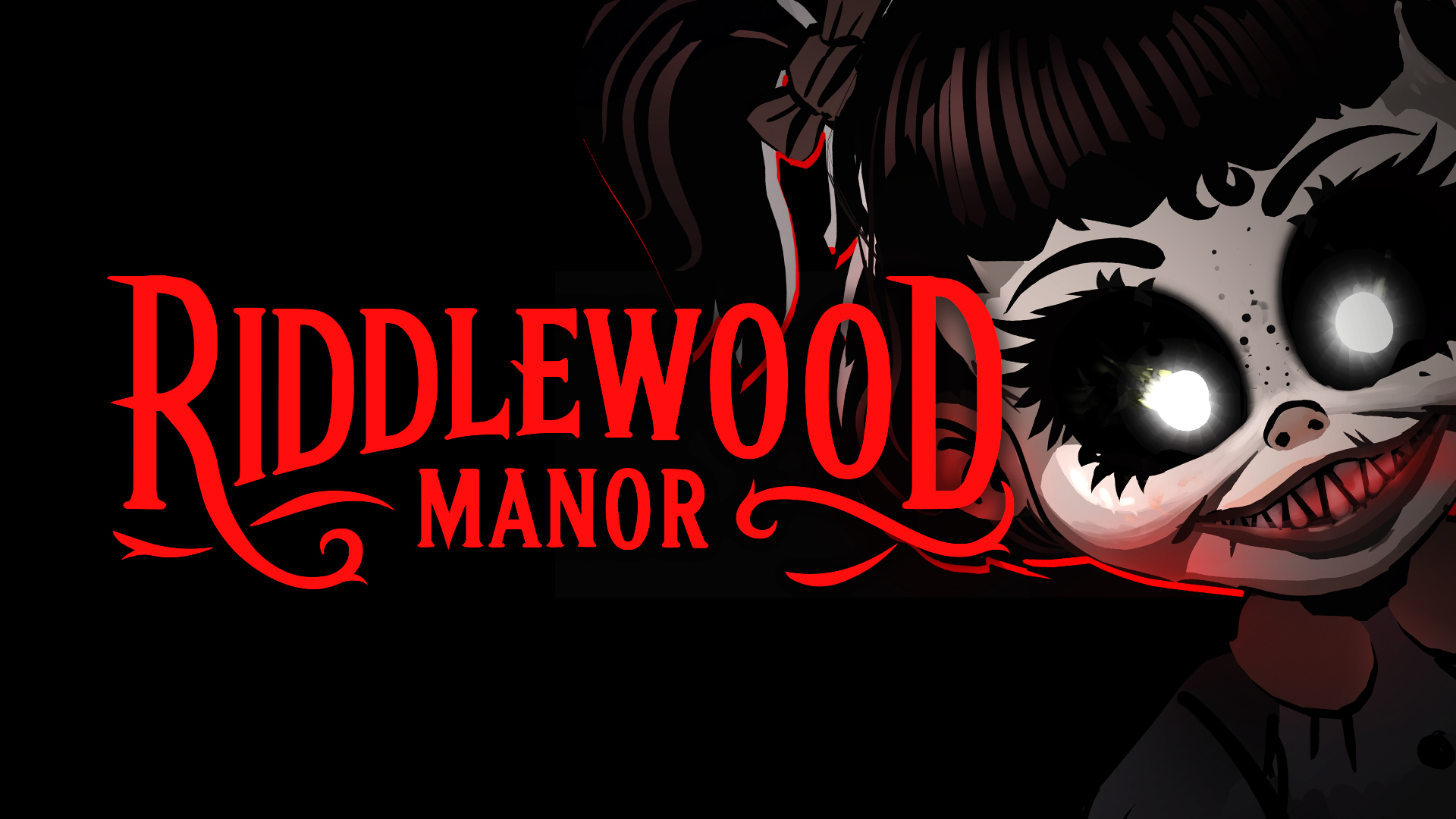
The art style is a wonderful combination of 2D and 3D. The jump scare animations of various demons hidden throughout the house were a standout, with glitching colours and pleasing shapes. However, even the simplest locations had a lot of charm to them, and the art team’s use of forced perspective really added to the ambience, making you feel small in the face of the manor itself. This is not mentioning the fact that Suzie is horrifying, but that much is obvious.
Ultimately, Riddlewood Manor was a good puzzle-horror game experience, but I cannot imagine I would have enjoyed it half as much had I actually attempted to figure out the post-endgame content on my own. There was room for improvement in the story, too — at times the dialogue felt more like generic horror movie writing rather than something unique to Riddlewood Manor. Still, it was a solid game and I have no reservations about recommending it to puzzle-horror lovers.
Rating: 7/10
Looking for more? Check out these articles:
A Magical Return: Wizard101’s Long-Awaited Console Release is Here
Revisiting the Politics of Life is Strange 2, Seven Years Later
Comments