Film Editor Joel Bishton investigates the disappearance of the spoof genre, and the lost cultural significance of iconic films like Airplane and Scary Movie
Think of a spoof movie. You’ve almost certainly thought of Airplane. Name another spoof movie. The film buffs among you will have said Top Secret, or Hot Shots or possibly Scary Movie so I’ll change the parameters. Name a spoof movie from the past ten years. It’s suddenly gotten a lot harder. The passing of Jim Abraham (one of the team behind Airplane) made me reflect on where the spoof genre is right now.
As an arts student, it has been drilled into me to always define my terms at the start of an essay, which brings us onto the difficult issue of defining a spoof movie. Spoof as a genre sits awkwardly in a Venn diagram of parody, pastiche and genre comedy. The main difference between pastiche and parody is whether the makers still want you to enjoy the thing being made fun of. In pastiche they do, in parody they do not. Therefore, the Cornetto Trilogy (or at least Shaun of the Dead and Hot Fuzz) are pastiches, whereas Not Another Teen Movie is a parody. Spoof is about using a genre as a form on which to hang jokes. They can be about the thing (parody jokes) or they can be just pure silliness, which Airplane has much of.
[Airplane] has aged well because it contains every joke possible, and has become a piece of common parlance.
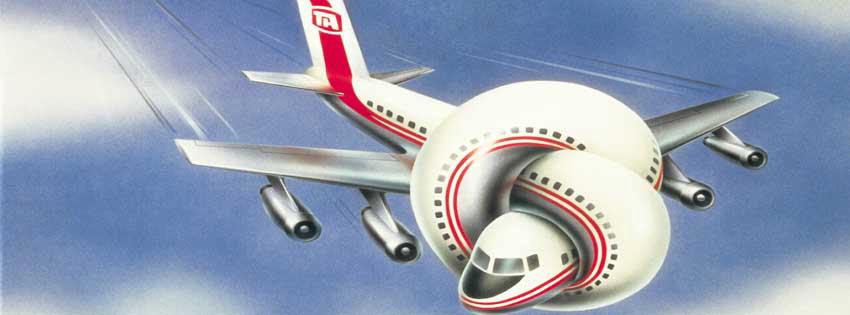
There were spoof films before Airplane (the first screen version of Casino Royale was a Bond spoof starring David Niven) but none as culturally significant. Airplane was a 1980 spoof of 1970s disaster films, in particular the 1957 film Zero Hour about a plane that loses its pilots to food poisoning and a war veteran is forced to land the plane. The three directors/writers (Abrahams and David and Jerry Zucker) bought the rights to Zero Hour and based their script on the beats of that movie. This meant the film is a perfect parody of ‘70s disaster movies, but this is not why it has aged well. It has aged well because it contains every joke possible, and has become a piece of common parlance. The three creatives were involved in all of the significant spoof movies of the 1980s. These included Top Secret (made by the same three), The Naked Gun (directed by David Zucker), as well as Hot Shots! and Hot Shots Part Deux! (written and directed by Abrahams). This was the peak of Abraham’s career, though he did contribute to the next wave of spoof movies.
The 2000s was the next peak of spoof movies. The decade saw the start of the Scary Movie franchise with Abrahams helping write Scary Movie 4. These started off as parodies of Scream and I Know What You Did Last Summer and continued to parody the decades’ horror films, to increasingly limited success. The decade also saw parodies of ‘80s teen movies (Not Another Teen Movie), vampire films, especially the Twilight franchise (Vampires Suck) and superhero movies (the imaginatively titled Superhero Movie). This wave was critically derided, though they did achieve at the box office with the Scary Movie franchise accruing almost $900 million.
This wave petered out in the 2010s, with the major inheritor of Airplane coming on television. Before Charlie Brooker became famous with Black Mirror, he wrote a parody of serious crime dramas entitled Touch of Cloth. He specifically used Airplane as his model, buying an unused script for Messiah (a grim BBC crime drama) and basing his parody on that. He went on to make two follow-ups, before moving on to Black Mirror.
If you wanted to parody a superhero film […] you have to have around the same amount of money to make it look right.
This lack of 2010s spoofs can be put down to the wider demise of the mid-budget movie, and especially the mid-budget comedy. The 2010s saw a steady demise in mid-budget comedies, with the few notable breakthroughs (Bridesmaids, Pitch Perfect, Booksmart) working to disguise the general decline. More widely, the films released were increasingly either low-budget indie darlings, or tentpole blockbusters, with serious adult fare being squeezed out due to its perceived unprofitability.
Which brings us to the current situation: spoofs do not get made nowadays. There are a couple of reasons why. One is that the films to parody are ridiculously expensive. If you wanted to parody a superhero film (as the recent HBO series The Franchise did) you have to have around the same amount of money to make it look right. The other major reason is social media negates the need for parody films. My feed is full of people parodying major releases (Wicked parodies still show up) in three minute segments, without having to painfully stretch it to 90 minutes and go through all the rigmarole of getting a film made.
Overall, then, the state of the spoof film is dire. You might be thinking ‘why do I care?’ (though if you’ve got this far you likely do), but you should care. The spoof is the form of comedy that is the most about making you laugh as many times as possible, and in These Dark Times™ we need laughter. ‘Surely you can’t be serious,’ you say. I am serious, and don’t call me Shirley.
Comments