Life&Style writer Grace Brown discusses Topshop’s return to the high street
Topshop is back on the high street! Though it has only opened one store so far, the brand has made a grand entrance by claiming its new up-market status alongside other luxury retailers inside Liberty London on Regent Street – a renowned shopping location. Topshop has also revived its online store, with clothing ranging anywhere from £50-£260 per item.
I find it interesting that a brand which was once extremely popular, but ultimately failed on the ‘regular’ high street, has been welcomed into the crème de la crème of high-end fashion. As I remember it in high school, Topshop’s unbeatable affordability was a major selling point, but the brand has seemingly abandoned this USP for a place in high-end fashion. Topshop expects future success, with plans to open up more stores across the country in 2026, but its revival seems to have sold out its loyal fanbase to the highest bidder. This feels like a confusing marketing strategy to me.
Its revival seems to have sold out its loyal fanbase to the highest bidder
Topshop is like the retail equivalent of a celebrity who is successful in one field and assumes that this success extends to all other pursuits. For example, when artist Harry Styles acted beside Florence Pugh, a renowned actress, in one of his first big Hollywood performances. Meanwhile, Topshop went from a high-street success to a luxury boutique without the experience or luxury fanbase, making it seem out of its depth. Not because it’s limited to one industry, but because assuming a ‘top dog’ status in an unfamiliar industry can come across as arrogant. In my opinion, both Topshop and Harry Styles want to be at the top of their industries without the necessary experience. As a previous supporter of both, they are not there yet.
Despite Topshop’s undeniable change in target audience, some of the ‘new’ clothes are stuck painfully in the past. It seems like it was stirring up some old-customer nostalgia, targeting those who still remember their favourite pair of Joni jeans.
Some of the ‘new’ clothes are stuck painfully in the past
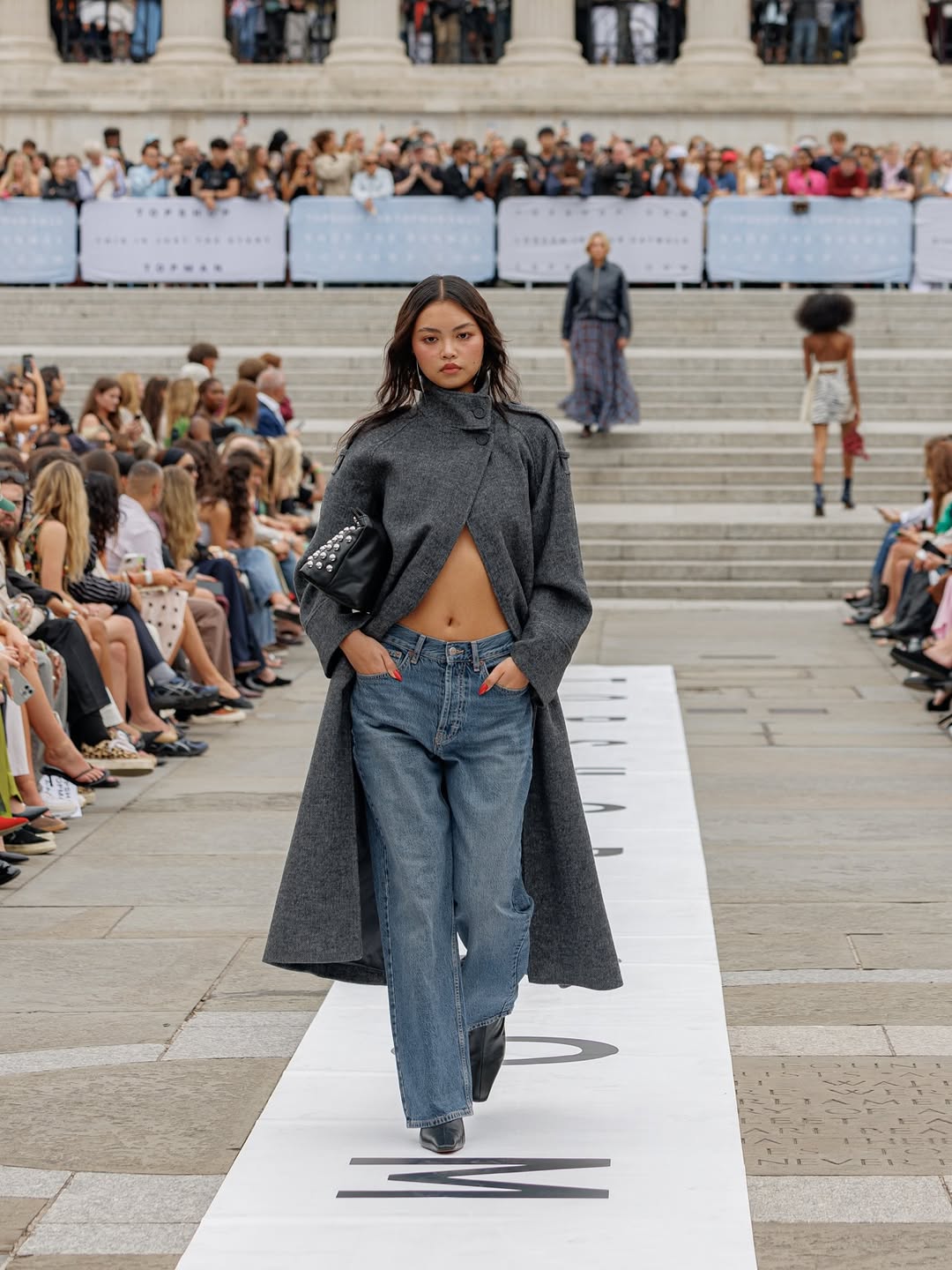
Last August, Topshop announced its comeback with a runway show in Trafalgar Square with appearances from prominent faces Cara Delevingne and Adwoa Aboah. Although they attempted to create fresh designs with Delevingne’s statement collection, the infamous Joni and Jamie denim featured back on the runway. I’m not sure if we should be impressed or outraged.
To the girls that remember their teenage, high-street shopping days, this is a big deal. The connection I had to my Joni Jeans in high school felt like something mythical – we had an inseparable bond that wouldn’t break after school, for weekend plans, or between seasons. When it came to fashion, I knew what good taste meant, and Topshop was the zeitgeist of the 2010s’ skinny jean revolution and a mandatory uniform for myself and my peers as a pre-teen. I think we wore it so much that, well, we wore it out.
After Topshop’s revival fashion show, Hannah Thompson for Harper’s Bazaar suggested that skinny jeans have been ‘threatening a revival for some time’. I’m not sure how accurate the prospect of Joni denim returning as a staple in our wardrobes is, but I certainly feel threatened by it. I did my time, and I refuse to go back.
It’s unclear whether Topshop is trying to attract a new crowd or win back its old one
To me, it’s unclear whether Topshop is trying to attract a new crowd or win back its old one: maybe it wants to do both. But changing its audience is a difficult strategy when millennials and Gen Z have a different approach to fashion now (and different pay packets). I think that Topshop should stop straddling the line and decide what it wants to be. If it’s going to be a brand with an upmarket image, its clothing should reflect that, and not just in the price tag. Otherwise, Topshop will be remembered as a failed fashion brand, representing the clothes we outgrew.
Comments