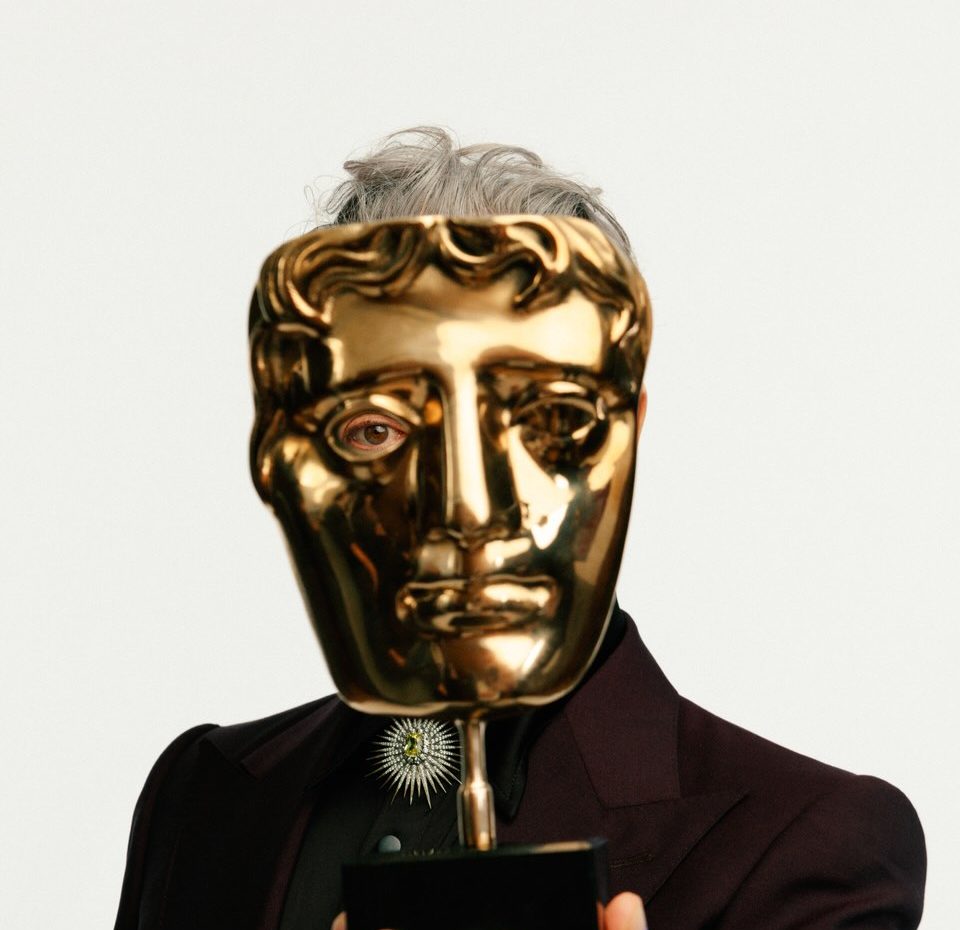
Comment Editor Ed Bettles discusses the BBC’s failure to censor a racial slur yelled by an audience member with Tourette’s syndrome
The 2026 BAFTA awards have been the subject of considerable controversy over the past few weeks, after the BBC failed to censor a racial slur shouted from an audience member with Tourette’s syndrome. In the broadcast, John Davidson, a Tourette’s campaigner attending the event for his biographical and multi-award nominated awareness-raising film I Swear, can be heard saying the N-word as Black actors and Sinners co-stars Michael B. Jordan and Delroy Lindo presented the award for Best Visual Effects.
Davidson has since, in an interview with Variety, publicly apologised for this incident, explaining that it was “an involuntary neurological misfire”, recognising the damaging impact his words may have inflicted but emphasising that “[His] tics are not an intention, not a choice and not a reflection of [his] values.”. Nonetheless, many, such as Jamie Foxx, who has since been criticised for his insensitivity to Davidson’s condition, have taken offence to the outburst, arguing that “[Davidson] meant that shit”. My tics are not an intention, not a choice and not a reflection of my values.
In my opinion, the most balanced and sensitive response to the night’s events came from BAFTAs host Alan Cumming, who posted: “The only possible good that could come of this is a reminder that words matter, that rushing to judgment about things of which we are not fully cognisant is folly, and that all trauma must be recognised and honoured… We were all let down by decisions made to both broadcast slurs and censor free speech”. Sharing this sentiment, at the NAACP Image Awards the following week, Lindo thanked the audience for the love and support offered to them following the BAFTAs, commenting “it’s a classic case of something that could be very negative becoming very positive.”
It’s important that we recognise the exceptional circumstances of Davidson’s tic, which were out of his control, and the apparent lack of malicious intent behind his words. Those with coprolalia (a particular type of Tourette’s), like Davidson, are often overcome by involuntary impulses to use obscene or offensive language, regardless of their own beliefs or whether they know this is wrong. They cannot be held accountable for this. It is necessary, however, for public figures and institutions such as the BAFTAs and the BBC to make an example of such language, to denounce and and discourage racism and prejudice of any kind, to the larger population. These two seemingly opposing motivations can and should be balanced in our response to these events. We can and should extend compassion and support to the Black community who were affected by the airing of such weighted language, without villanising and attacking the Tourette’s community by misunderstanding the nature of their condition. Why, then, did this one instance of hate speech, whether intentional or not, slip through the net?
An arguably more pertinent question is why the BBC continued to air the slur hours after the live ceremony, despite the almost universal reaction of attendees, including Jordan and Lindo onstage, and having adequate time to edit it out. This is particularly baffling, considering that both Davidson noted several of his other tics, including further racist and homophobic slurs, were successfully censored. Meanwhile, the director of My Father’s Shadow and winner of the Outstanding Debut By A British Writer, Director Or Producer award, Akinola Davies Jr., had “free Palestine” cut by the BBC from his acceptance speech. Why, then, did this one instance of hate speech, whether intentional or not, slip through the net? Why are individuals having their free speech doctored when the BBC could not spare their audiences from the broadcasting of a harmful slur? What’s worse, is that this un-edited version of the broadcast was not removed from BBC iPlayer and remained available online for a further 20 hours before workers addressed it, by which time the clip was widely circulated. this incident shows a shocking degree of negligence
I feel it would be slightly audacious to accuse the BBC of being outwardly racist and calculated in this airing of this abusive language, but we can’t deny that this incident shows a shocking degree of negligence, reminiscent of other recent discussions regarding the BBC’s somewhat equivocal approach to censorship and impartiality. Davidson remarked that this was a contingency that both the BAFTAs and the BBC had reassured him they were prepared for and failed. A microphone was positioned just in front of him and, in his opinion, “they should have been aware of what to expect from Tourette’s and work harder to prevent [it]”. The BBC claims, on the other hand, slightly incredulously that it was a “genuine mistake”, and none of their team heard the slur, thus leaving it in unintentionally and addressing the error as soon as they became aware, assuring us that “a comprehensive review is under way” to learn from and avoid further incidents. This is yet another stain on the BBC’s increasingly muddied reputation and only time will tell how the once untouchable powerhouse of British media will recover.
If you liked this, read more from Redbrick Comment:
Student Safety In Selly Oak: Who is Responsible?
Comments