Food&Drink Writer Maile Agai writes about food nostalgia and the love it conveys
Singapore’s Changi Airport is more a door than a liminal space. The minute you deplane, you know exactly where you are. My sister and I comment on the scent every time we arrive, some mix of lemongrass, chicken stock, and curry leaves. We can’t quite place it, but its familiarity is comforting, an anchor after a long travel day.

A Harvard medical study explains that the olfactory bulb (our scent sensor) has a highway directly to the hippocampus, so important memories are often intrinsically paired with smells. And, although scientists argue over the strength of the connection, there is certainly a tie between scent and taste. So, by some loose usage of the transitive property, taste and memory must also be connected.
Dodgy equivalencies aside, I know that some of my most potent memories are tied to food. When I catch that first whiff of lemongrass in Changi Airport, I’m immediately reminded of laughing until my stomach hurts and the whirr of fans working overtime. In the same way, chicken soup always reminds me of my great-grandmother, with her thick Polish accent and stubborn smile.
I’m immediately reminded of laughing until my stomach hurts and the whirr of fans working overtime.
Food provokes memories, but also conveys the emotions that those memories contain. Often, those emotions can be distilled into love. I believe that’s because food, or rather the act of cooking, is the most tender service one person can do for another. No store-bought chicken soup can measure up to the hours my great-grandmother spent in front of her stove, simmering broth until it had an unbelievable depth of flavor. One line from Christopher Citro’s poem “Our Beautiful Life When It’s Filled with Shrieks” went immensely viral a few years ago; he writes, “I love you. I want us both to eat well.” By the time I found this poem, my great-grandmother had passed away, but thinking back, I have no doubt that every bowl of soup that she made me, from the sprigs of dill to the mirepoix, was an expression of that same sentiment.
Food provokes memories, but also conveys the emotions that those memories contain.
Malaysian poet Cynthia Miller’s description of the love inherent in food culture is similar to Citro’s, but influenced by her South East Asian background. In a poem titled “Sayang/Sayang,” she explores the different definitions this Malay term for affection has. Unsurprisingly, many of these definitions are food-related. In one particularly resonant verse, she writes, “Love is/chiding you to finish your plate/love, eat up.”
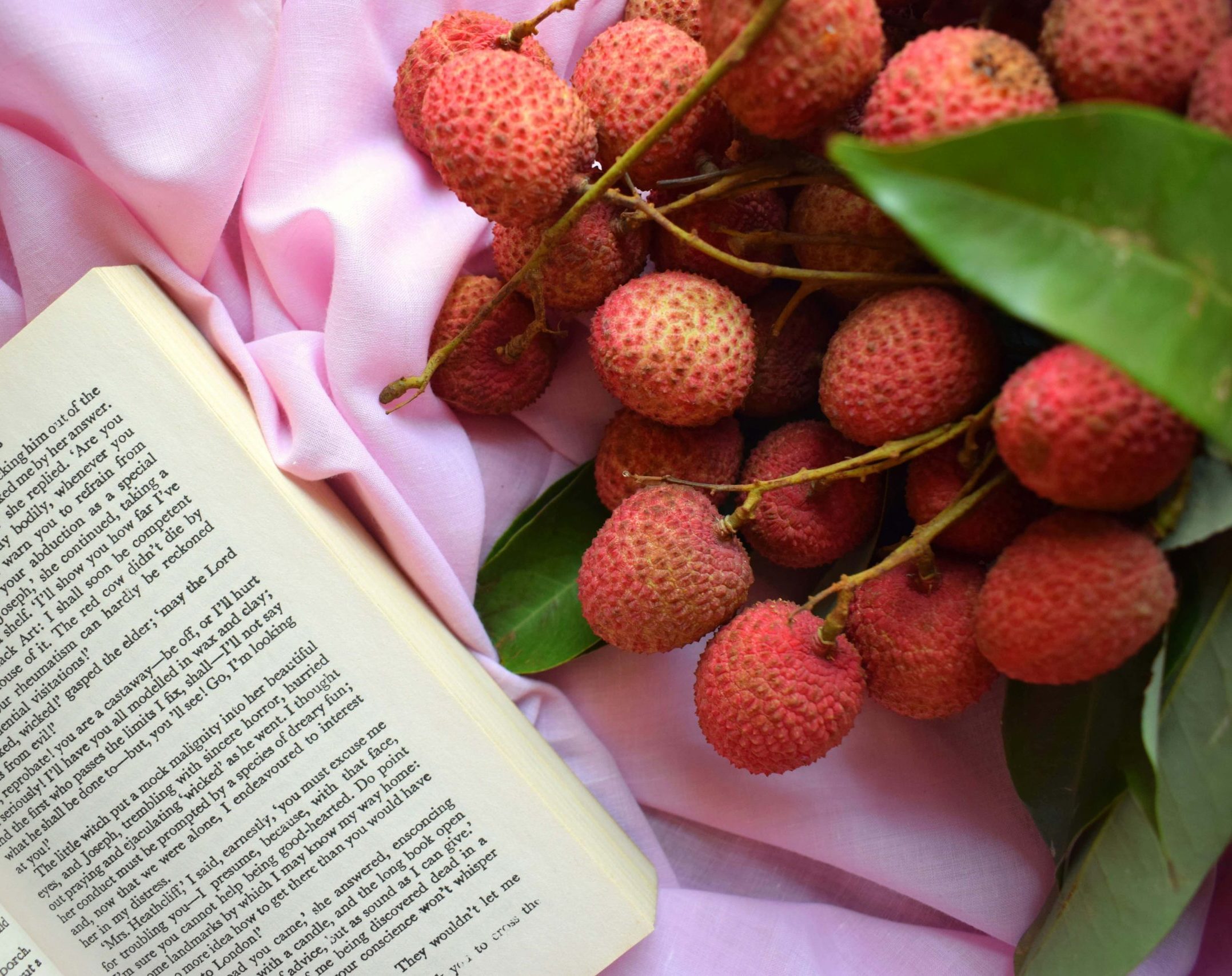
My Singaporean grandmother always ensures that I have a plate of fruit in front of me when I visit her. She fills platters with peeled lychee, rambutan, mangosteen– any fruit that she knows I like in quantities I can’t possibly finish. Keeping my plate full of food that I enjoy is her way of expressing care for my wellbeing. Although she doesn’t often convey her love through words or physical affection, moments like these, centered around food, hold no less weight.
The mundanity of food is what makes it so emotionally powerful. Its omnipresence in our lives gives it the opportunity to have such depth of meaning and interpretation. Endlessly nostalgic and inspiring, I can’t help but find food poetic.
Hungry for more? Check these articles out:
Comments