Sci&Tech Editor Adam Abrahams parrots some facts about our local wildlife
Yellow and purple crocus flowers emerging from the soil are a clear sign of spring returning to campus. As sunrise shifts earlier and days get brighter, why not keep your head up and try to spot some of these campus regulars?
Pied Wagtail

Lukáš Kadava – Unsplash
Despite being only about the length of a smartphone, these little guys won’t shy away from darting around your feet in search of beetles, flies, and meal deal scraps.
They can often be seen near the green heart or the Aston Webb buildings, identifiable by their distinctive black and white plumage and – surprise surprise – their wagging tails.
Bird experts aren’t certain on why they exhibit this behaviour; theories suggest that it lets them flush insects out from hiding, or that it is a signal of vigilance. The important part is that it makes them look very cute indeed.
Blue Tit

Doncoombez – Unsplash
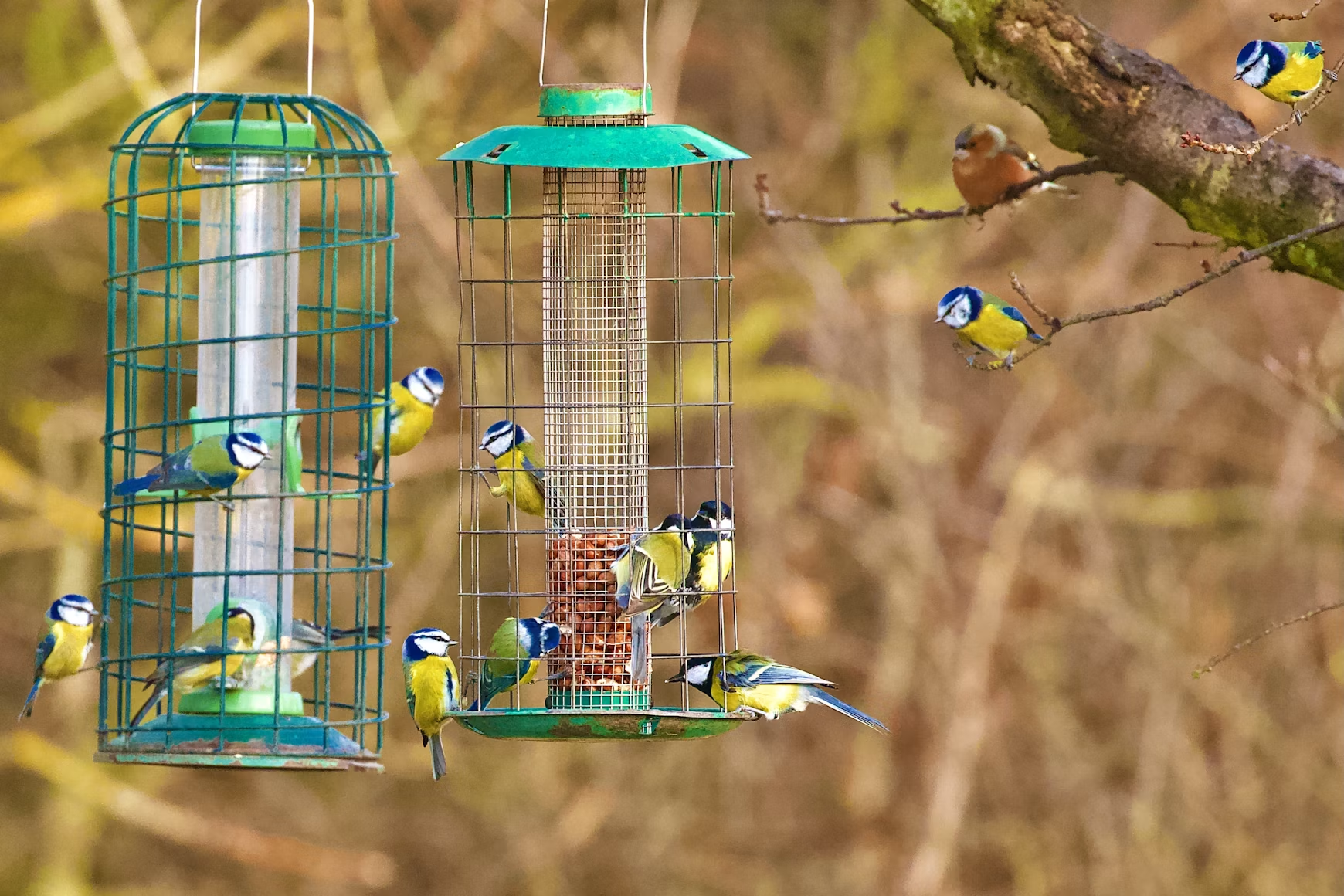
No fowl language here, the Tit subfamily get their name from shortening the Old English word ‘titmouse’, meaning ‘small bird’. The Blue Tit is the most common of its cousins in the UK, though the Great Tit, Coal Tit and Long-tailed Tit all thrive across European gardens, woodlands and parks.
The Blue Tit is one of the smallest of the UK’s avian population, weighing around 11 grams – about as much as a 10p coin.
Their calls can be similar to other Tit species, but once you learn to recognise it you’ll be shocked at how prevalent these colourful creatures are.
Goldfinch

Nikola Tomašić – Unsplash
In ‘A Midsummer Night’s Dream’, Shakespeare describes the songs of Wrens, Sparrows, Larks, and also Finches. It was during a performance of this play out on the grass near the Guild, perhaps better known as a gathering point for Sports Night smokers, that I first saw a Goldfinch on campus.
Students of literature may also note that the word ‘Goldfinch’ first appeared during the 14th century in Geoffry Chaucer’s unfinished ‘The Canterbury Tales’.
It is no surprise that these two literary figures take inspiration from the European Goldfinch. Their melodic calls are so beautiful that they were historically captured as caged songbirds, whilst their striking red and yellow colouring made them a frequent symbol in Christian artwork.
Peregrine Falcon

Have you ever wondered why Old Joe takes a break from chiming during the spring? A pair of Peregrine Falcons are the reason for his silence.
Though the species has been spotted around campus since the 90s, a dynamic duo has nested in our clocktower every year since 2013. We can’t be sure that it’s the same couple each time, but I’d like to think it is. A dynamic duo has nested in our clocktower every year since 2013
Peregrines are the UK’s largest falcons, with wingspans up to 1.2 metres, and are expert hunters; their diving speeds of 200 miles per hour make them the fastest animal on earth! They also have a set of semi-transparent eyelids that act as goggles, protecting them from wind and dust whilst allowing them to stay focused on their prey.
Though these birds have recovered from their pesticide-induced population declines throughout the 1950s-70s, they still continue to fall victim to shooting, trapping and intentional poisoning – two Peregrine chicks nesting in Worcester Cathedral were confirmed to have died by poisoning in May last year.
They are often killed by landowners who practise ‘game bird shooting’. Their sport of killing Pheasants and Grouse is threatened by natural predators such as Falcons and Raptors, so these animals are illegally killed to protect investments.
Issues like these highlight the importance of facilitating habitats for wildlife. Even in urban Birmingham, there is an abundance of life all around for those willing to look.
Enjoyed this article? Read more from Sci&Tech here:
What to See in the ‘City of a Thousand Trades’
Comments