Beatrice Rubens makes the case for a motherly love of prudence over passion.
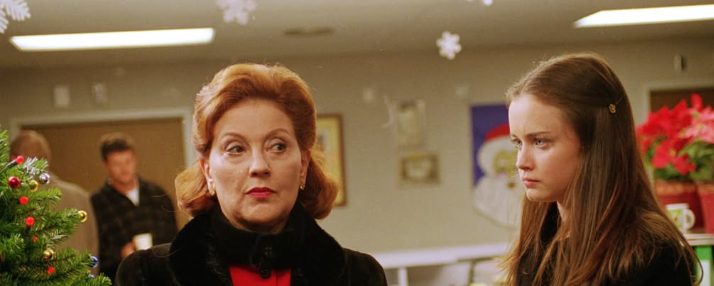
The series ‘Gilmore Girls’ is one of my all-time favourites. Its comforting feel and unique characters have made it a mandatory autumn re-watch for many. The series follows three generations of women through their juxtaposing mother-daughter dynamics, contrasting Lorelai (Lauren Graham) and Rory (Alexis Bledel)’s warm relationship against Emily (Kelly Bishop) and Lorelai’s distant one.
Some viewers might consider Emily the ostensible “villain”
unfair judgement. Arguably, Emily’s inability to understand Lorelai stems from the indoctrinated view of her 1960s upbringing: that the perfect “nuclear family” is what would truly be best for her daughter. One of my favourite scenes is of Emily finally admitting her admiration for Lorelai’s independence, and realising she could not run the household without the help of her husband, Richard (Edward Herrmann). Though infrequent, such moments of warmth afford Emily her emotional depth, unearthing the true feelings she has been conditioned to hide.
Emily’s seeming “disappointment” with Lorelai is a running motif throughout the series, shown in lines such as: ‘you can use your mother’s old clubs. They’re upstairs, gathering dust, along with the rest of her potential’. This is particularly prevalent when Rory decides to move in with Emily and Richard, resulting in her subconsciously seeing an opportunity to reinvent a “new” Lorelai. Though moments like this make Emily an unlikeable character for some, I see an underlying sadness. She can never quite understand Lorelai, and this drives them apart.
It’s interesting to note, in comparison with her own upbringing, the difference in how Lorelai decides to raise Rory: focusing on developing the deeper connection she never had with her mother. Emily seems to crave the bond that Lorelai and Rory have,
Furthermore, Emily’s witty and sharp dialogue signifies her clear intelligence. This leaves me to wonder whether, perhaps, born in a later generation, her personality and views might have been more similar to Lorelai’s. This has also made her one of my favourite characters, as her comedic insults deliver some of the best lines in the show. I would say her character is one that grows on you over time, especially when you consider her as a mother who – despite being completely different from her daughter – loves her irrevocably.
Comments