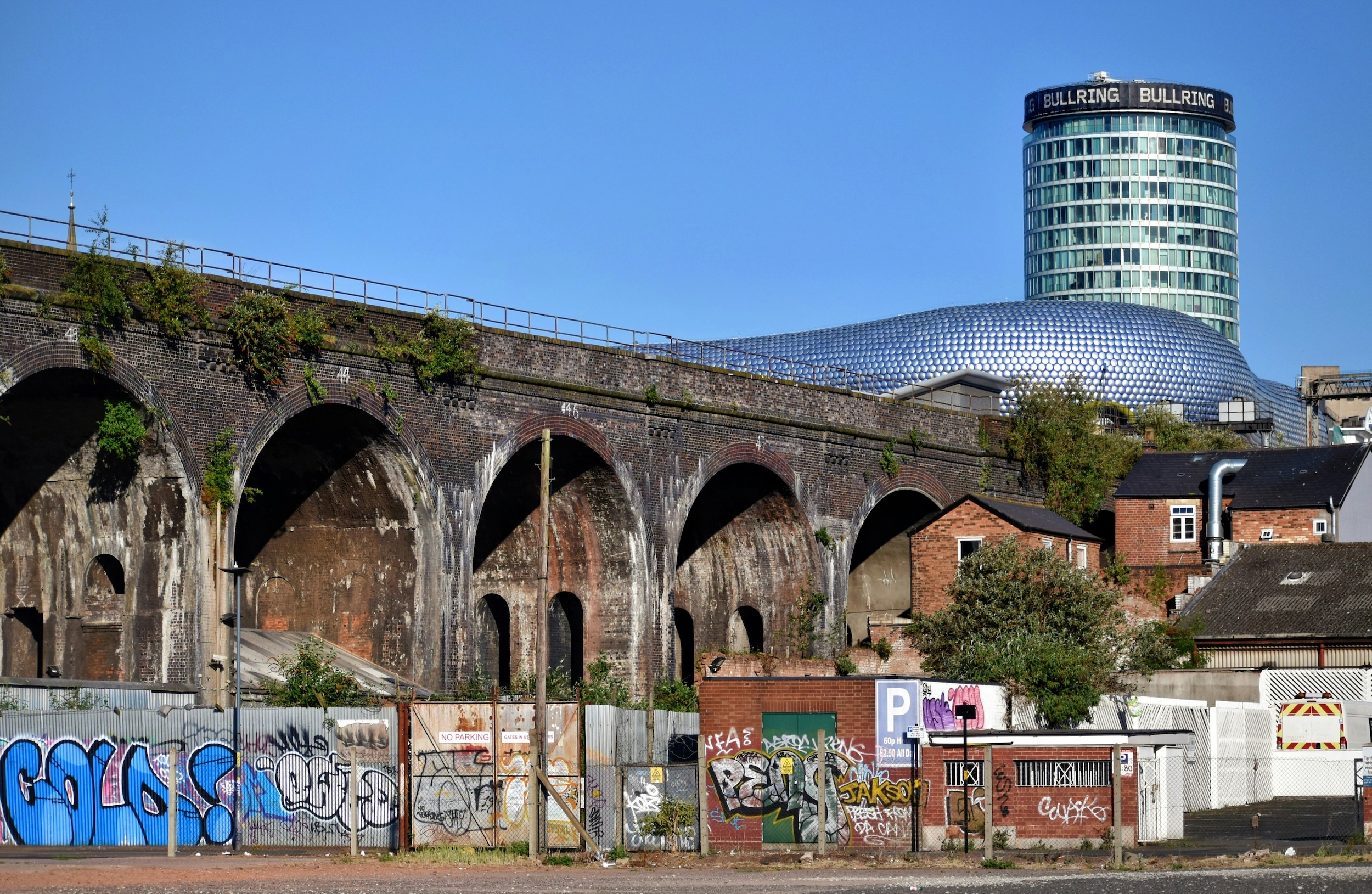
Major plans for the Bordesley Viaduct threaten to reshape Birmingham’s most vibrant quarter, but could this be the end of city’s music scene and nightlife as we know it?
It is important to note that these proposals are subject to a public consultation. This means residents, businesses and tourists still have time to voice their opposition to the plans. The consultation remains open until 28 August 2026, and it is vital for Birmingham’s students to tell Midlands Rail Hub exactly what Digbeth means to us. Visit this website to share your thoughts.
If you are a student in Birmingham, chances are you have spent a night out in Digbeth. In fact, Redbrick is no stranger to hosting events at some of the quarter’s most famed venues. What you may not know is that parts of Digbeth could soon face demolition as part of the £1.75bn Midlands Rail Hub project.
The project proposes to widen the Bordesley Viaduct, allowing six additional trains per hour into Birmingham Moor Street – but at what cost?
Digbeth is one of Birmingham’s cultural hotspots, recognised as the creative and digital quarter, following decades of urban regeneration. What were once factories and warehouses have been transformed into independent music venues, nightclubs and creative spaces. Now businesses, including BIMM University, built into and surrounding the Bordesley viaduct face displacement or demolition. Infrastructure intended to improve the city’s inter-city connections threatens the area these businesses have helped thrive.
The Midlands Rail Hub Alliance has said that the works would affect a ‘low-lying industrial area of Birmingham, including the River Rea.’ However, the statement does not mention the cultural hubs and independent businesses that occupy the area.
Among the businesses and venues that could be affected are Park Street Tattoo, Original Patty Men, Kilder, Global Gaming Arena and Cafe, Midland Press, The Warehouse, Brum Radio, VOCE Books, Suki10c, The Ladbrooke Hotel, The Executive Lounge, Lab11, Sector57, BIMM University, The Ruin, Pan Pan, Golf Fang, Ithaka Coffee, Mama Roux, Club Collette, The Night Owl, Luna Springs, XOYO, The Rainbow, The Drop Inn, Pirate Studios, Borsch Electric and Blue Marlin.
For many who socialise and work in Digbeth, the potential displacement is raising questions about what could be lost if the plans went ahead.
The Night Owl
The Night Owl is one of the many music venues in Digbeth facing an uncertain future. The popular independent live music venue and retro nightclub is the West Midlands’ first purpose-built Northern Soul and Motown club. For years, it has championed alternative subcultures and provided a space for students and Brummies to thrive.
Under the proposed plans, the venue could be demolished, used as a construction site, or left unable to open. In an Instagram appeal, The Night Owl said ‘what is certain is that if these plans go ahead, The Night Owl would not survive.’
The venue has already faced significant adversity in recent years, surviving both lockdown during the COVID-19 pandemic and soaring energy costs. Yet for Clare Edwards, the general manager at The Night Owl, the latest threat to the club is particularly painful.
‘The Night Owl is a committed grassroots venue of 11 years and a huge passion for subcultures has always been at the heart of what we do. It’s pretty awful to have your future potentially decided by people who see no worth in what we do; they didn’t even seem to realise that Lower Trinity had open, thriving venues!’
Edwards made one thing clear if the plans were to go ahead: ‘Digbeth will be pretty much over as you know it.’
But it is not just venue owners who fear the closure of The Night Owl. Students who flock to Digbeth every week for Jazz Tuesday and Boogie Tuesday are also struggling to face the prospect of losing a key part of their university experience. Many students see The Night Owl, and the community built around it, as a safe space, and an integral part of university life.
Alex, who graduated from the University of Birmingham this July, said Boogie Tuesdays had become a significant part of his social life at university: ‘I’m definitely going to miss Boogie Tuesdays! I had some of my best nights out there while I was at university.’
Chris, a current student at the University of Birmingham, shared similar sentiments: ‘The Night Owl is such a wonderful LGBTQ+ safe space. Its incredible inclusivity has helped us be able to spend time, enjoy, expand, and most importantly boogie with our community, and it’s an integral part of my student life in Brum.’
The Night Owl is also a popular choice for university society events. For recent University of Birmingham graduate Rachel, nights at the Owl were more than just an opportunity to go out: ‘Society events hosted at The Night Owl are always super fun, in a very relaxed and welcoming environment that embraces every event. The Night Owl always ensures a safe and fun space to party and have even got involved in buying raffle tickets in the past, adding to the friendly atmosphere even more.’
Jessica, a 2024/2025 society treasurer, also praised the venue’s commitment to supporting student groups, sharing with Redbrick: ‘they always respond quickly and are happy to let societies adapt the space to their needs with décor and music. They are super friendly and welcoming.’
Elly White is a social secretary for the Filmmaking society next year, and she had already planned for the first night out social to be hosted at The Night Owl. She told Redbrick she was disappointed to hear about the proposal: ‘The Night Owl is such an important venue, not just for students but for the independent artists who play there and the important part it plays in Digbeth’s community. Publicising Digbeth as the creative quarter of Birmingham and then attempting to pave over creative venues to make way for more transport shows the council’s true priorities.’
For every student who spoke to Redbrick, the message was clear. To lose The Night Owl would be to lose an essential third space at a time when students are already short of places to connect with like-minded people. Publicising Digbeth as the creative quarter of Birmingham and then attempting to pave over creative venues to make way for more transport shows the council’s true priorities
Mama Roux and Club Collette
The Night Owl is not the only venue at risk. Just down the road, Mama Roux is a multi-room bar and live music venue well known for its LGBTQ+ events and long-standing contribution to Digbeth’s grassroots music scene.
Madi Harrington, assistant manager at Mama Roux, contacted Redbrick to share her opposition to the proposed plans. Harrington has worked at Mama Roux since she was 18, describing it as not just a job but ‘a place where [she] has grown up, built confidence, and made some of [her] closest friends.’
‘Since opening, Mama’s has been at the heart of so many different parts of Digbeth’s culture […] We’ve opened our doors to local schools and universities, as well as countless UoB events where students have made some of their best memories.’
Not only this, but the venue also plays an active role in Birmingham’s live music scene.
‘We invest thousands of pounds directly into local musicians, artists, DJs and performers every week. Supporting emerging talent and helping Birmingham’s music community grow has always been a huge part of what we do, all without charging an entry fee.’
Benjy, Owner of Mama Roux and Club Collette found out about the demolition plans on X, formerly Twitter. He described the proposals as a threat to the ‘soul of Digbeth.’
‘Lower Trinity Street […] is the beating heart of Birmingham’s grassroots live and electronic music scene. We’ve hosted global artists like Jorja Smith and Little Simz, and we’ve invested thousands back into local creatives every single week.’
He continued, ‘We are fighting to prevent a complete cultural wipeout for the independent spaces that make this city human.’
But what do the Midlands Rail Hub Alliance say? They argue that the scheme would be overwhelmingly beneficial for the city, representing an opportunity for growth, not cultural loss. A spokesperson for Midlands Rail Hub Alliance described the project as ‘a major investment in the region’s railway which will unlock access to opportunities, create jobs, boost economic growth, and enable new houses to be built, benefiting local people, businesses, and communities.’
University of Birmingham student Jennifer Sawitzki describes this perspective as ‘insulting’ to both businesses and the young people who support them. She believes the MRHA are ‘ignoring the potential of Digbeth – as it is now – for economic growth.’
As a regular in Digbeth, Sawitzki sees the area as an important cultural hotspot: ‘Digbeth is Birmingham’s hotspot for incubating upcoming talent and – in my opinion – reinstating what nightlife should be. Venues like The Night Owl regularly support local jazz artists, events in warehouses like those run by Club Colette are pioneering phone-free dance floors (and bringing back actual dancing to clubs).’
She added: ‘The installation of the Bordesley viaduct and subsequent destruction of Lower Trinity Street would probably be the most idiotic thing the MRHA could choose to do.’
With thanks to Mazzy Snape at The Night Owl, Madi Harrington at Mama Roux, and Jennifer, Elly, Chris, Alex, Rachel and Jessica for sharing their experiences and contributing to this article.
For more information about the proposed plans, read the Midlands Rail Hub Alliance consultation here.
To share your views on the proposals, complete the Midlands Rail Hub Alliance feedback form here.
Read more investigative pieces from Redbrick here:
An Investigation into Redbrick’s Decline
In Conversation with FemSoc: Redbrick on Spiking Against Students
Comments