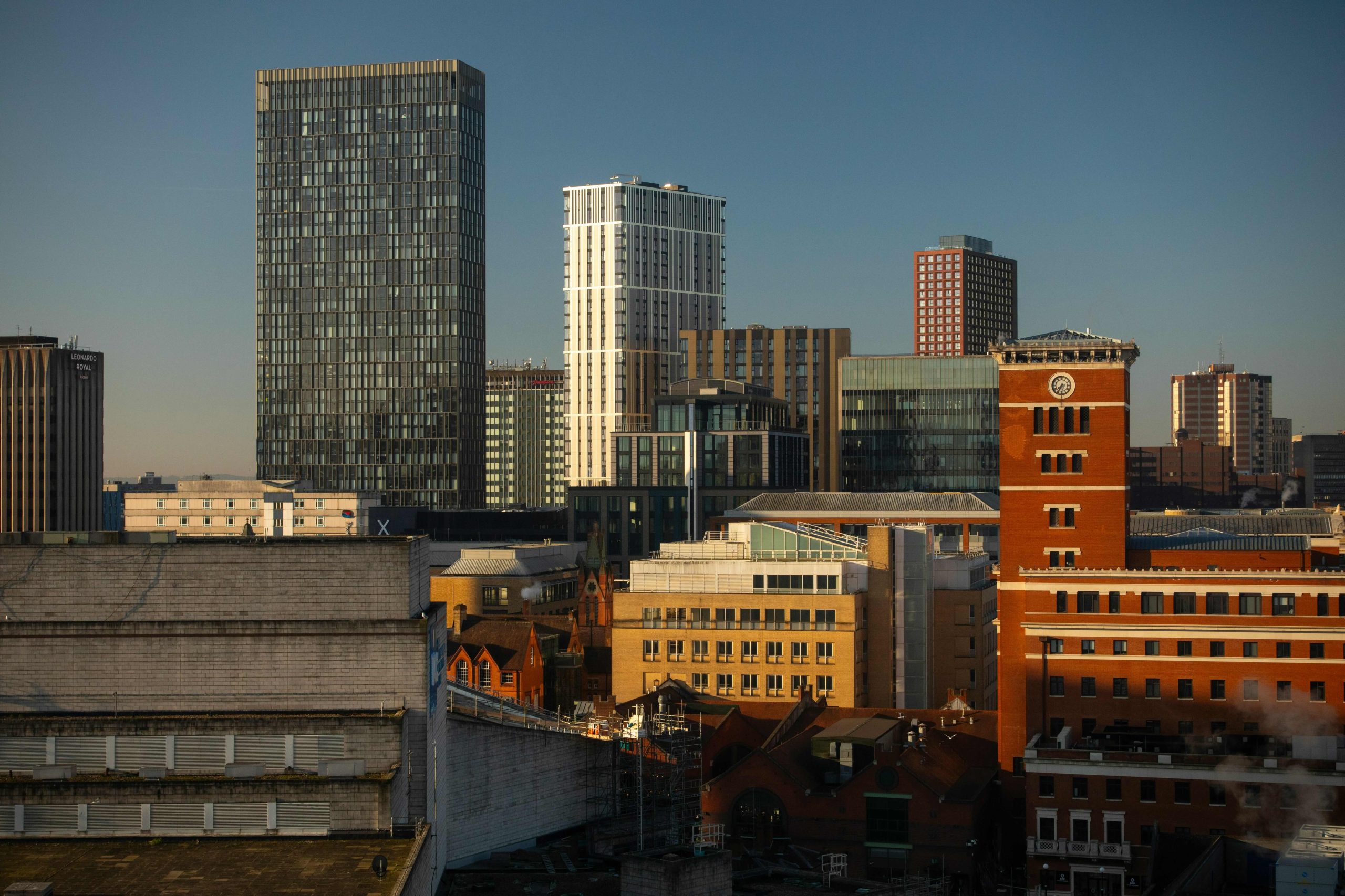
Charlie Mead comments on the uncertain future of Birmingham under Burnham’s premiership.
The first weeks of Andy Burnham’s premiership has been a breath of fresh air for the wheezing British political system. His big, emotive speeches, together with his down-to-earth personality, are starting to shift the political atmosphere in the UK. I generally support Burnham’s ideas and policies as of yet. Britain has a Prime Minister who recognises neo-liberalism as a bad thing. I honestly had to pinch myself to see if I was dreaming. He wants reform: not the kind that uses millions from its illegal donations to spread disparity and division not the kind that uses millions from its illegal donations to spread disparity and division…
However, we must be careful not to be swept away by all these grand buzz words and try to understand how Birmingham is recognised too, so that Britain’s traditional ‘Second City’ does not become the forgotten one. No.10 Midlands may not have the same ring as No.10 North, but why hasn’t Birmingham been chosen as the second great national centre of devolution?
It is true that Manchester is growing faster (although marginally) than Birmingham. It does not have its bins overflowing into the streets, it has efficient transport, and a council that embraces its creative hub rather than wishing to build a railway that knocks it all down. But Birmingham was once desirable too!
During the 1930s and 40s, Birmingham was leading the economic growth of the UK, acting as its industrial and urban flagship. Unfortunately, all of this prosperity existing outside of London seemed to make Westminster rather uncomfortable. As a result, the government introduced the West Midlands Plan in 1946. The West Midlands Plan of 1946 aimed at stunting the growth of Birmingham’s financial and industrial power. It pushed expanding businesses away from Birmingham in the hope that other deprived areas further up North would be able to swoop up these new investors. However, the North’s lack of wealth did not change in the end, and Birmingham suffered massively from this exodus of business, losing one fifth of its population and ripping the heart out of its beating industries.
This goes to show that centralised powers, where one city is able to dictate the outcomes of another, have already damaged Birmingham enough. Being under London’s rule has been hard. If Manchester becomes another place that hoards power rather than devolve and disperse it, then ‘Manchesterism’ just becomes tokenistic and could leave Birmingham stuck between these two cities like a rock and a hard place. like a rock and a hard place.
I know I may just be overly cautious. In practice, all of Burnham’s new schemes should benefit Birmingham and give it more power over its own future. After all, this is what is at the heart of Burnham’s idea, he wants ‘growth in every postcode’. Burnham’s model, if executed properly, should mean more investment into regions like the West Midlands, and more regional prosperity. Perhaps my own insecurities about Birmingham being leapfrogged by its Northern Neighbour is making me circumspect. Manchester, with its more charming accent, more money, and better political image, like some sort of Northern Hugh Grant, is quite hard to compete with. I think what I am just asking for, is for us to not be forgotten.
If you liked this, read more from Redbrick Comment:
Save Our Scene: Birmingham’s Doomsday
Student Safety in Selly Oak: Who is Responsible?
Wicked, Weight-Loss and ‘Well-Intentioned’ Comments
Comments