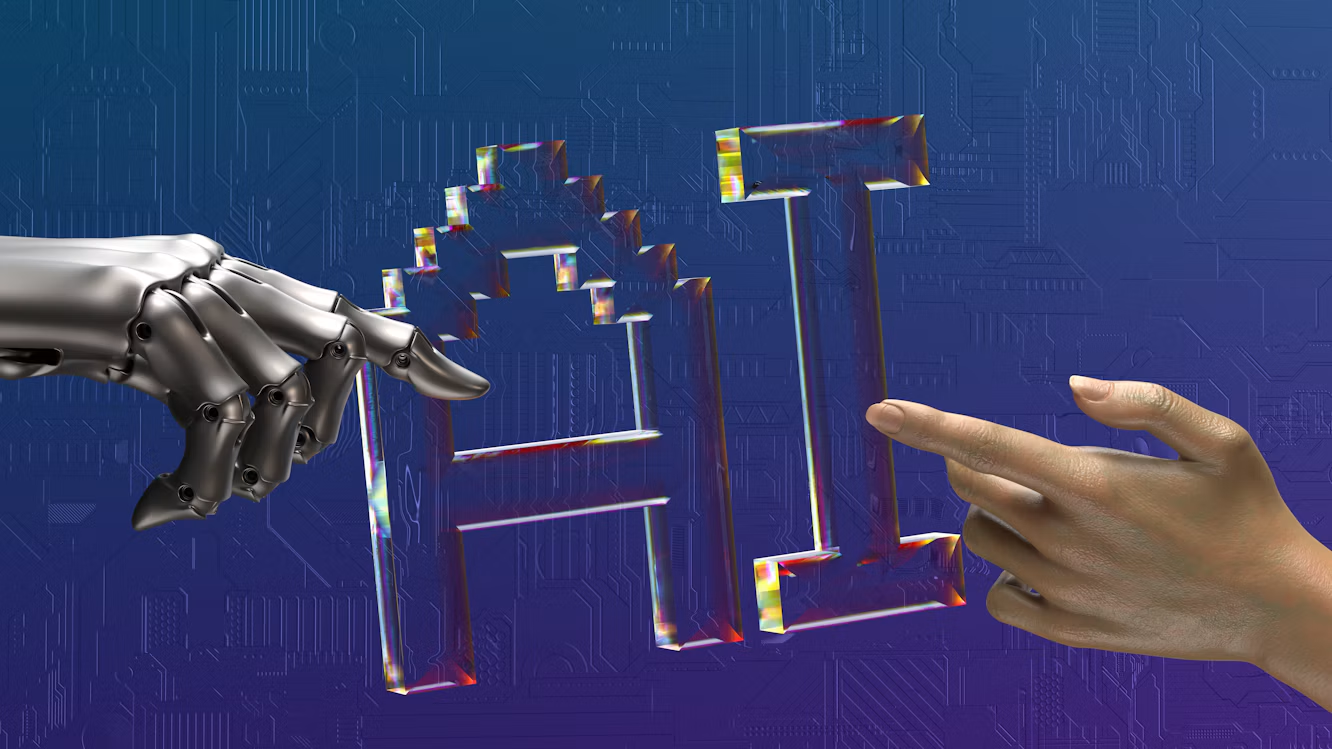
Life&Style Writer Juslina Jakhu discusses the effects of seeking relationship advice from AI
We have all been there, confiding in a friend after an argument, either looking for a fresh perspective on whether we did the right thing or perhaps an opportunity to untangle a complicated situation. Our support systems provide us with something invaluable: the emotional responsiveness that helps us process our feelings and understand ourselves better. Yet, in times of heavy reliance on AI, these once crucial social encounters are threatened by AI’s replacement of our own problem-solving skills.
crucial social encounters are threatened by AI’s replacement of our own problem-solving skills
People are increasingly using artificial intelligence to analyse their relationships and problems, turning to chatbots to guide them through heightened emotions and heated moments. An impartial mediator may appear helpful, but the design of AI chatbots reflects an idealised reality shaped by the initial prompt. Just like when we relay a story, it is no secret that people tend to present themselves as less in the wrong than they actually were. The danger of a deceptive prompt is not only that it may be biased towards one side of the story, but that it weaponises ‘intelligence’ to validate oneself, and avoids real responsibility.
What is intelligent about an artificial relationship? Research from the University of Oxford states that 38 per cent of young people trust AI for advice on personal relationships. This extends from ‘practical help’ to the ‘collaboration [in] role play with AI characters and deep conversations with AI chatbots.’ This matters because artificial roleplay encourages the falsification of behaviour towards romantic partners, blurring the lines between honesty and performance.
the design of AI chatbots reflects an idealised reality shaped by the initial prompt
When the use of AI to validate one perspective goes unchallenged, we are left with a moral crisis of reasoning. Developers see a market to monopolise on young people and create AI chatbots which export messages to analyse texts and comprehensively outline behavioural patterns and engagement. AI is framed as a ‘coach’ when in reality it transforms us into vessels of predictable AI subjects, formulating compatibility under algorithms, not real life. A Stanford study tested AI models and found that on average AI “affirmed users’ actions 49% more often than humans on average, including in cases involving deception, illegality, or other harms.” As AI companions provide distorted expectations on human intimacy, the compliant nature of AI may lead us to make decisions that do not consider the greater context of dynamics.
Meanwhile, in some partnerships, both individuals use AI as a mediator that equally weighs both sides of the story. Here, chatbots seem helpful because they reach a conclusion of validating both sides. We might even say that AI has resolved the conflict and is therefore useful when used right. However, what enabled the resolution was the manufactured space of rationality and understanding. The real risk is the potential for AI to become a scapegoat to avoid hard conversations.
the real risk is the potential for AI to become a scapegoat to avoid hard conversations
Human connections deserve more credit than being formulated as predictable, algorithmic understandings. Relationships are messy, complicated and incomprehensible, but that is exactly what makes them real. True vulnerability, humility to tackle a problem, and the courage to confide in one another is where real intelligence thrives.
Read more from Life&Style:
Is Heated Rivalry the New Normal People?
Comments