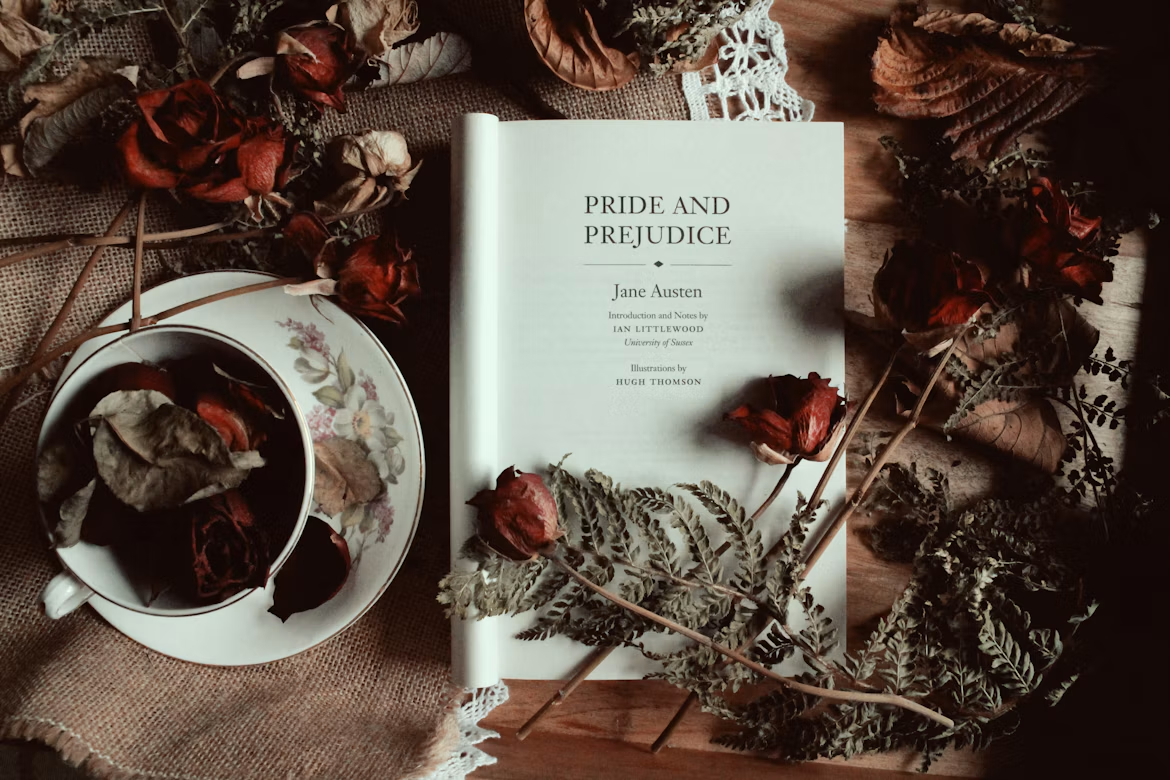
Film & TV Writer Elizabeth Gough questions whether we need another adaptation of Jane Austen’s classic ‘Pride and Prejudice’
It is a truth universally acknowledged that a novel of positive reception must be in want of a decent tele cinematic adaptation. And yet, in anticipation for Netflix’s version of Pride and Prejudice, I am begging the many film and TV producers who regularly read Redbrick to stop re-adapting the classic.
This is not out of hatred of the novel – quite the opposite. In fact, I love Pride and Prejudice. The novel is funny, clever, romantic and everything else you could possibly want from a Jane Austen novel. It is the blueprint for the romcom, an excellent satire, and Lizzie Bennet has got to be one of my favourite heroines, ever. I could go on if I did not fear boring you.
Despite my endless praises of the classic, I think it is time that we stop adapting it. You see, most classics are lucky to have one semi-decent adaptation. To look at another work by Jane Austen, Persuasion is yet to have one: nobody talks about the 1995 made-for-television film, and even fewer people say anything positive about the Netflix’s interpretation from 2022, staring Dakota Johnson. Very few adaptations can avoid ‘the book was better’ outrage.
The fact that there is even a debate about which is the best, is enough to prove that a fan of the novel is spoiled for choice.
And yet, Pride and Prejudice is lucky enough to have many great adaptations. The fact that there is even a debate about which is the best, is enough to prove that a fan of the novel is spoiled for choice. The principal subjects of this debate are between the equally seminal 1995 series (starring Jennifer Ehle and Colin Firth) and 2005 film (starring Keira Knightley and Matthew Macfadyen).
But the excellent adaptations do not end there. There is even a brilliant modern-day reinterpretation in the delightfully hilarious Bridget Jones’s Diary. More recently, there has been an expansion to the universe this year in the spin-off, The Other Bennet Sister, a BBC adaptation of a 2020 novel. It would seem that Pride and Prejudice will soon rival the Marvel Cinematic Universe in its speed of expansion. Do not even get me started on Pride and Prejudice And Zombies. There truly is a version of Pride and Prejudice for everyone – and these are just the English-language versions mentioned.
On one hand, I am delighted that a novel I adore gets its due. On the other hand, I think it is quite frankly selfish for one novel to hog all good film and television.
On one hand, I am delighted that a novel I adore gets its due. On the other hand, I think it is quite frankly selfish for one novel to hog all good film and television. It is for this reason, that I think we – as a collective – need to decide which novels have been ‘done’, meaning successfully adapted and therefore banned from the big (or small) screen, and which ones we would still like to see adapted. Little Women? Done. A Thousand Splendid Suns? Not done. Sense and Sensibility? Done. Wuthering Heights? Maybe we just need to give up and accept that only Kate Bush can do the novel justice.
Perhaps what I am most annoyed about, however, is that I cannot even bring myself to boycott the unstoppable juggernaut that is the ever expanding of the Pride and Prejudice brand. It is devastating to report that the casting for the upcoming Netflix adaptation looks too good. I mean, Olivia Colman as Mrs Bennet? I am afraid that I cannot avoid this objectively genius decision. If only Netflix had put half as much care into Persuasion as they did for Pride and Prejudice.
I suppose all I can hope for is a rising interest in adaptations off the back of this. Could this mean that some underrated classics like The Tenant of Wildfell Hall or The Mayor of Casterbridge might receive some much-deserved attention? I doubt it, unfortunately.
More from Redbrick Film & TV:
Comments