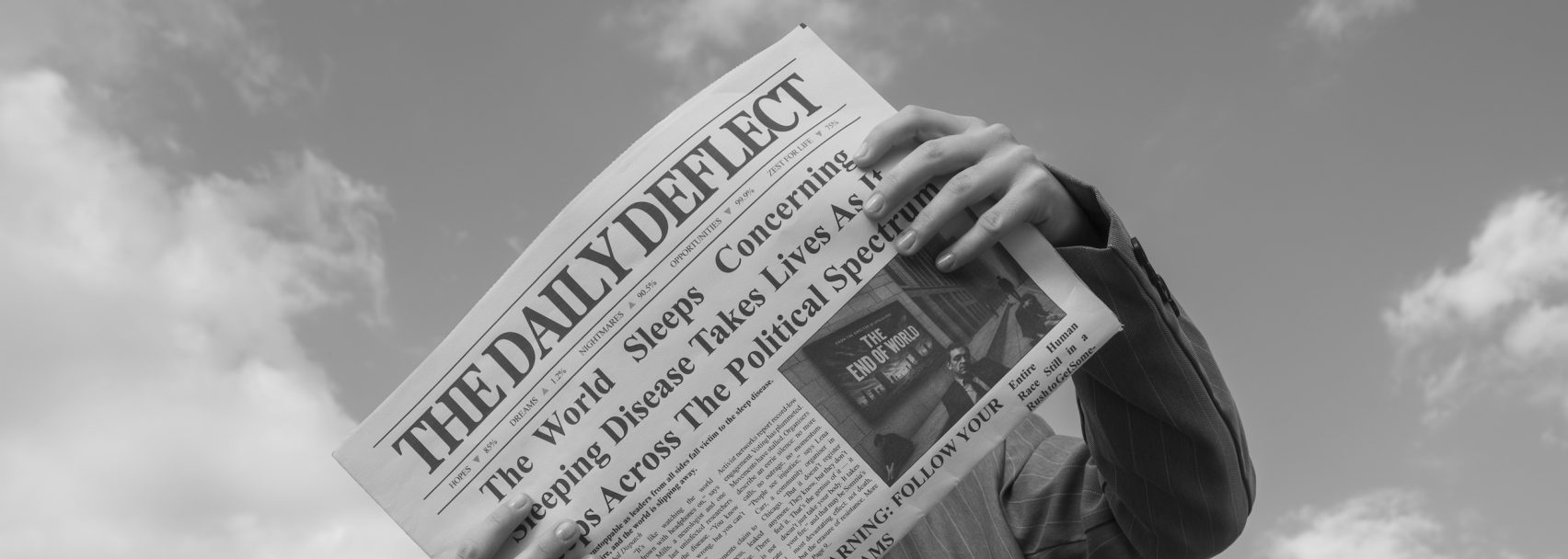
Charlie Mead and Tamara Greatrix critique The Tab in light of its recent Instagram post regarding censorship in student journalism.
The Tab is a for-profit media brand, covering youth culture, student affairs and entertainment. You’ve probably encountered them before, between their heavy online presence and campus interviews, it would be a lie to say their journalistic approach isn’t successful. However, just because something is gaining views doesn’t mean it is without flaws.
The Tab‘s identity is inextricably entwined with chasing views for advertising, often prioritising quantity over quality and accuracy. A constant chase for more views, and in turn more money, leads to the phenomenon of ‘churnalism’. This is when journalists heavily rely on press releases with little editorial input, leading to verbatim reproductions of the primary material and, in turn, a lack of original reporting and investigation. The Tab has been in hot water before when one of its editors-in-chief plagiarised an article from The Financial Times. All of this goes to say that their approach is simple: views always come first.
The Tab recently posted on its Instagram page, reporting on the influx of student papers complaining that their student unions are censoring and suppressing articles. The Times and BBC have recently picked up these stories, highlighting the neglect that student journalism is facing. Instead of sympathising and spreading awareness of this current situation that continues to hinder student journalism, The Tab saw it as an opportunity to advertise their own platform.
What The Tab is perhaps in need of, is some serious self-reflection. By encouraging students to move away from their local student papers so that they instead work for them instead is actively engaging in the dissolution of student papers. While Redbrick has a clear emphasis on informative journalism, intended to inform the student population, it is more clear than ever that The Tab are chasing views.
If you saw this post and were attracted by it, my frustration is not directed towards you. Writing for The Tab is an easy way to get something that you wrote published online, after all. It would look good on the CV and is something you can show friends and family the next time you go back home for Christmas. But, would your relatives be so proud of you if they knew you were contributing to a paper that consistently mocks and delegitimises journalism?
The promotion off the back of many student papers’ misfortune, including our own, is a perfect example of news-jacking that seems to be a quintessential aspect of tabloid media. It not only devalues the original story, but has also been leveraged to heighten the ‘credibility’ of their own organisation.
Tabloids generally do not have the best reputation. They are known for purposefully scandalous, and often hyperbolised, headlines that may be created at the expense of the truth. Tabloids have shifted the landscape of how media is consumed, becoming the godfather of clickbait and fake news, specialised in toying with the public’s emotions. One of the most infamous British tabloids, The Sun, was famously sued for their headlines. Their investigation into Hillsborough, titled ‘The Truth,’ carried lies about the fans in the aftermath of the disaster, such as ‘some fans urinated on the brave cops,’ and ‘fans beat up PC giving kiss of life.’ The Sun’s portrayal of fans as hooligans, rather than recognising the gross misconduct of the police force, contributed towards the 27-year delay of justice.
you can make up your own mind when you discover that The Tab hosted a ‘Fittest Fresher’ column
You can easily find examples of these inflated headlines in The Tab, Sexist backlash against Sarina Wiegman coaching the men’s England team is insane is a clear case of language being power. Describing sexism as ‘insane’ surely undermines the real weight of such a widespread societal concern.
I could be saying this all in spite, perhaps I am just annoyed and bitter about them belittling student papers. You would not be wrong. I mean, you can make up your own mind when you discover that The Tab hosted a ‘Fittest Fresher’ column that acts as the latest rendition of The Sun’s page three, making young women a spectacle who are categorised by a voting system that assesses whether they are the ‘fittest fresher’ or not.
Unfortunately, it does not end there. The Tab was also recently involved in a controversial scandal that saw their female-focused spinoff, Babe.net, shut down after being accused of trivialising sexual assault and conflating bad date experiences with predatory misconduct by large-scale media outlets such as the New York Times.
The controversies extend further with claims against The Tab when they hosted anti-Scottish and classist sentiments after stating that the absence of Scottish Students at Edinburgh University was ‘god intended’. Ignoring factors of social mobility and wealth inequality, The Tab chose to double-down on this position, which subsequently led them to be nationally criticised.
People reading this could be saying that Redbrick is jealous that The Tab is more nationally recognised and resourced. This is not what we are trying to portray. Instead, we are trying to highlight The Tab prioritising the attention economy, and assessing their work based on quantity rather than quality. Owned by Digitalbox, a profit-driven media company. They also own Entertainment Daily, The Daily Mash, and Reality Shrine. Backed by shareholder and investment funds, The Tab has to answer to shareholders. As a volunteer-run paper, Redbrick simply cannot match the resources and commercial incentives that The Tab owns.
The Tab’s student writers’ payment for their work is a precarious situation and often students are not paid, and while that is not inherently problematic considering the large platform these budding journalists are gaining access to, the journalism is by nature amateur. Amateur journalism is good, and everyone at Redbrick is certainly in the same boat. I want to make it clear that I do not see myself as superior to The Tab. I have written for the page myself previously and I would have again had they not utilised student journalism’s current downfalls for their own gain, and if I hadn’t uncovered their less than admirable past.
The Tab’s approach to journalism is pretty simple: surprising headlines get views, and views mean money. This means that their platform is built on churnalism and shock-factor. When they do get into hot water, they choose to double down on it. It is undeniable that The Tab is providing a valuable platform for budding journalists, but next time you’re picking from their ops list, make sure you question what you’re buying into.
Although The Tab have advertised a movement away from student journalism, Redbrick offers a sense of community and engagement with our campus that is unique to the University of Birmingham. Everything at Redbrick is student-centred. Unlike The Tab, which is backed by large investment funds and run by a small team of officers based in London. At Redbrick, whether you are an editor, writer or on a committee, you have to be a student. Written for the students, by the students.
Redbrick approached The Tab for comment, but they did not reply.
If you enjoyed this article, read more from Redbrick Comment here:
No Man’s Land: Burnham’s Birmingham
Comments