Culture Editor Katherine Bhaskar reviews John McCrae’s poem ‘In Flanders Fields’ for Remembrance Sunday 2026.
Remember the bittersweet story of a Lieutenant-Colonel who stood amidst a field of red poppies, the flower soon to be worn every second Sunday in November? I will be dedicating this article to review Lieutenant-Colonel John McCrae’s well-renowned war poem ‘In Flanders Fields’ for Remembrance Day 2026.
Do not worry if you have a faint recollection of this brief moment in history. Or, if this is your introduction into McCrae, and his collection of other pensive poems about wartime tragedy and innate duty. Let me take you back to a time when one middle-aged Canadian military doctor was struck by such awe at the sight of unusual poppies growing around a cemetery. Thriving upon dead soil, despite the extreme trauma felt across the ecosystem as a result of artillery warfare.
Poppies that stained the cemetery bright red
The year is 1915, almost one year since the start of the First World War. It is no exaggeration to say that the world looked like a reflection of hell. The Western Front was paralysed in deadlocked trenches, No Man’s Land was a godforsaken scar across the earth that refused to heal, soldiers’ lived in claustrophobic dirt-roofed dugouts, with heavy boots that submerged in waterlogged mud that sank deeper into unknown depths. Imagine the blistering cold, the smell of rotting bodies. It was nothing short of horror. There was never a moment of rest: even if all intermittent crashing of artillery barrages abruptly paused, the traumatised mind would fill in a louder boom.
Neutral countries seemingly away from the scene of war were not spared. The Netherlands faced violent food riots, known as the Potato Riots later in 1917. Meanwhile Switzerland, surrounded by warring nations, was not only compelled to mobilise their entire army, but had trade landlocked by both Germany and the Allied Powers.
Ypres, Belgium in 1915 is the setting of this story. A land which saw these same nightmares once before and now again, in the Second Battle of Ypres. It was the first time chlorine gas was used in warfare. Such poisonous, uncontrollable air knows no friends nor enemies. In the aftermath, more than 59,000 casualties were reported from the British Empire, around 2000 to 22,000 casualties from French forces, and more than 35,000 casualties from the German Empire. Among the deceased was John McCrae’s friend and fellow soldier, Lieutenant Alexis Helmer.

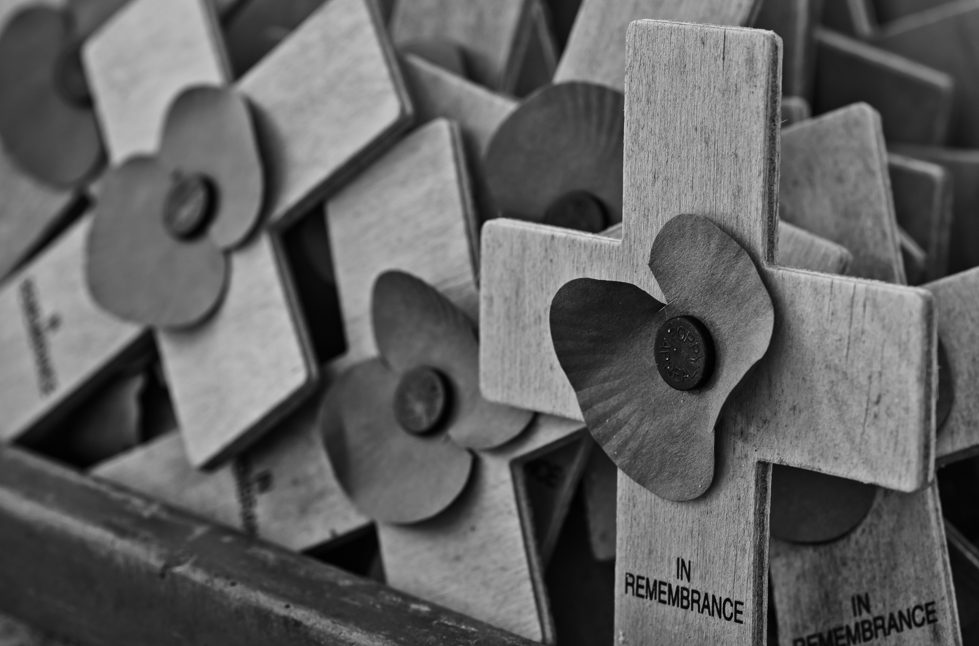
Over dead and cold earth, the physician performed a warm burial for his friend by planting a makeshift wooden cross into the cemetery’s ground. Although man has destroyed so much of nature, perhaps it was empathy that convinced her to join this small ceremony and offer poppies that stained the cemetery bright red – a colour so striking and familiar that it spoke to John McCrae, both as a soldier and military doctor, the lines of his poem ‘In Flanders Fields’:
In Flanders fields the poppies blow
Between the crosses, row on row,
That mark our place; and in the sky
The larks, still bravely singing, fly
Scarce heard amid the guns below.
We are the Dead. Short days ago
We lived, felt dawn, saw sunset glow,
Loved, and were loved, and now we lie
In Flanders fields.
Take up our quarrel with the foe:
To you from failing hands we throw
The torch; be yours to hold it high.
If ye break faith with us who die
We shall not sleep, though poppies grow
In Flanders fields.
I believe that harmonising the use of poetic devices with raw feelings is the essence of poetry. The way McCrae expressed both factors so seamlessly and authentically is what makes ‘In Flanders Fields’ a timeless masterpiece.
Standing amid Flanders fields, McCrae takes us into his consciousness. Before us lies the expanse of nature: vast verdant fields, holy crosses, larks that soar freely like the skies never end, and pretty red poppies that charmed the landscape. He shows life that thrived, as well as love that lasted. Before long, McCrae reveals that the beauty of it all will eventually die.
McCrae could have slowly eased readers into the subject of inevitable death. However, abrupt juxtapositions since the beginning of his poem gave an eerie feeling the grim reaper recurrently whispering to soldiers on the battlefield, muttering ‘memento mori’. For example, the holy crosses which have already marked their resting place, and singing birds that became scarce. taDum, taDum, taDum, taDum. That is the iambic tetrameter, echoing McCrae’s final weary heartbeats.
Symbolise remembrance since Armistice Day
Poppies grow over the cemetery, chanting “We are the dead. Short days ago, we lived, felt dawn, saw sunset glow, loved, and were loved, and now we lie in Flanders fields.” It sounds like a requiem sung by fallen soldiers, recounting their short lives. Rhyming, youthfully, through these mesmerising blood red flowers across the field.
Being a rondeau, McCrae’s poem circles again to no definitive end. More and more lives are claimed throughout the great war, leaving behind souls that bloom as new poppies in the cemetery. These fallen soldiers shall not rest, unless, the living serve their duty to remember and continue the never-ending cause.
Poppies hence came to symbolise remembrance since Armistice Day was declared on November 11th 1919, leading to the official Poppy Appeal in 1921.
Written in 1915, McCrae’s poem have survived over a century. The field of red poppies in Flanders continues to remind the vast majority of us of a time we have never lived through. Perhaps, McCrae wrote about his serendipitous encounter as a way to warn the future of a piece of history that should never be repeated.
In 2026, several headlines display symptoms of straining international relations; this includes news of countries skeptical over the activities of another. I hope that on November 8th 2026, we have been reminded of how it only takes a single spark to set a wildfire. Whether it be in the fields of Belgium, home grown or a symbolic brooch, may poppies from all across the world continue to sway along peaceful days.

Review rating: 5/5
Enjoyed this review? Let’s keep you entertained:
A Warning for Our Times: Book Review of Prophet Song by Paul Lynch
Comments