Comment Editor Ed Bettles revises what that led to ‘incel-horror’ film Obsession’s success earlier this year, criticising interpretations of the film whilst linking it to contemporary issues.
*Spoilers ahead* *TW: Mention of Rape*
Released in cinemas in May 2026, Obsession, written and directed by Curry Barker, quickly became one of the most talked about films of the year and a massive box office success. Despite its remarkably low-budget production cost of $750,000, it’s currently estimated to be grossing over $522 million worldwide, overtaking Sinners as the highest-grossing original horror movie. But what is it about Obsession that has audiences so obsessed?
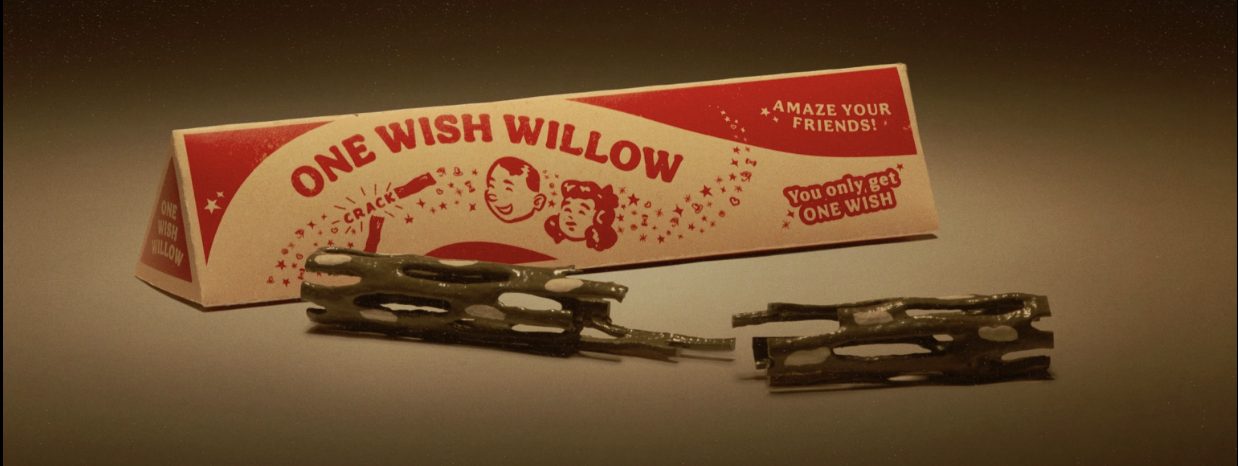
The film follows the story of Baron “Bear” Bailey (Michael Johnston) who breaks a ‘One Wish Willow’ – a novelty charm that hexes his co-worker (and painfully platonic friend) Nikki Freeman (Inde Navarrette) to love him. As anyone and their mum could predict, this backfires, and Bear condemns them both to a nightmare of his own making – one that cannot be wished away. Under his supernatural manipulation, Nikki’s personhood is completely erased and taken over by a violent and all-consuming obsession for Bear. While it might appear that the horror aspect is focused on Bear’s experiences, the really frightening thing is what Nikki is forced to endure, and what feminist critics, like Emma Cieslik, have coined as ‘incel horror’.
While it might appear that the horror aspect is focused on Bear’s experiences, the really frightening thing is what Nikki is forced to endure…
The term ‘incel’ designates someone who self-identifies as an ‘involuntary celibate’: someone who believes they are fundamentally and frustratingly incapable of attracting a partner despite their best efforts. It’s a group that has since become strongly associated with and preyed upon by the manosphere, an extremist subculture and hate group founded on male supremacy and the idea that there is a female conspiracy causing a ‘male loneliness epidemic’. In Obsession, Bear fulfils a caricature of this role, deprived of a relationship with Nikki by what, her autonomy to unreciprocate his attraction? In this way, the ‘One Wish Willow’ serves as a means for Obsession to fulfil Bear’s incel wish to be loved by Nikki and to explore the less than desirable fallout in what can only be described as a cautionary tale or exercise in gentle parenting to other incels watching.
Don’t get me wrong, Bear is not (at the start of the film at least) a completely unlikeable character, but rather he appears unthreatening and charming in a lost-puppy kind of way. In fact, I think Obsession purposefully wrong-foots the audience by offering Bear as the main protagonist rather than the villain. Barker implicates us in Bear’s fantasy only to reveal the increasingly blatant misogyny driving it, as if to say, ‘yes, it really is that easy to get swept up and corrupted by the manosphere ideology and isn’t that truly terrifying!’. Equally, Nikki’s exaggerated obsessiveness, representative of other misogynistic narratives surrounding women in relationships (even forced to reciprocate his attraction she can’t win), is portrayed in the beginning as somewhat comical. Quickly, however, her overstated performance becomes an ever-present reminder of her lack of freedom to act genuinely.
Baker confronts Bear with a Catch-22: accept that the real Nikki does not love him, or settle for the inauthentic, hollow Nikki that loves him despite herself. The latter would not only force him to admit that he is only in love with her surface-level beauty rather than the depth of her personality; he does not love her enough to let her choose what makes her happy; he does not love her. Ultimately, when the ‘real’ Nikki manages to speak while her ‘wish-self’ is asleep, she begs Bear to kill her and end her misery, but rather than feel remorse or sympathy for someone he supposedly loves he can only think of himself: “would it be so bad to love me?”.
The latter would not only force him to admit that he is only in love with her surface-level beauty; he does not love her enough to let her choose what makes her happy.
The film also uses this dislocation between Nikki’s true desires and those voiced by her ‘wish-self’ to probe questions about consent, and the implications of incel ideology on rape culture. Throughout the film, Bear’s friends voice concerns around Nikki’s mental capacity to consent and his taking advantage of her vulnerability during a time of personal difficulty (fictitiously, the grieving of her father but really the supernatural ventriloquism that has taken over her). Nevertheless, Bear continues his relationship with Nikki, seemingly accepting the moral cost it takes from him. This is most shockingly evident in a scene depicting Bear sleeping with a deadpan, inexpressive Nikki, clearly faking moans with her face otherwise devoid of visible pleasure.
It’s important to recognise that the ‘One Wish Willow’ is not inherently cursed, like a kind of monkey paw wish that always backfires. For example, when Ian (Cooper Tomlinson) wishes for money, he receives it with no obvious negative repercussions. Rather, it’s Bear’s wish, specifically, that is fundamentally wrong.
It’s important to recognise that the ‘One Wish Willow’ is not inherently cursed…
The end of the film leaves us with Nikki physically and emotionally scarred by what she has been forced to do against her will. The audience are left wondering how this poor girl will continue her life: even if she manages to overcome the trauma of everything she’s undergone, it’s very unlikely she can walk away unscathed from the aftermath of her crimes and transgressions. Here, Baker demonstrates how the lives of countless women are completely and unjustly ruined by the exploits of men, acting on whims, in their own best interests and ignorant to the lives of those around them.
In this way, Obsession is such an effective and viscerally disturbing horror film precisely because its subject matter is so relevant to the fears and concerns of contemporary society. It’s a terrifying reflection of hateful and ignorant times we’re living in. It’s not some distant or far-fetched evil like ghosts, demons or zombies but an active and pervasive threat affecting us in more ways than many are willing to recognise. The thing I found scariest about Obsession was the shocking number of viewers that failed to understand this allegory. An increasingly concerning number of young boys are being exposed to manosphere and incel content, to the point that these views, and the disgusting transgressions against women associated with them, are becoming commonplace. We can no longer ignore the danger posed to all of us by these ideologies, without becoming complicit, like Bear, in the horrific consequences that will undoubtedly follow for ourselves and everyone around us.
If you enjoyed this article, why not read these articles from Redbrick Comment?
Surveillance, Meta Glasses & Kylie Jenner
What is the point of International Women’s Day anymore?
The US Midterms: What’s Next for Trump?
Comments